
Festival Stage Rental That Fits the Event
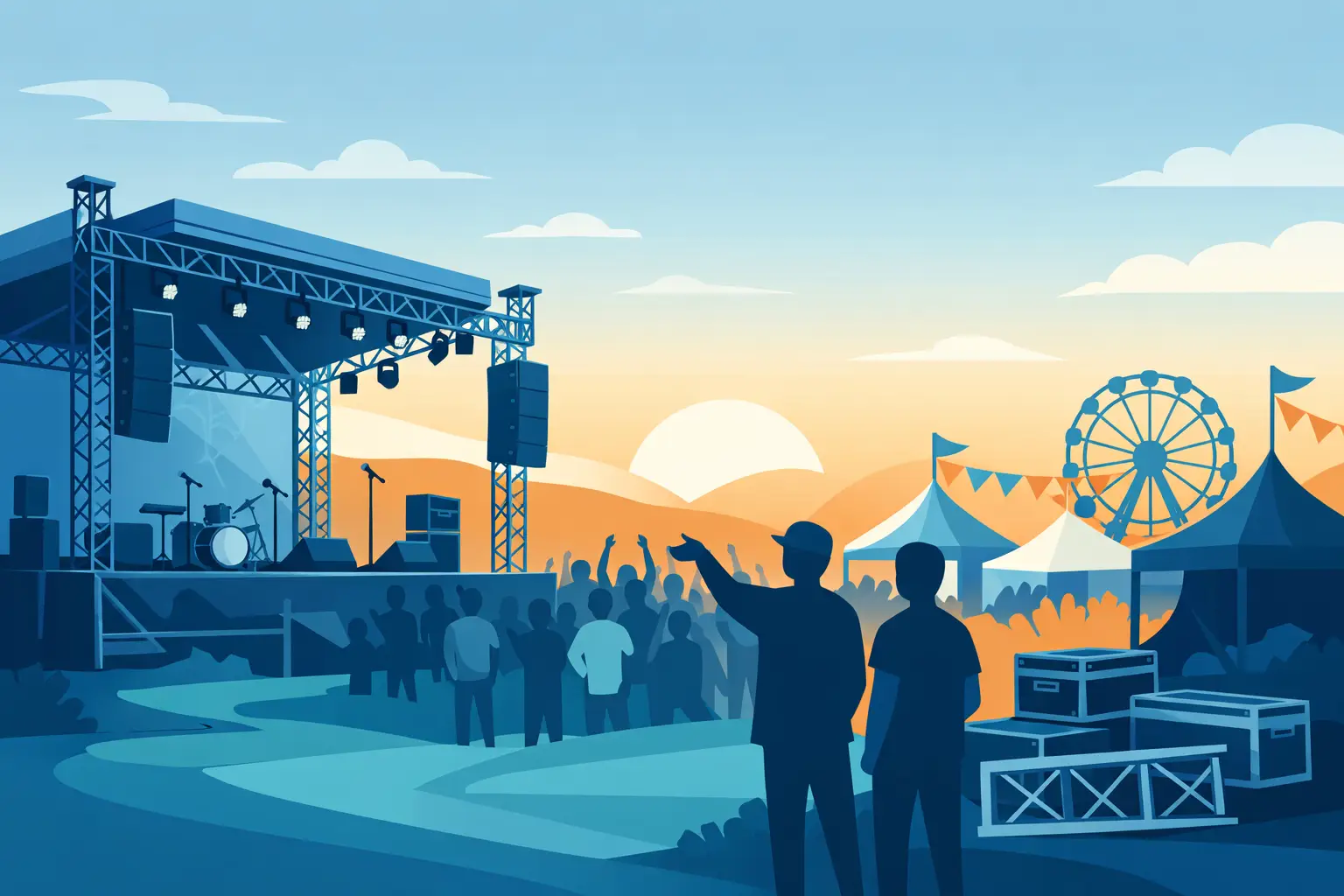
A festival stage that looks great in a rendering can still create problems on show day. If the deck height is wrong, sightlines suffer. If the roof is undersized, lighting options get limited. If load calculations, access, and scheduling are treated as afterthoughts, a simple build can turn into a long and expensive morning. That is why festival stage rental is never just about putting a platform in a field. It is about building the physical center of the event around safety, performance, and timing.
For festival organizers, venue teams, and production managers, the right stage setup does more than hold artists and equipment. It shapes the audience experience, determines what the technical team can deliver, and sets the pace for load-in, rehearsals, and changeovers. A dependable rental partner helps you think through those details early, before small oversights become major onsite issues.
What festival stage rental really includes
When people hear stage rental, they often picture the deck and maybe a roof system. In practice, festival stage rental can include much more. Depending on the event, it may involve the stage platform, roofing structure, stairs, skirting, ADA access, barricades, stage wings, risers, FOH platforms, ballast, and weather-rated structural components. It also often connects directly to lighting, audio, LED walls, power distribution, and crew planning.
That broader view matters because stage decisions affect almost every other department. A band with a larger input list may need more wing space. A headline act with scenic elements may require additional load capacity. A daytime community festival may need a clean, efficient setup without the complexity of a concert roof system. The right answer depends on the event format, the site, and the expectations for production value.
Choosing a festival stage rental that matches the show
The biggest mistake in stage planning is sizing by guesswork. Bigger is not always better, and smaller is not always more efficient. A stage should fit the program, the audience footprint, and the technical package.
A local cultural festival with dance groups, speeches, and light playback needs a different solution than a multi-act music event with backline, video, and programmed lighting. In one case, speed and simplicity may matter most. In the other, roof capacity, backstage flow, and cable management become much bigger priorities.
Audience size is part of the equation, but it is not the whole equation. You also need to think about artist requirements, camera positions, local permitting, and the physical layout of the venue. A stage that works perfectly on paper can create bottlenecks if trucks cannot access the build area or if the audience grade changes sightlines more than expected.
Deck size, height, and sightlines
Deck dimensions affect more than performer comfort. They influence whether the show feels polished to the crowd. A stage that is too low can make performances disappear for anyone beyond the first few rows. A stage that is too high may create accessibility and loading complications that were not necessary.
The right height depends on attendance, terrain, and the type of performance. Spoken-word programming and corporate festival activations often benefit from a different setup than live music. If the venue has a slope, that may help. If it is flat, deck height becomes more important for visibility.
Roof systems and rigging capacity
If your event includes moving lights, line arrays, LED walls, scenic pieces, or weather protection for performers and gear, the roof system deserves close attention. Not every stage roof is built for the same loads, and this is not an area for rough estimates.
Production teams need accurate weight planning, proper rigging points, and a crew that understands how the stage structure supports the rest of the show. A lower-cost option can look attractive early on, but if it limits speaker hangs or fixture placement, you may end up spending more trying to work around those constraints.
Why site conditions matter as much as stage size
Outdoor festivals are rarely as simple as an empty open lot. Ground conditions, access routes, wind exposure, nearby structures, and local rules all affect what can be installed and how long it will take.
Uneven ground may require additional leveling and engineering attention. Tight access can slow down staging trucks and forklifts. Parks, parking lots, beach-adjacent venues, and urban event sites each come with their own logistical issues. In West Coast markets, for example, you may be working around strict venue rules in a downtown setting or weather variables in an open coastal location.
A good production partner looks at those realities early. That includes confirming truck access, identifying the best load-in path, understanding venue restrictions, and building a schedule that leaves room for inspections and last-minute adjustments. Those practical decisions protect both the budget and the show timeline.
Festival stage rental and safety planning
Safety is not a separate conversation from design. It is part of every decision, from stage placement to ballast to cable routing. Any stage provider should be able to speak clearly about structural integrity, weather planning, crew procedures, and how the installation will be managed onsite.
For outdoor events, wind is often the issue people underestimate. Weather plans should address what happens if conditions change during load-in or during the event itself. That includes knowing the operating limits of the structure, understanding evacuation or shutdown procedures, and coordinating those plans with the broader event team.
The same goes for crowd management around the stage. Barricade layout, security positions, stage access control, and emergency egress all connect back to how the stage environment is built. If several vendors are handling separate pieces without close coordination, gaps can appear fast. One accountable team reduces that risk.
When full-service support is the better move
Some events only need a straightforward stage rental with delivery and installation. Others need a more complete production approach. The difference usually comes down to complexity, available staff, and how many moving parts need to be coordinated.
If you already have an experienced production manager, a venue contact, and separate audio and lighting teams, a standalone staging package might be enough. But if your event includes multiple acts, changing technical needs, tight labor windows, and public-facing schedule pressure, having one production partner manage staging alongside audio, lighting, video, and crew can save time and prevent mistakes.
That is especially true when changes happen, which they usually do. An artist rider expands. The site map shifts. A sponsor activation needs power near the stage. A rehearsal runs late. When staging is handled in isolation, every change creates more calls and more room for confusion. When one team is responsible for execution across departments, adjustments happen faster and with fewer surprises.
Budget decisions that actually matter
Most clients are not looking for the cheapest festival stage rental. They are looking for the best value without exposing the event to avoidable risk. Those are not the same thing.
The price of a stage package is shaped by more than platform size. Labor, transportation, roof configuration, engineering requirements, site access, duration, and add-ons all affect cost. If one quote is dramatically lower than another, it is worth asking what is missing. Sometimes the difference is real efficiency. Other times it is a sign that key services, crew time, or structural elements have not been fully accounted for.
A practical budgeting conversation should focus on what the event truly needs and where flexibility exists. Maybe a smaller roof is fine because the lighting package is modest. Maybe the stage needs to stay the same, but the schedule can be adjusted to reduce labor pressure. Smart production planning is often less about cutting quality and more about aligning the build with the real priorities of the show.
Questions worth asking before you book
Before committing to a festival stage rental provider, ask how they assess site conditions, what structural and labor assumptions are included, and who is responsible for onsite coordination. You should also understand what happens if the schedule changes, what support is available during the event, and whether the staging plan has been considered alongside audio, lighting, and video needs.
Clear answers matter. So does responsiveness. A provider that is hard to reach before the event rarely becomes easier to work with during load-in.
For many clients, the best partner is the one that can scale. A smaller neighborhood festival may need a simple, budget-conscious setup this season and a more complex build next year. Working with a team that can support both helps create continuity and better long-term planning. That is a big part of how GeoEvent approaches live production – meeting clients where they are, then helping the event grow without losing control of the details.
The stage is where your event becomes visible. Choose a setup and a team that can carry the weight of that responsibility, not just the equipment on the deck.