Trade Show Projector Rental Done Right
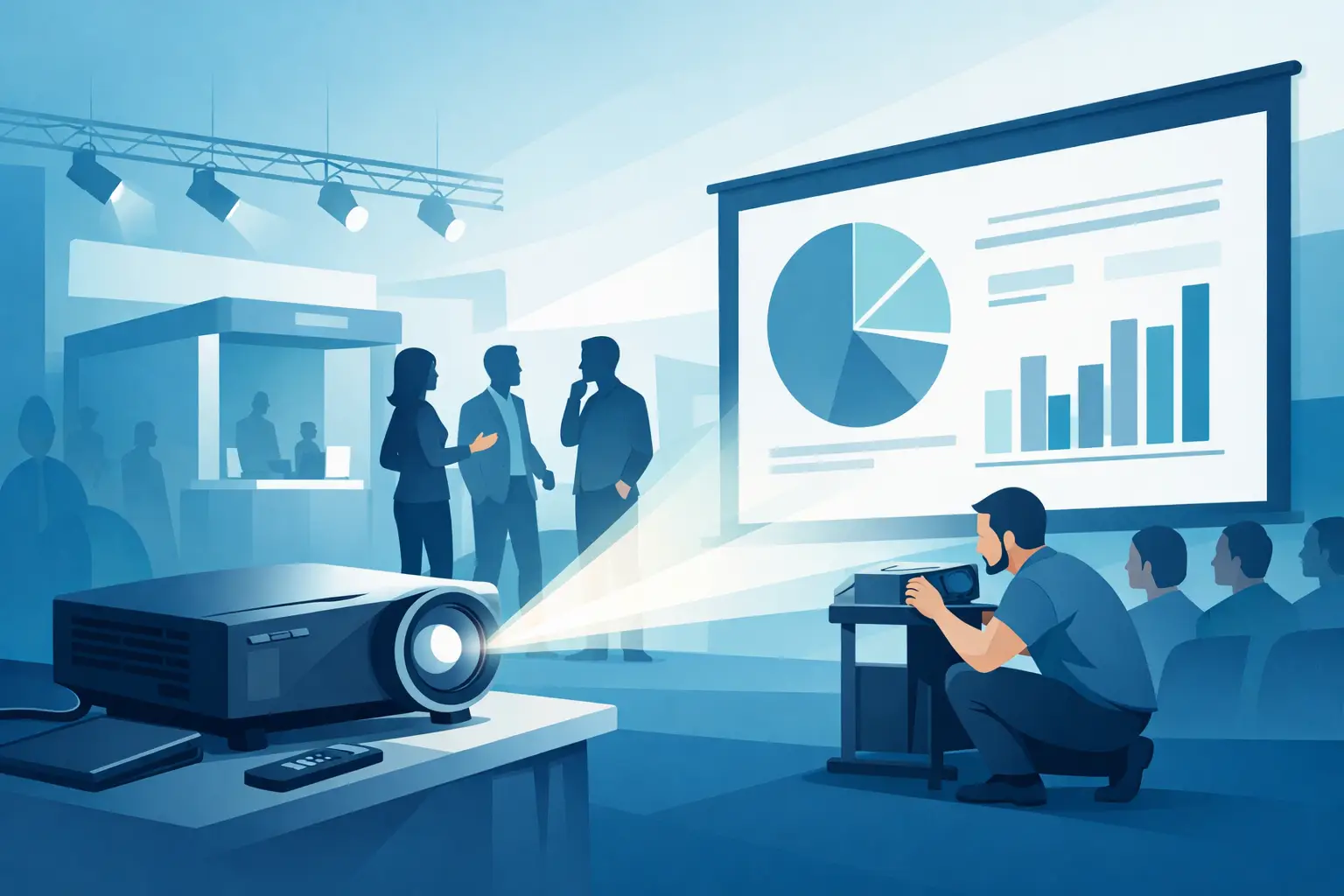
A projector that looks great in a conference room can fall apart fast on a trade show floor. Overhead lighting, booth depth, ambient glare, and nonstop attendee traffic change the equation. That is why trade show projector rental is less about grabbing a unit with enough lumens on paper and more about choosing the right system for the space, content, and schedule.
For exhibitors, marketers, and production teams, the goal is simple. You want visuals that pull people in, support the sales conversation, and keep performing from show open to teardown. Getting there usually depends on a few practical decisions made early, before the booth is built and before the freight deadline gets close.
What makes trade show projector rental different
Trade show environments are demanding in ways that surprise first-time exhibitors. The lighting is rarely under your control, ceiling heights vary, and booth layouts often force tight projection angles. Add limited install windows and crowded load-ins, and even a strong projector can underperform if the system design is off.
That is why projector rental for trade shows should be treated as part of the full booth experience, not as an isolated equipment line item. Screen size, projector placement, lens selection, playback source, rigging options, power access, and cable management all affect the final result. If one piece is wrong, the visual impact drops quickly.
There is also the issue of expectations. A projector used for sales decks has a different job than a projector used for motion graphics, product demos, or immersive brand visuals. Some booths need readable text and charts. Others need color punch and large-format movement that can be seen from the aisle. The best rental plan starts by being honest about what the content needs to do.
Choosing the right projector for a trade show booth
Brightness gets the most attention, and for good reason. Trade shows are bright. If your booth sits under strong venue lighting or faces open aisles with spill from neighboring displays, a low-output projector will struggle. But higher brightness is not the only factor, and it is not always the cheapest path to a good result.
The throw distance matters just as much. In many booths, space is limited, which means a standard lens may not create the image size you want. A short-throw lens can solve that problem, but it may introduce placement challenges if people will be walking between the projector and the screen. Rear projection can create a cleaner look and protect the image path, but it requires enough enclosed depth behind the display surface. In a compact booth, that may not be realistic.
Resolution is another place where trade-offs matter. If your content includes detailed product renderings, small text, or live data, higher resolution can make a visible difference. If the use case is a looping brand video seen from ten feet away, resolution may matter less than brightness and contrast. Spending more on specs that your audience will not notice is rarely the best use of the budget.
Noise and heat can also become issues in smaller footprints. A projector placed close to staff or attendees should not be distractingly loud. It also should not create extra heat in a booth that is already packed with lighting, monitors, and people.
Screens, surfaces, and booth design affect the image
Many projection problems get blamed on the projector when the real issue is the surface. A wrinkled screen, reflective panel, or wall with the wrong finish can weaken image quality even if the projector is properly sized. For a clean result, the display surface has to match the content and the viewing angle.
Front projection is often the simplest choice, but it asks more of the surrounding booth design. You need a clear path from projector to screen, controlled sightlines, and enough distance to avoid shadows. Rear projection can create a more polished presentation because the hardware stays hidden, but it requires planning for support structure, drape, and access behind the wall.
If the projector is part of a larger visual package, it should work alongside LED walls, monitors, scenic elements, and lighting rather than compete with them. Sometimes projection is the right tool because it can create a large image at a lower cost than direct-view displays. Other times, an LED wall is the better answer because it handles bright show floors more effectively. The right recommendation depends on the room, not just the equipment list.
Why setup and on-site support matter
Trade show schedules are tight. Install windows can shrink, union rules may affect labor timing, and other vendors are often building around you at the same time. That is not the moment to discover that the projector needs a different lens, the mounting hardware does not fit the booth structure, or the playback content is formatted incorrectly.
This is where working with an AV partner instead of a simple box rental makes a real difference. Proper pre-show planning should cover signal flow, booth dimensions, content outputs, backup playback options, and how the projector will be secured and aligned. It should also account for practical details like extension power, trip-free cable routing, and who is responsible if something needs attention during show hours.
For many exhibitors, the real value is not just getting gear delivered. It is having a crew that can install, test, color-correct, and stay accountable if an issue comes up. A trade show floor is not forgiving. If the image drops out during a live demo or the projector shifts after setup, you need a fix fast, not a support number that sends you into a call queue.
Budgeting for trade show projector rental without cutting the wrong corners
Most event teams are balancing visual impact against freight, labor, and exhibit costs. That is normal. The smart move is not always to rent the biggest projector available. It is to spend where performance actually affects attendee experience.
For example, it may be better to invest in the correct lens and professional setup than to overspend on brightness you do not need. In other cases, upgrading the screen surface or changing to rear projection can improve results more than moving up one projector class. If the booth includes timed product presentations, it may also make sense to budget for an operator or on-site technician rather than risk staff trying to troubleshoot in the middle of a show.
Bundling services can help keep costs under control as well. When one production partner handles projection, audio, lighting, staging, and labor, coordination usually gets simpler. You reduce handoff problems, avoid duplicate delivery and setup charges, and give your team a single point of accountability. That is often more efficient than sourcing each piece from a different vendor and hoping everything lines up on install day.
Common mistakes to avoid with projector rental for trade shows
The most common mistake is underestimating ambient light. A projector may look excellent in a warehouse test and still wash out on the show floor. The second is assuming booth dimensions tell the full story. Ceiling obstructions, truss placement, and neighboring booths can all affect where equipment can actually go.
Another frequent issue is content mismatch. Slides built for laptops do not always translate well to large-format projection. Fonts that seem readable in the office can become weak from the aisle, and subtle color differences may disappear under venue lighting. Reviewing content on the actual display format before show day saves a lot of frustration.
There is also the temptation to treat setup as basic. Projection alignment, keystone correction, focus, and playback settings all affect how polished the booth feels. Attendees may not know why a display looks amateur, but they notice when it does.
When to bring in a full-service production partner
If your booth includes more than one display element, scheduled demos, branded lighting, or custom staging, projector rental is no longer just an equipment decision. It becomes part of a show strategy. At that point, having one team manage the technical plan can save time and reduce risk.
A full-service partner can help decide whether projection is even the best fit, map equipment to the venue rules, coordinate install labor, and support the booth through live show hours and teardown. For exhibitors working major West Coast convention markets like Los Angeles, San Diego, San Francisco, or Las Vegas, that kind of coordinated support can be especially valuable when timelines are compressed and venue logistics are complex.
GeoEvent approaches these projects with that bigger picture in mind – not just supplying gear, but helping clients match the right visual solution to the booth, budget, and audience experience.
The best trade show visuals do more than fill a wall. They help your team tell a clearer story, attract better attention, and stay focused on the people walking into the booth instead of the equipment overhead. That is the real standard to measure against when you plan your next rental.