What Concert Production Services Include
A concert can look effortless from the crowd. The lights hit on cue, the vocal sits clearly above the band, video content lands at the right moment, and load-out happens after the last encore without anyone in the audience noticing what it took to get there. That result usually comes from experienced concert production services that handle the technical, logistical, and operational details before they turn into problems.
For organizers, venues, promoters, and private clients, that support matters because concerts rarely fail for one dramatic reason. More often, they get compromised by small gaps – an underpowered PA, a rushed stage plot, incomplete power planning, poor communication between vendors, or a crew that is technically capable but not aligned with the show. A strong production partner closes those gaps early.
What concert production services actually cover
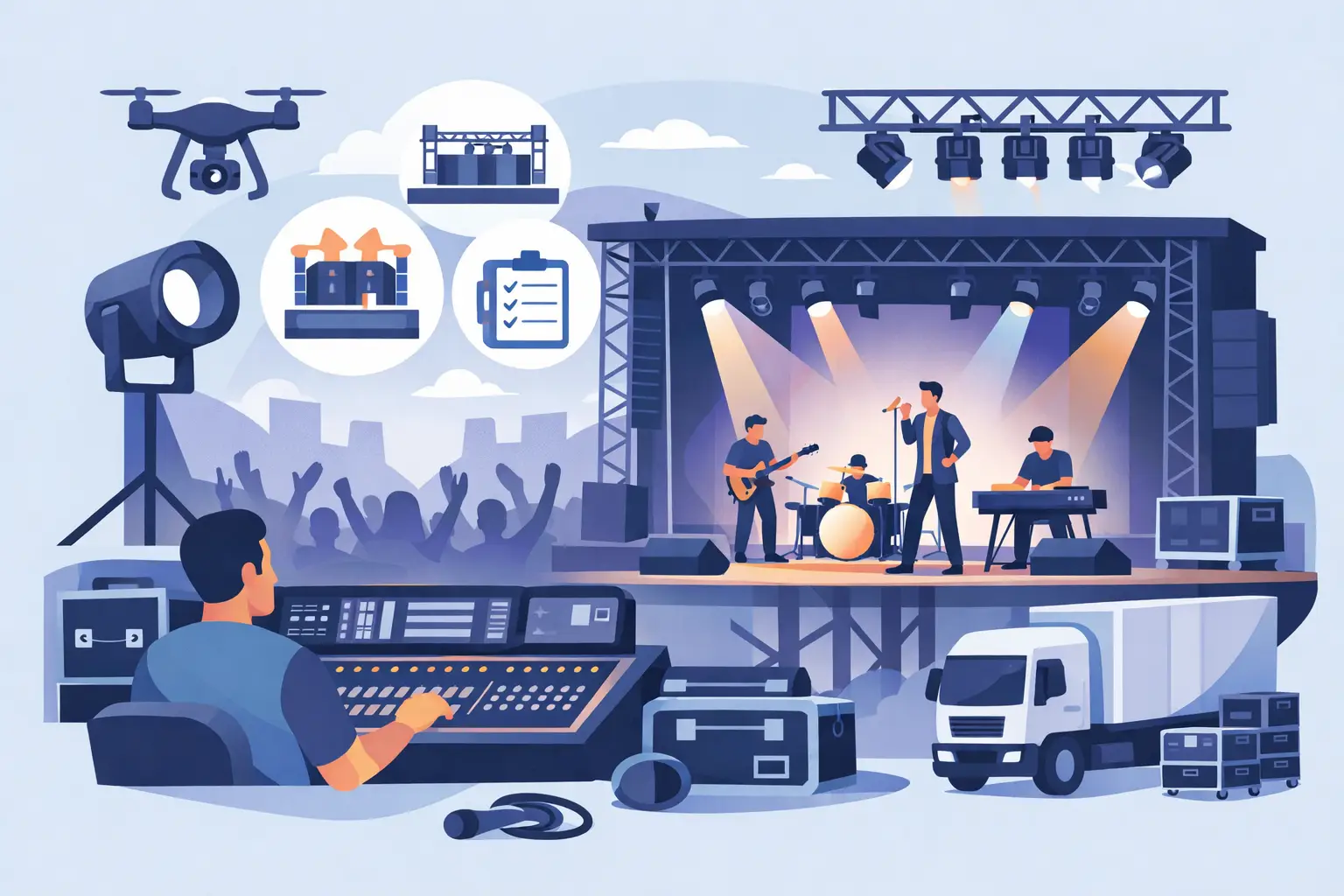
Concert production services can be as narrow or as comprehensive as the event requires. Some clients only need a specific inventory package, such as speakers, wireless microphones, lighting fixtures, or an LED wall. Others need full show support, including pre-production planning, stage design, equipment delivery, setup, operation during the event, and teardown after the audience leaves.
That flexibility is one of the biggest advantages of working with a full-service provider. You are not forced into an all-or-nothing model. If your team already has a tour manager and house audio engineer, you may only need staging and lighting. If you are producing a public concert with multiple performers and a temporary site, you may need one partner to manage everything from power distribution to show calling.
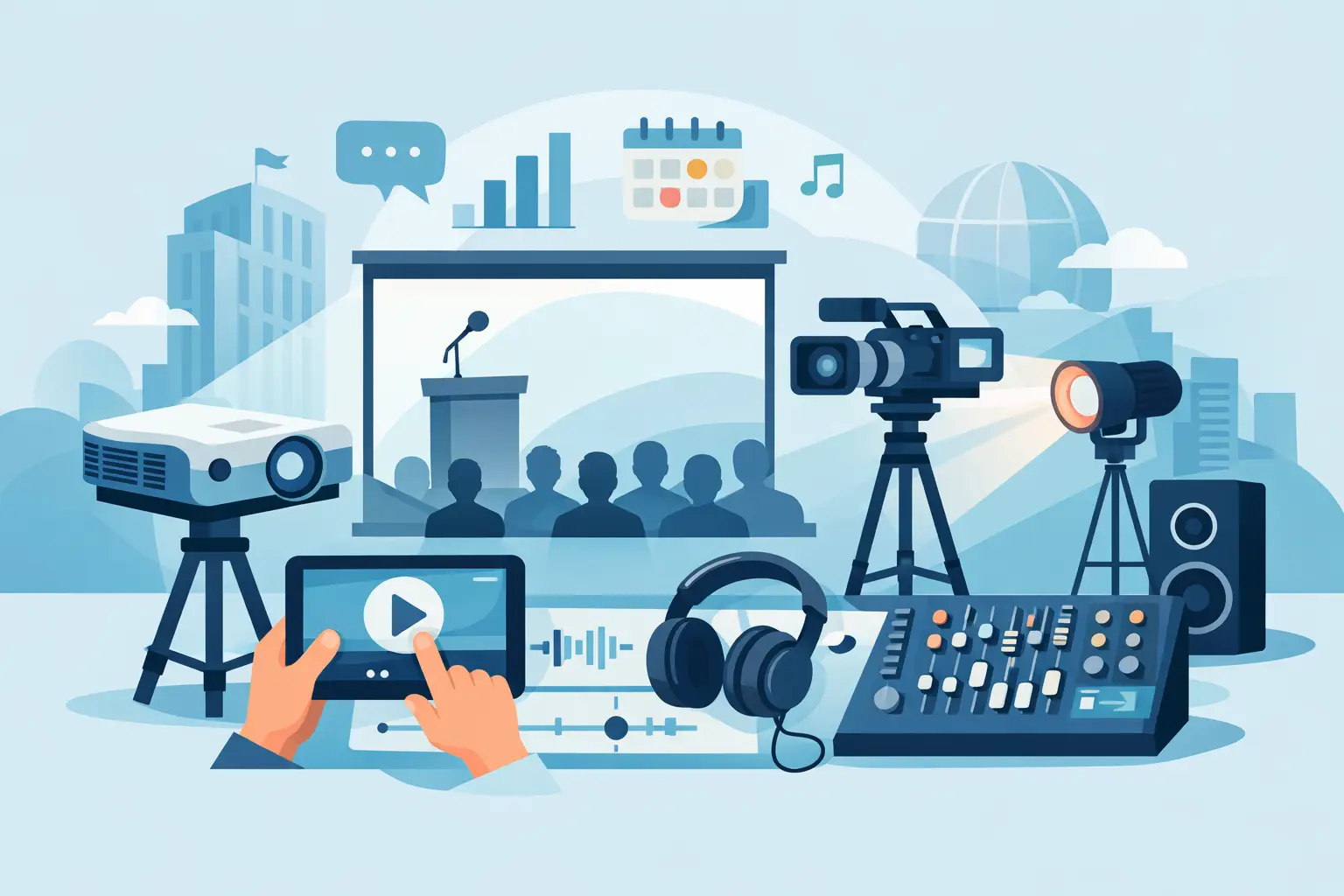
In practical terms, most concert production work centers around five areas: audio, lighting, video, staging, and staffing. The real value, though, is not simply access to gear. It is having those elements designed to work together under one plan.
Audio is more than volume
Audio is usually the first thing audiences notice when something goes wrong. If the mix is muddy, vocals disappear, or coverage is uneven, even a strong performance feels flat. Professional production starts with system design, not just speaker delivery.
That means looking at the venue or site layout, audience size, performer needs, stage volume, and the kind of experience you want to create. An outdoor festival set has different demands than a corporate concert in a ballroom or a wedding reception with a live band. One may require wider coverage and stronger low-end control, while another needs speech intelligibility and musical warmth in a reflective room.
Backline coordination, monitor mixes, wireless frequency management, and front-of-house operation all affect the result. If multiple acts are performing, changeovers and input consistency become just as important as raw sound quality. A good provider plans for those transitions instead of treating them as an afterthought.
Lighting shapes the show
Lighting does two jobs at once. It helps the audience see the performers, and it creates the visual energy that makes a concert feel intentional. Even a simple show benefits from smart lighting choices, while larger productions often depend on cue-based programming, effect timing, and scenic integration.
The right design depends on the venue, budget, and content. A singer-songwriter performance may need clean front light and subtle color washes. A festival or high-impact concert often calls for moving fixtures, audience looks, uplighting, and dynamic cue changes that follow the set. More lighting is not always better. In some rooms, a restrained design with good color balance and strong positioning produces a better result than an overloaded rig.
This is also where experience matters. Lighting has to work with camera positions, LED screens, scenic pieces, and stage traffic. If those departments are planned separately, the show can feel visually cluttered even when the equipment is high quality.
Staging and rigging set the foundation
A concert stage is not just a platform. It affects sightlines, safety, performer movement, equipment layout, and the speed of load-in and load-out. The stage has to fit the show, the site, and the audience.
For some events, a straightforward stage deck with skirting and stairs is enough. For others, the setup may include roof systems, risers, barricades, FOH platforms, ADA access considerations, and scenic elements. Temporary outdoor events often bring additional concerns such as weather planning, ballast requirements, site access, and local compliance.
This is one area where budget-conscious decisions need to be made carefully. It is reasonable to avoid overbuilding, but cutting too far on stage size or support structures tends to create downstream problems. Bands need room. Engineers need clear positions. Video and lighting need proper mounting solutions. Saving money at the foundation level often costs more later in labor, delays, or compromised presentation.
Video and LED support can raise the production value fast
Not every concert needs projection or LED walls, but when visuals are part of the experience, they need to be integrated from the beginning. Screens affect stage layout, power needs, signal flow, and audience sightlines. They also affect how polished the event feels.
For branded events, fundraisers, and corporate-backed concerts, video often serves both entertainment and communication goals. You may need IMAG support for audience visibility, sponsor content playback, live camera feeds, or scenic backgrounds. For festival environments and larger rooms, LED walls are often the practical choice because of brightness and flexibility. In smaller indoor spaces, projection may still be the better fit depending on ambient light and budget.
The trade-off is straightforward. Video adds impact, but it also adds complexity. Content management, processing, playback coordination, and operator staffing all need to be accounted for. If those pieces are handled casually, a great screen package can still underperform.
Staffing is where planning turns into execution
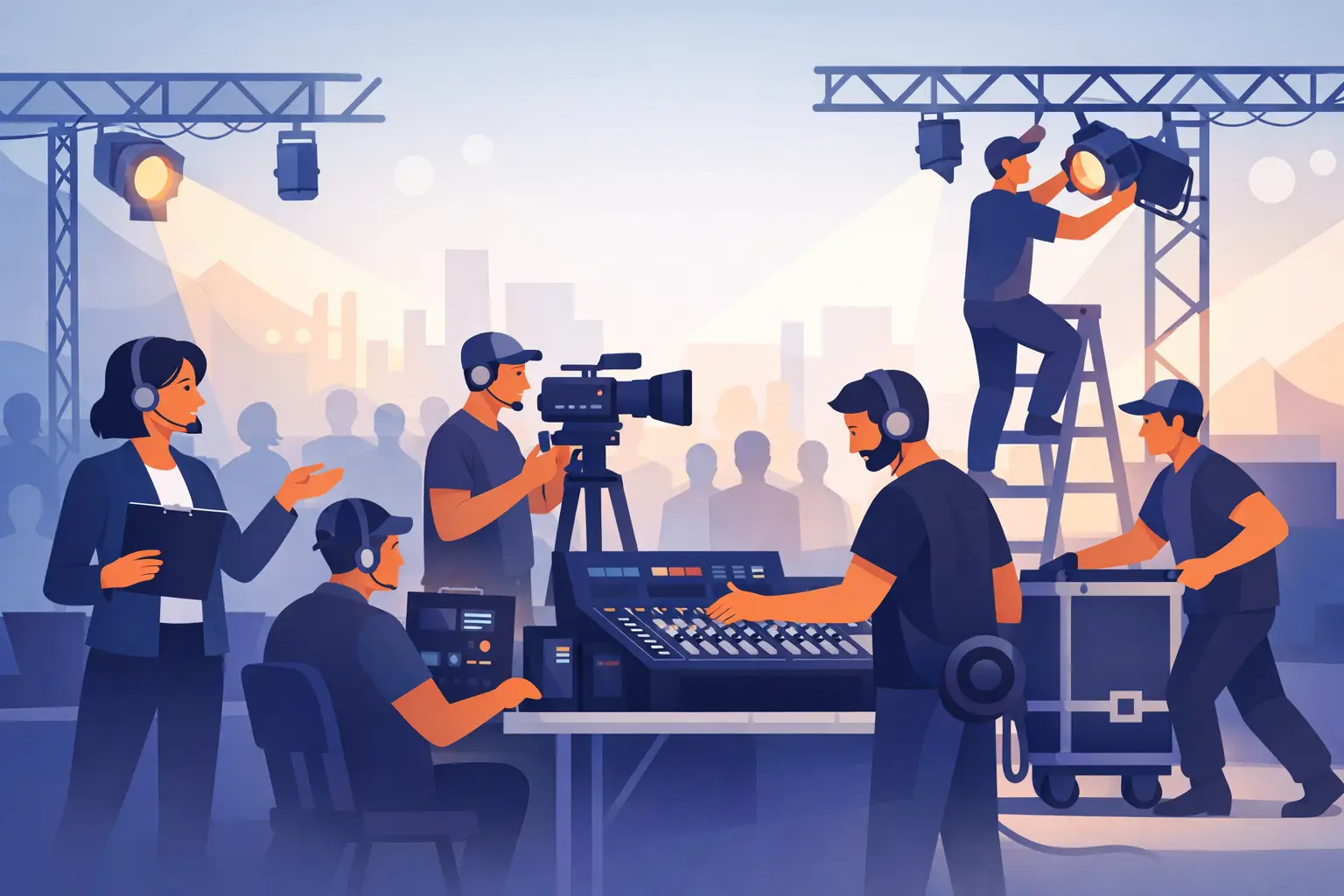
Equipment matters, but shows are run by people. Concert production services often include technicians, stagehands, audio engineers, lighting programmers, A2s, video operators, production managers, and crew leads who keep every department moving on schedule.
This is one of the biggest reasons clients choose a single production partner instead of piecing together rentals from multiple vendors. When one team is responsible for planning, prep, setup, show operation, and teardown, communication gets cleaner. Problems are solved faster because nobody is trying to determine which vendor owns the issue.
That does not mean one model fits every event. Some experienced buyers prefer to bring in their own engineer or production manager and use a production company for equipment and labor support. That can work well when roles are clearly defined. For clients with less technical experience, full management is often the safer route because it reduces guesswork and creates one point of accountability.
Why pre-production matters as much as show day
The audience only sees the event window. Production teams know the real work happens much earlier. Advancing with the venue, confirming performer needs, building a realistic schedule, checking power, identifying load-in paths, and finalizing stage plots are the steps that keep show day from becoming reactive.
Pre-production is also where budget gets protected. It is much easier to right-size a system during planning than to add emergency rentals or labor after problems appear. A dependable partner will tell you where you can scale back and where you should not. That kind of guidance is especially valuable for first-time concert organizers who know the experience they want but are not yet fluent in technical requirements.
On the West Coast, where events range from hotel ballrooms and urban rooftops to outdoor festival grounds and destination venues, site conditions can change the production plan quickly. A provider that offers both equipment and end-to-end support can usually adapt faster because the planning team and the field crew are working from the same playbook.
Choosing the right concert production services provider
The best fit is not always the company with the biggest inventory or the flashiest reel. It is the team that understands your event goals, communicates clearly, and can scale support to match the show.
Ask practical questions. Can they support only the gear you need, or can they take over the entire production if needed? Do they handle audio, lighting, video, staging, and crew under one roof? How do they approach timelines, site visits, and contingency planning? Are they comfortable supporting a small community concert with the same care they bring to a larger festival?
That range matters. Some events need a lean, efficient package and a crew that knows how to maximize every dollar. Others need a full technical build with layered departments and detailed show flow. A capable partner should be honest about what your event requires, not just sell the largest setup possible.
At GeoEvent, that is the standard we believe in – practical planning, dependable gear, experienced crews, and production support shaped around the event rather than a fixed package. Whether a client needs a single department or full concert management, the goal is the same: make the show feel confident, polished, and fully under control.
The right production support does not just help a concert happen. It gives everyone involved – organizer, artist, venue, and audience – the confidence to stay focused on the performance instead of the risks behind it.