
10 Best Wedding Reception Lighting Ideas
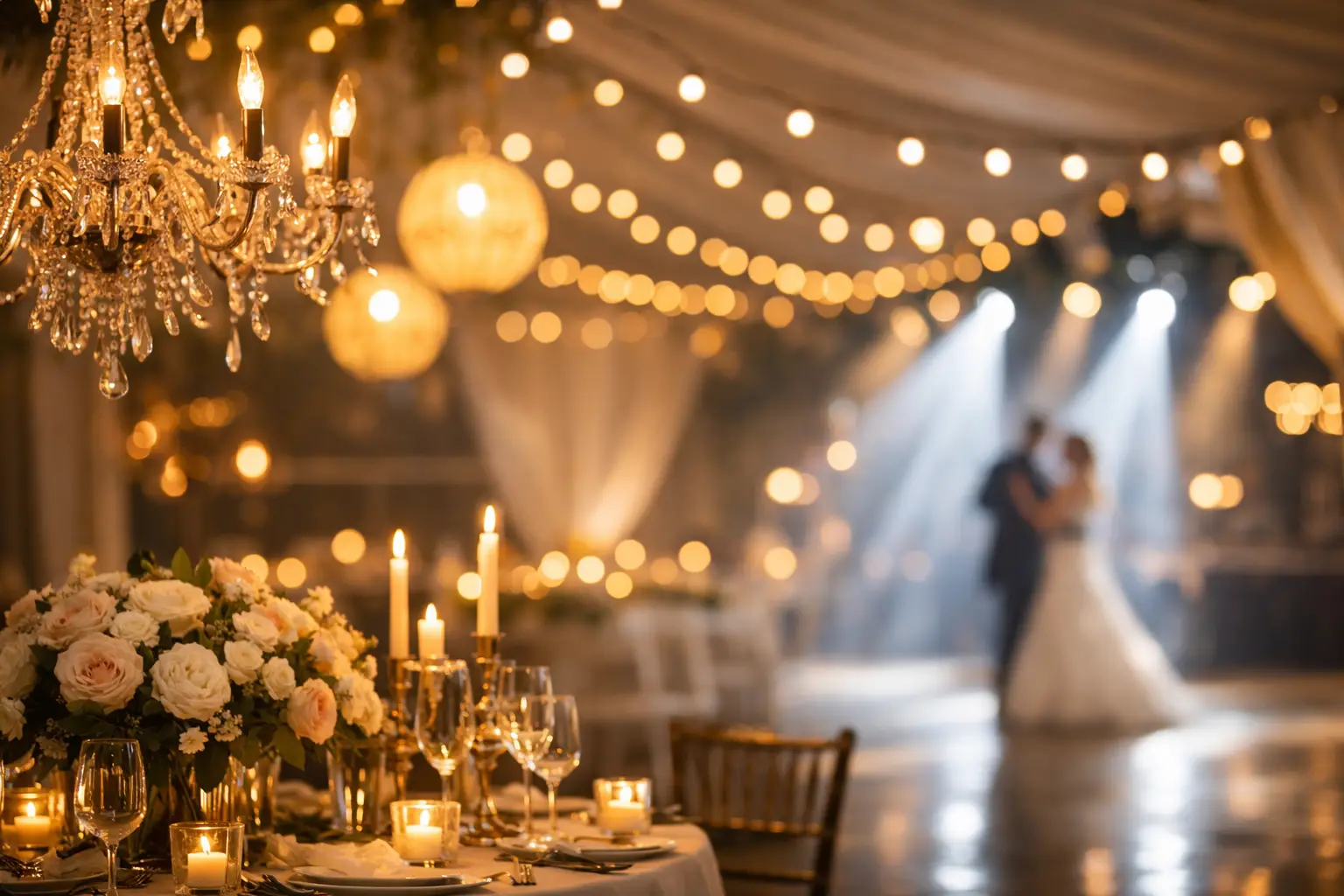
The room can have great flowers, a strong floor plan, and a beautiful venue, but if the lighting is flat, the reception still feels unfinished. The best wedding reception lighting ideas do more than make a space look pretty. They shape the mood, help guests settle in, make photos look better, and guide the energy from cocktails to dinner to dancing.
That is why lighting should be part of the planning conversation early, not a last-minute add-on. A smart lighting plan does not always mean a massive production budget. It means choosing the right layers for your room, your timeline, and the experience you want guests to have.
What the best wedding reception lighting ideas actually do
Good reception lighting solves several problems at once. It adds warmth to venues that feel too plain, gives structure to large rooms, and creates focus around the moments that matter most. Your sweetheart table, cake display, first dance, and band or DJ setup should not all compete for attention. Lighting helps each area feel intentional.
It also affects how comfortable the room feels. If everything is bright overhead light, the reception can read more like a conference lunch than a celebration. If everything is too dark, guests struggle to find seats, servers have a harder time moving through the room, and photos lose detail. The best results usually come from balance, not extremes.
Start with uplighting for an immediate transformation
If a couple asks for one change that makes the biggest visual difference, uplighting is often the answer. Placed around the perimeter of the room, uplights add color, depth, and dimension to blank walls, drape, columns, and architectural features. They can make a ballroom feel warmer, a tent feel more polished, and an industrial venue feel more intentional.
Uplighting works especially well because it is flexible. You can keep it soft and warm for an elegant dinner or shift into richer color during open dancing. That change in atmosphere helps the reception feel like it is progressing through the night rather than staying visually static.
The trade-off is restraint. Too many bright fixtures or overly saturated colors can overpower the room. In most weddings, a cleaner palette photographs better and feels more timeless.
Pin spotting keeps the details from disappearing
Couples often invest heavily in florals, cake design, signage, and tabletop details, then place them in a room where they fade into the background. Pin spotting fixes that. These focused lights highlight centerpieces, cake tables, escort card displays, and other decorative features so they stand out without flooding the whole space.
This is one of the most practical wedding lighting upgrades because it supports both guest experience and photography. Your guests notice the details more clearly, and your photographer gets better separation and texture in the shots.
Pin spotting does need proper placement. If the beam is too harsh or aimed poorly, it can create glare or unflattering shadows. This is where professional setup matters.
String lights bring softness without feeling overproduced
For barns, outdoor receptions, patios, and tents, string lights are hard to beat. They create warmth quickly and make a large space feel more welcoming. They are also one of the few lighting elements that guests actively notice in a positive, emotional way. People feel the difference even if they cannot explain the technical side.
The reason string lights work so well is scale. They spread visual interest across the ceiling or overhead space, which makes the room feel full and finished. In a tented wedding, they can completely change the tone from functional to romantic.
Still, they are not the right answer for every room. In a modern ballroom with a low ceiling, they can feel forced. They also provide atmosphere more than task lighting, so they should usually be paired with other fixtures.
Chandeliers add polish in the right venue
A chandelier can anchor the entire design of a reception. Whether you use crystal, modern black iron, or a more rustic style, it creates a visual centerpiece and gives the room a sense of occasion. This approach works particularly well over a dance floor, sweetheart table, or long head table.
The main advantage here is that chandeliers look intentional both in person and in photos. They bring design value during every part of the evening, not just during dancing. If the venue already has beautiful house chandeliers, enhancing them with dimming and accent lighting may be smarter than bringing in something new.
The limitation is logistics. Rigging, ceiling height, venue rules, and installation time all matter. This is not a decor element to decide on without confirming what the room can actually support.
Wash lighting helps define key zones
One of the best wedding reception lighting ideas for larger spaces is using wash lighting to create distinct zones. Instead of treating the whole room the same way, you can give the dining area a warm glow, the dance floor a little more energy, and the bar or lounge area a softer look.
This approach is especially useful in mixed-use venues or large ballrooms where the space can otherwise feel scattered. Guests naturally understand where to gather and where the focus is supposed to be.
Wash lighting is subtle when done well. Guests may not identify it directly, but they respond to the structure it creates.
Monograms and patterned gobos can personalize the room
A custom monogram on the dance floor or a textured pattern projected onto walls can add personality without taking up physical space. This is a strong option for couples who want something personalized but still clean.
The key is moderation. A monogram can be elegant during dinner or the first dance, but too many projected patterns in one room can start to feel busy. If the floral and decor design is already detailed, simpler lighting often produces a better result.
Dance floor lighting should match the energy, not fight it
Dance lighting is where many receptions either come alive or fall flat. The goal is not to turn the room into a nightclub unless that is truly the couple’s style. The goal is to create movement and excitement that supports the DJ or band and gives guests permission to let loose.
This can include intelligent lighting, color changes, beam effects, and rhythm-based looks that build as the night progresses. The most effective setups usually start subtly and become more dynamic after formalities are done.
There is a practical side to this too. If the dance floor is too dark, people hesitate to join. If the effects are too intense too early, it can feel disconnected from the rest of the evening. Timing matters as much as equipment.
Candles and practical light still matter
Not every lighting choice needs to come from production gear. Candles, lanterns, and other practical light sources add intimacy in ways larger fixtures cannot. They work best as part of a layered plan, especially on dining tables, cocktail tables, and lounge furniture.
These smaller sources make the room feel human. They soften the look of technical lighting and help dinner service feel more relaxed.
Of course, open flame is not always allowed. Many venues require LED candles, and in some spaces that is the safer and smarter option anyway.
Outdoor receptions need a different plan
Outdoor wedding lighting has its own rules. You are not just designing for atmosphere. You are also handling safety, pathways, catering access, restrooms, and load-in realities. The prettiest look in the world is not enough if guests cannot see where they are walking.
Path lighting, tent lighting, tree lighting, and focused illumination around bars and food stations all matter. Outdoor receptions also tend to need more power planning and weather awareness than couples expect. That is another reason to approach lighting as a production element, not just decor.
In places like Los Angeles, San Diego, San Francisco, and Las Vegas, outdoor weddings can look incredible, but each venue comes with different restrictions, setup windows, and power conditions. Early planning helps avoid last-minute compromises.
How to choose the right wedding reception lighting setup
The best approach starts with three questions. First, what should the room feel like during dinner and during dancing? Second, what parts of the venue need help, and what parts already look good on their own? Third, where will lighting have the biggest impact on guest experience and photos?
From there, build in layers. Ambient lighting sets the base mood. Accent lighting highlights details. Functional lighting supports service and movement. Entertainment lighting drives the dance floor. Not every wedding needs a heavy version of all four, but most strong designs use some mix of them.
Budget should be part of the conversation, not an afterthought. If you cannot do everything, prioritize the pieces that change the room most. Uplighting, pin spotting, and dance floor lighting often deliver more value than a long list of smaller effects.
The other major factor is coordination. Lighting needs to work with florals, drape, staging, entertainment, and venue conditions. That is where an experienced production partner can save time and stress. When one team is thinking through gear, placement, power, timing, and live execution together, the result is usually cleaner and more cost-effective.
A well-lit reception does not need to feel complicated. It just needs to feel considered. When the lighting supports the room instead of competing with it, every part of the celebration lands a little better.