Los Angeles Stage Rental That Runs Smoothly
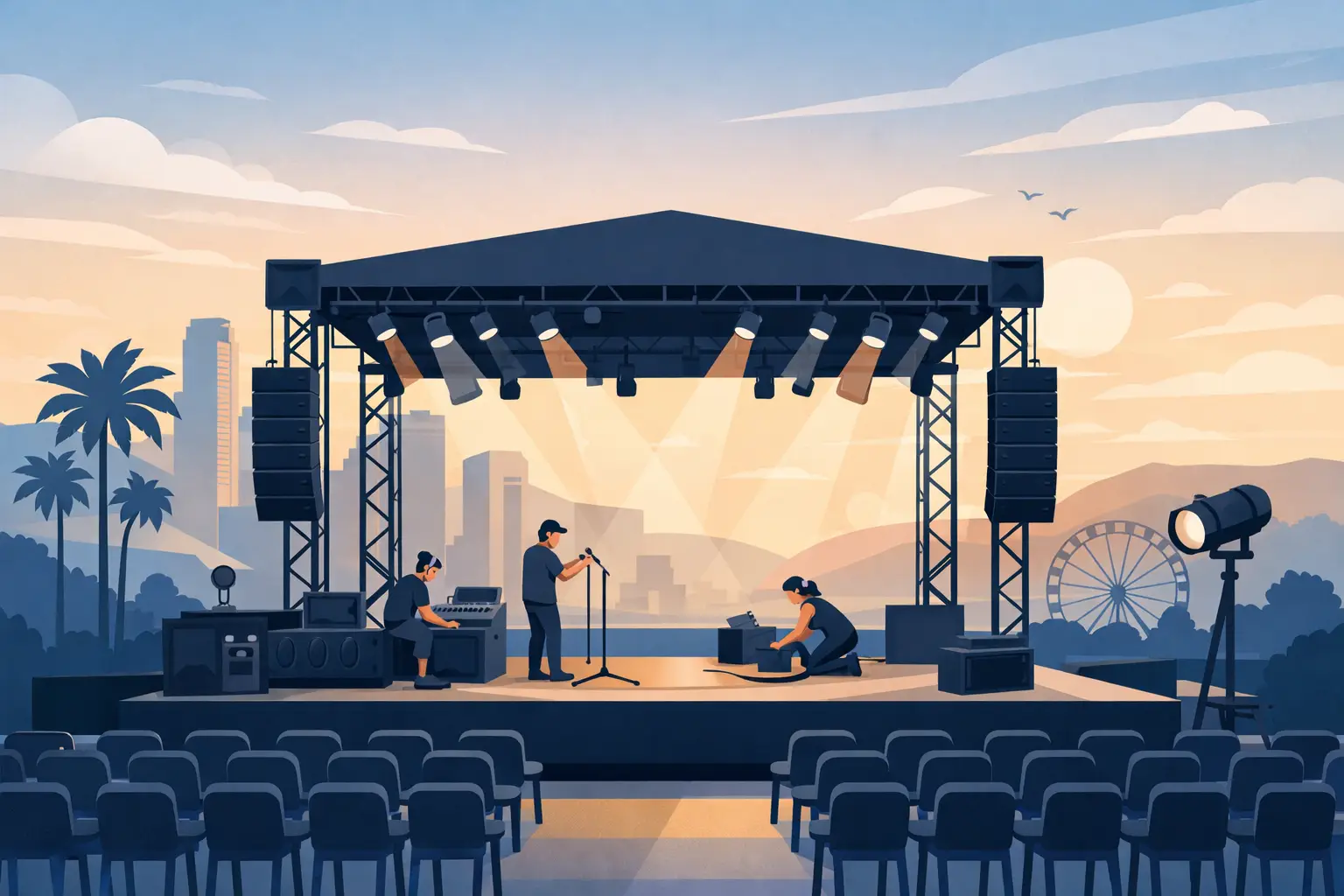
A stage can make an event feel organized, elevated, and ready for a crowd – or it can create delays, sightline issues, and last-minute stress if it is undersized, overbuilt, or poorly managed. That is why los angeles stage rental is rarely just about platform pieces. It is about choosing the right stage for the venue, the audience, the schedule, and the kind of show you need to deliver.
In a market like Los Angeles, expectations are high and timelines are often tight. Corporate planners need clean presentation spaces that support branding and speaker confidence. Festival teams need durable staging that can handle long days, changing run-of-show demands, and larger technical systems. Wedding clients want a polished look without turning the room into a construction zone. The common thread is simple: the stage has to work the first time.
What a Los Angeles stage rental really includes
When people hear stage rental, they often picture a deck, some legs, and a set of stairs. In practice, a professional stage package can involve much more. The right build may include skirting, ADA access solutions, stage roofs or truss support, guardrails, backstage drape, and coordination with lighting, audio, and video systems.
That broader view matters because staging affects nearly every other production element. Screen placement depends on stage height. Speaker coverage can shift based on platform layout. Lighting positions, backstage traffic, and camera angles all improve or suffer depending on how the stage is designed. A reliable production partner looks at the whole room, not just the riser footprint.
For some events, a simple low-profile platform is exactly right. A panel discussion, press conference, or ballroom presentation may only need a clean, stable stage with safe access and enough depth for furniture, monitors, and presenters. Other events call for a larger custom build with scenic treatment, multi-level sections, FOH coordination, and heavier technical support. Neither approach is better on its own. The right answer depends on the event goals.
Choosing the right Los Angeles stage rental for your event
The fastest way to overspend on staging is to rent by appearance alone. The fastest way to create problems is to rent by price alone. The practical middle ground is to match the stage to the event function.
For corporate events, clarity and professionalism usually matter more than spectacle. The stage should frame speakers well, keep sightlines open, and leave enough room for confidence monitors, lecterns, chairs, or branded scenic pieces. If the room has low ceilings, a modest platform height may be the smart move. If the audience is deep, even a small increase in height can make a big difference in visibility.
For concerts and festivals, stage planning gets more technical. Load requirements, performer movement, backline space, cable paths, and weather considerations all come into play. Outdoor events may need elevated staging for audience visibility, but they also demand serious attention to leveling, anchoring, and site access. A parking lot, park, or street closure can look straightforward until you factor in slope, power runs, and truck placement.
For weddings and private events, the best stage often blends in while still doing its job. A band riser, sweetheart table platform, or ceremony stage should feel intentional, not intrusive. Finishes, skirting, and dimensions matter here because guests notice aesthetics as much as function. A slightly oversized stage can dominate the room. A slightly undersized one can make the setup feel cramped and improvised.
Trade shows and branded activations sit somewhere in the middle. They need clean construction, efficient load-in, and a design that supports messaging. In these cases, the stage is often part presentation platform, part visual anchor. It needs to support presenters and products while fitting naturally into booth traffic or general session flow.
Size, height, and layout are where good planning pays off
The most common staging mistake is assuming bigger is safer. Bigger can help, but it can also crowd a venue, increase labor, limit audience seating, and force changes to lighting or projection. The better question is whether the stage supports the show comfortably and safely.
Height is one of the biggest variables. A 12-inch or 16-inch stage can be ideal in ballrooms, banquet halls, and smaller indoor venues where you want presence without making talent feel disconnected from the audience. Taller stages may be necessary outdoors or in large-format event spaces, especially when there are standing crowds or long viewing distances. But higher stages also change stair design, skirting needs, and the visual balance of the room.
Depth matters just as much. A keynote platform has different needs than a five-piece band. A dance performance needs wing space and clean entrances. A panel needs room for chairs, tables, and monitor sightlines. If your event includes multiple uses on the same stage, the layout should be planned around transitions, not just the main moment.
Why staging should never be separated from AV planning
Staging decisions are strongest when they happen alongside audio, lighting, and video planning. If the stage goes in first and AV gets forced around it later, compromises usually show up fast. Screens may sit too high or too low. Lighting positions may become awkward. Speaker placement can create blocked views or uneven coverage.
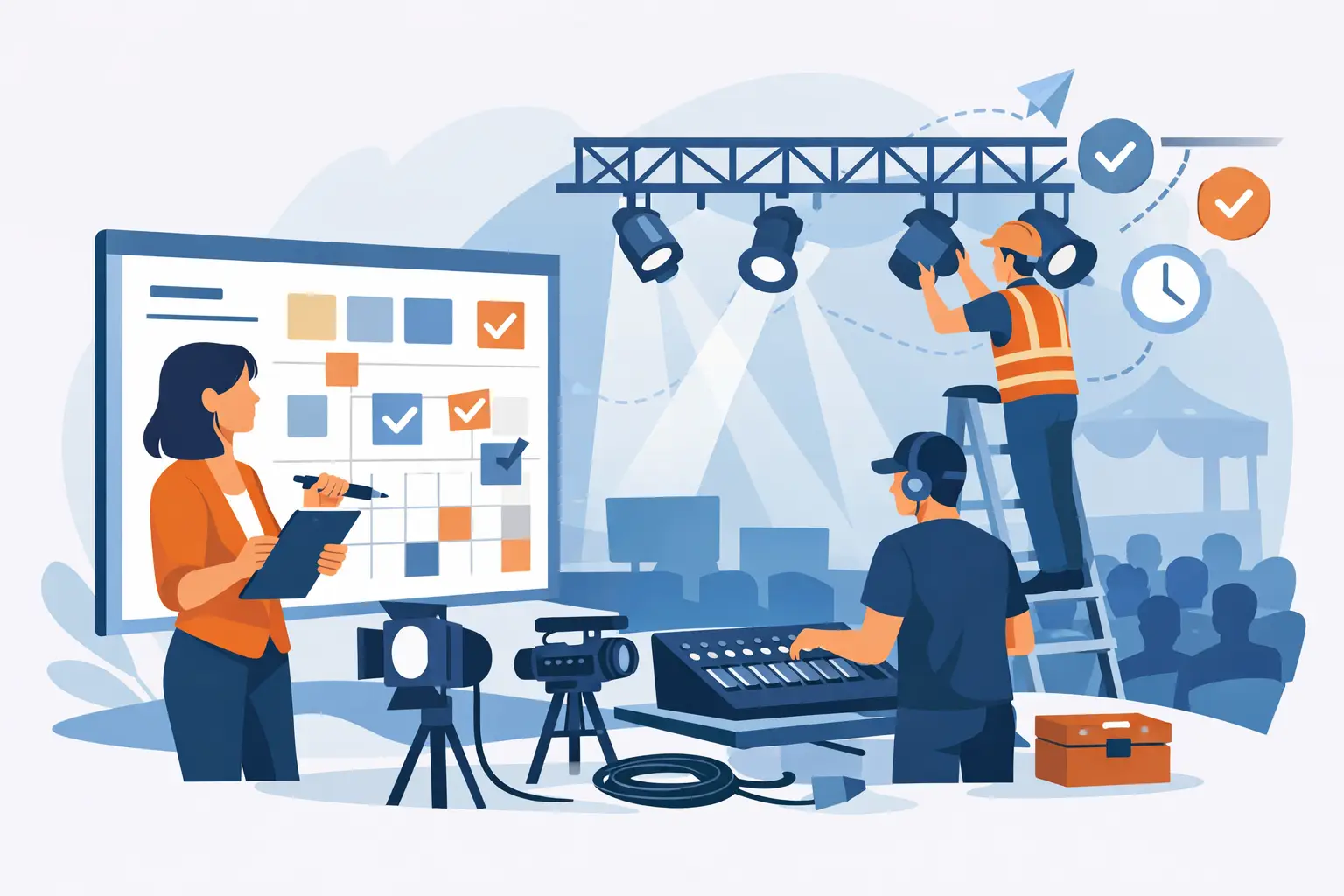
When one team handles both the stage and the technical systems around it, coordination gets easier. Cable paths can be built cleanly. Scenic goals can align with lighting positions. Load-in timing becomes more realistic because departments are not working against each other. That saves time, but more importantly, it reduces risk.
This is where a full-service partner adds real value. Instead of juggling separate vendors for staging, sound, lighting, and video, clients can work from one production plan with one accountable team. For many event organizers, that is the difference between managing an event and constantly reacting to it.
What to look for in a stage rental partner
Experience matters, but responsiveness matters too. Plenty of companies can provide stage decks. Fewer can help you decide what you actually need, flag issues early, and support the event all the way through teardown.
A dependable provider should ask smart questions about venue rules, access points, show flow, power, audience size, and scenic expectations. They should be comfortable handling both simple rentals and more involved production builds. They should also be direct about trade-offs. If a custom look will increase labor or reduce setup flexibility, you should hear that before show day.
Safety should be visible in the planning process, not treated like a footnote. Proper leveling, secure assembly, appropriate stairs and rails, and awareness of load requirements are basic expectations. Outdoor jobs require even more attention because weather, ground conditions, and timing windows add pressure quickly.
Budget discipline is part of professionalism as well. Good production support does not mean pushing the largest package. It means recommending what serves the event best and explaining where spending more helps and where it does not. That approach is especially useful for clients balancing presentation quality with real budget constraints.
When full-service support makes the most sense
Some clients know exactly what stage dimensions they need and simply want rental, delivery, and pickup handled correctly. That can be the right fit for experienced planners or venues with in-house technical direction. But many events benefit from broader support, especially when staging is only one piece of a larger production setup.
If your event includes presenters, live entertainment, projection, LED walls, room lighting, or multiple spaces, it often makes sense to coordinate everything through one team. GeoEvent supports events this way by combining stage rental with AV, staffing, setup, show operation, and teardown. That structure helps clients avoid the gaps that show up when several vendors each own only part of the outcome.
The benefit is not just convenience. It is clearer communication, faster troubleshooting, and a more consistent result from planning through show day. For busy organizers, that kind of support frees up time to focus on the event itself instead of chasing production details.
The goal is a stage that feels effortless
The best stage is rarely the one guests talk about directly. It is the one that makes the speaker easier to see, the band easier to hear, the room easier to understand, and the event feel fully under control. That takes more than equipment. It takes planning, coordination, and a team that treats the stage as part of the full attendee experience.
If you are evaluating los angeles stage rental options, start with the event outcome you need, not just a platform size. A well-matched stage supports the schedule, the venue, the audience, and the technical plan all at once. When those pieces line up, the event feels calm, polished, and ready from the moment the first guest walks in.