What Is AV Equipment Rental?
A ballroom goes quiet for the keynote, the walk-on music misses its cue, and half the room cannot see the presentation because the screen is undersized. That is usually the moment people start asking, what is AV equipment rental, and why does it matter so much to an event? The short answer is simple: it is the process of renting the audio, video, lighting, staging, and related production gear needed to run an event without buying and maintaining that equipment yourself.
For planners, venues, and producers, rental is not just about getting speakers or a projector for the day. It is a way to match the right system to the room, the audience, and the format of the event while keeping costs and logistics under control. In many cases, it also includes delivery, setup, testing, on-site technicians, and teardown.
What is AV equipment rental in practical terms?
AV stands for audio visual. In event production, that covers the equipment used to help people hear, see, and experience what is happening in the room or on stage. When you rent AV equipment, you are temporarily sourcing that gear from a professional provider instead of purchasing it outright.
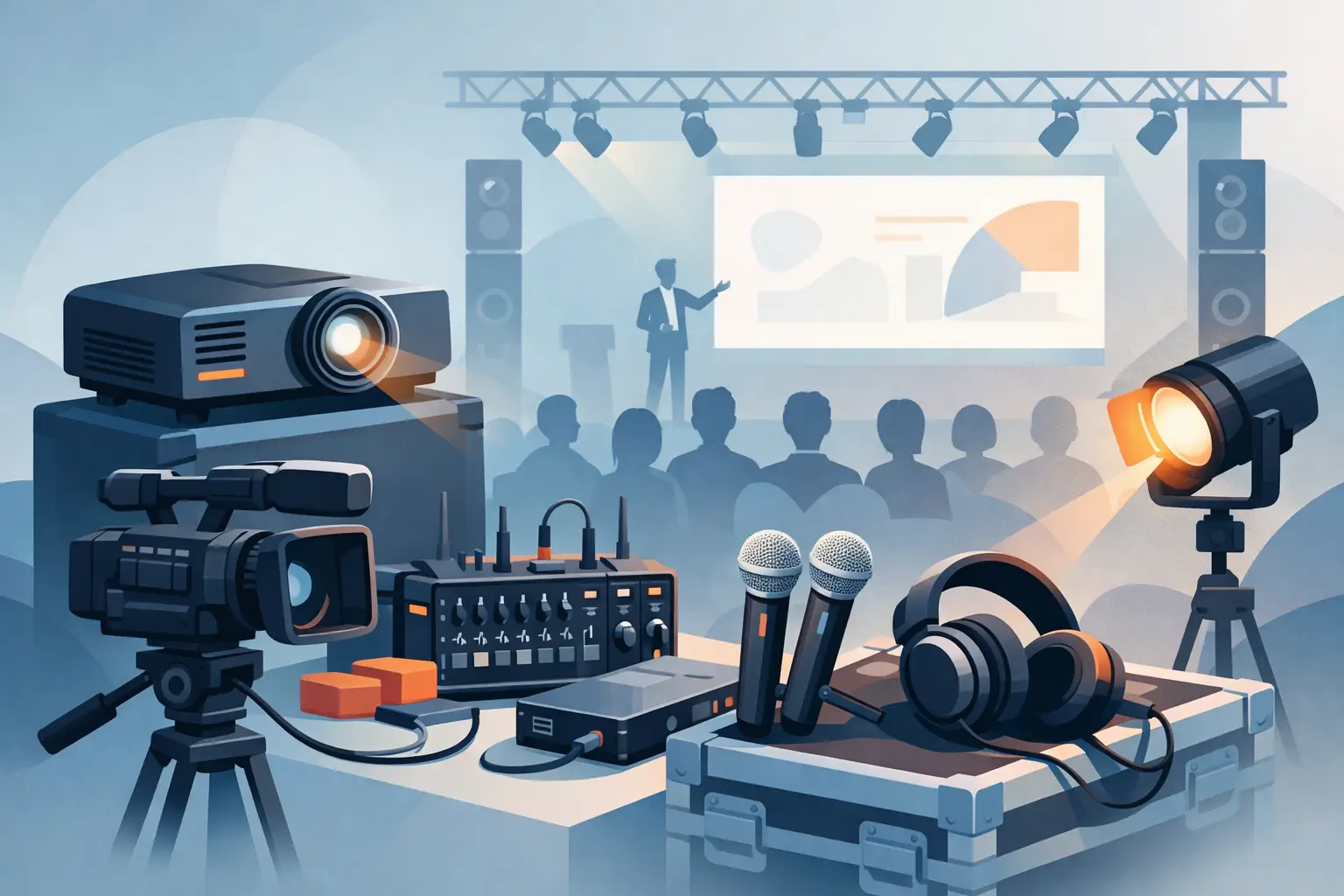
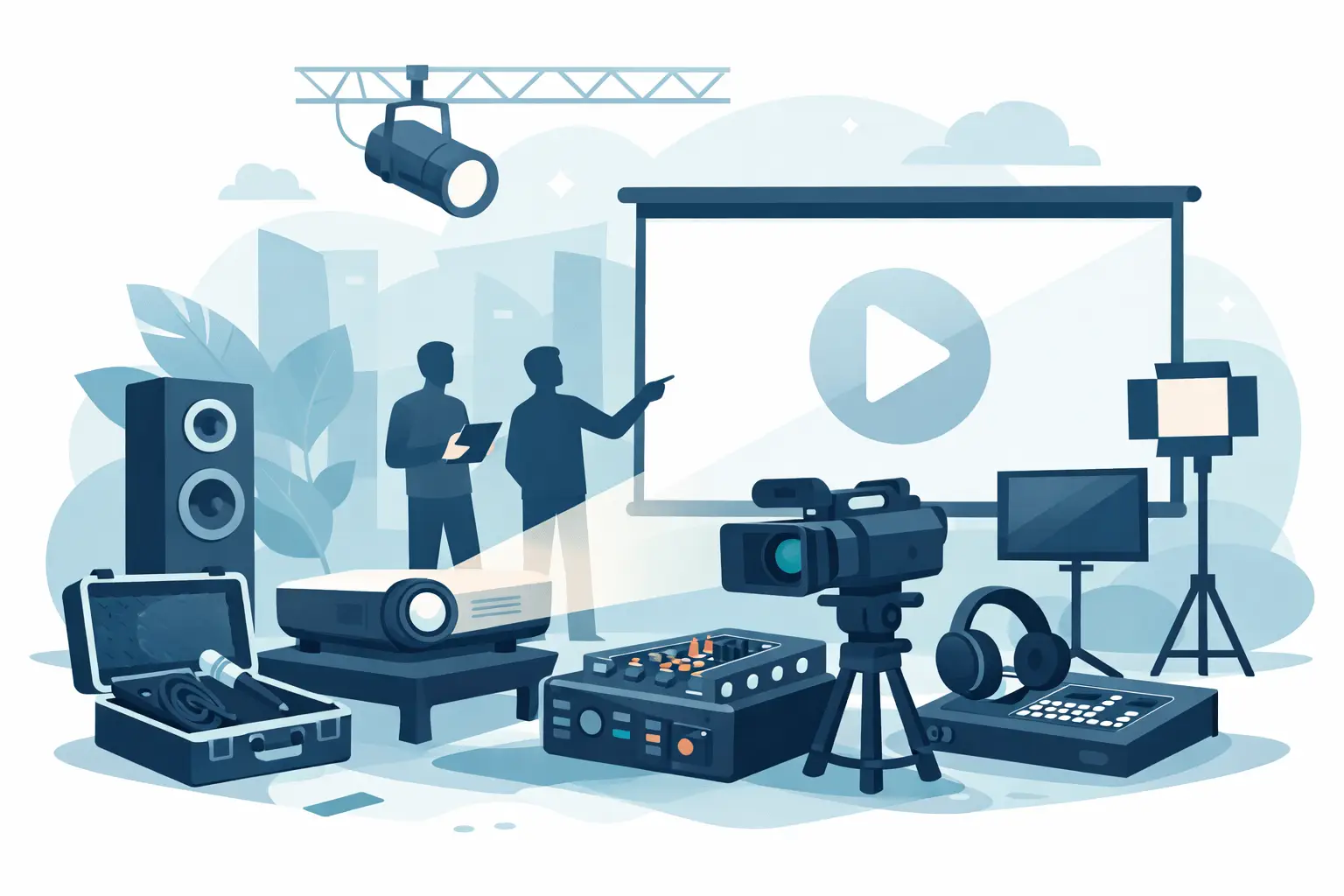
That can be as simple as renting a wireless microphone and a speaker for a small meeting. It can also mean building out a full show package with line array speakers, wireless mics, confidence monitors, stage lighting, LED video walls, projectors, switchers, pipe and drape, staging, playback systems, and a crew to operate everything live.
The real value is fit. A wedding reception, a trade show booth, a corporate conference, and an outdoor festival all need different systems. A professional rental partner helps you avoid over-ordering, under-powering, or choosing equipment that looks fine on paper but does not perform well in the venue.
What equipment is usually included?
The scope depends on the event, but AV equipment rental usually falls into a few core categories.
Audio
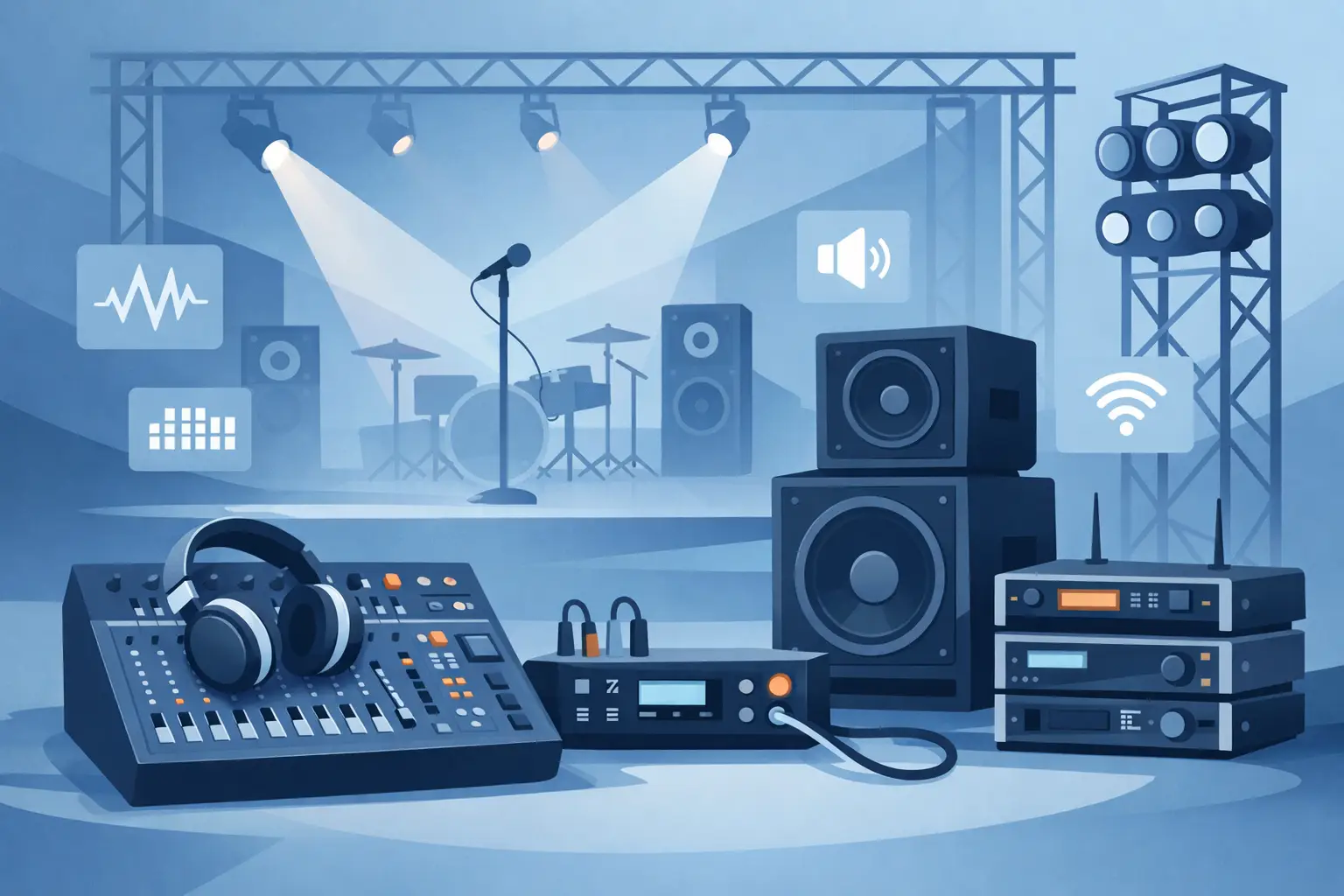
Audio rentals can include speakers, subwoofers, mixers, amplifiers, podium microphones, handheld wireless microphones, headset mics, in-ear monitoring, playback devices, DI boxes, and monitors for performers or presenters. For a conference, the focus is speech clarity and coverage. For a concert or party, the system may need far more output and low-end support.
Video
Video equipment often includes projectors, projection screens, LED video walls, confidence monitors, TVs, video switchers, playback systems, cameras, and signal distribution gear. A general session with PowerPoint slides has very different needs than a product launch with live camera feeds and branded motion graphics.
Lighting
Lighting rentals may cover uplighting, stage wash fixtures, moving lights, spotlights, control consoles, dimming, and atmospheric effects where appropriate. Lighting does two jobs at once. It helps the audience see what matters, and it shapes the mood of the event.
Staging and support gear
Many clients are surprised that staging and rigging often sit close to AV in the planning process. Portable stage decks, truss, pipe and drape, lecterns, risers, power distribution, cables, and show control systems are often rented alongside core audio and video gear because they affect both safety and presentation quality.
Who uses AV equipment rental?
Almost any event with an audience uses some form of AV rental, even if the setup is modest. Corporate planners rent AV for meetings, town halls, conferences, trainings, galas, and trade shows. Wedding clients use it for ceremony sound, reception lighting, microphones for toasts, and video display needs. Festival operators and entertainment professionals rely on rental systems for larger-scale sound, staging, and lighting. Venues also rent supplemental gear when in-house equipment is limited or the event outgrows the room’s standard package.
This is one reason rental works so well across the market. First-time planners get guidance they may not have internally, while experienced producers can scale quickly without owning every piece of gear needed for every type of show.
Why rent instead of buy?
Buying AV equipment makes sense for some organizations, but only when the need is frequent, the technical requirements are stable, and there is staff available to maintain and operate the gear. For everyone else, renting is usually the more practical move.
The first reason is cost control. Professional AV gear is expensive, and the purchase price is only the beginning. Ownership also brings storage, transport, maintenance, repairs, firmware updates, and replacement cycles. If you only need the equipment for occasional events, those ongoing costs rarely make financial sense.
The second reason is flexibility. A breakout room for 50 people and a general session for 1,000 require very different systems. Renting lets you scale up or down as needed rather than forcing every event into the limits of owned gear.
The third reason is expertise. Good AV is not just equipment. It is system design, room coverage, cable management, power planning, cueing, troubleshooting, and live execution. Renting from a qualified provider often means access to technicians who know how to make the system work under real event conditions.
What services may come with the rental?
This is where the gap between “gear only” and “production support” matters. Some clients simply want equipment pickup and return. Others need a partner who handles the technical side from planning through strike.
A rental provider may offer pre-event consultation, equipment recommendations, delivery, installation, testing, live show operation, standby technical support, and teardown. For more complex events, that support can extend to stage design, show calling, run-of-show planning, venue coordination, and staffing.
There is no single right model. If your team has in-house technical experience, standalone rental may be enough. If you are managing multiple vendors, a tight schedule, or a high-stakes audience experience, full-service support usually reduces risk.
How pricing usually works
AV rental pricing depends on more than the equipment list. The type of gear matters, but so do labor, transportation, setup time, venue access, show duration, power needs, and the complexity of the event.
A simple speaker-and-mic package for a meeting is obviously different from a multi-day conference with projection, breakout rooms, stage lighting, and technicians on site. Outdoor events can add another layer because weather protection, power distribution, and coverage challenges often require more infrastructure.
The cheapest quote is not always the best value. Sometimes a lower number means key labor, backup equipment, or proper system design has been left out. A better way to compare proposals is to ask what is included, who is responsible on site, how support is handled if something changes, and whether the recommended package is actually designed for your attendee count and venue conditions.
What to look for in an AV rental partner
Reliability matters more than flashy terminology. You want a provider that asks clear questions about your event goals, venue, audience size, run of show, and budget. That usually signals experience. It also helps prevent common mistakes like ordering a projector that is too dim for the room or a sound system that cannot evenly cover the audience.
Look for a team that can explain trade-offs in plain language. For example, a projector can be the right choice in a dark ballroom, while an LED wall may be better in a bright environment. Wireless microphones offer flexibility, but the number of frequencies and the room conditions still need to be managed properly. A dependable provider will walk you through those choices instead of pushing a generic package.
It also helps to work with a company that can support both equipment rental and broader production services when needed. As events grow, having one accountable partner for sound, lighting, staging, visuals, and crew can simplify communication and reduce coordination issues.
Common mistakes to avoid
The biggest mistake is treating AV as an afterthought. Event planners often focus first on venue, catering, and guest management, then try to solve production needs late in the process. By then, room layouts, load-in timing, and power availability may already be working against the event.
Another common problem is underestimating labor. Even a small setup may need proper installation, testing, and someone who can respond quickly if a microphone drops out or a presentation laptop stops talking to the switcher.
Finally, avoid ordering based only on a past event. The same package does not always work in a different room or for a different audience. Ceiling height, ambient light, acoustics, stage size, and schedule all affect what should be rented.
When AV rental makes the biggest difference
AV equipment rental has the most impact when the event experience depends on timing, clarity, and presentation quality. That could be a CEO keynote, a wedding ceremony, a touring performance, or a branded launch where visuals and sound need to land exactly right. In those moments, good production feels invisible because everything works. Poor production becomes the thing people remember.
For that reason, AV rental is best thought of as event infrastructure, not an accessory. The gear matters, but the planning behind it matters just as much. If you are weighing options for an upcoming event, the right question is not just what equipment do I need. It is what level of support will help this event run with confidence from the first cue to the final teardown.