AV Equipment Rental for Events That Works
A packed ballroom can forgive a lot. It will not forgive bad sound, a dim screen, or a microphone that cuts out right as your keynote starts. That is why av equipment rental for events is not just a box-checking exercise. It is one of the biggest factors in whether your event feels polished, stressful, or completely off track.
For planners, producers, venues, and first-time clients alike, the challenge is rarely just finding gear. It is knowing what you actually need, what can go wrong, and how to get the right level of support without overspending. The best rental approach balances performance, logistics, and budget from the start.
What av equipment rental for events really includes
Many people hear AV rental and think speakers and a projector. In practice, event production usually involves several moving parts that need to work together.
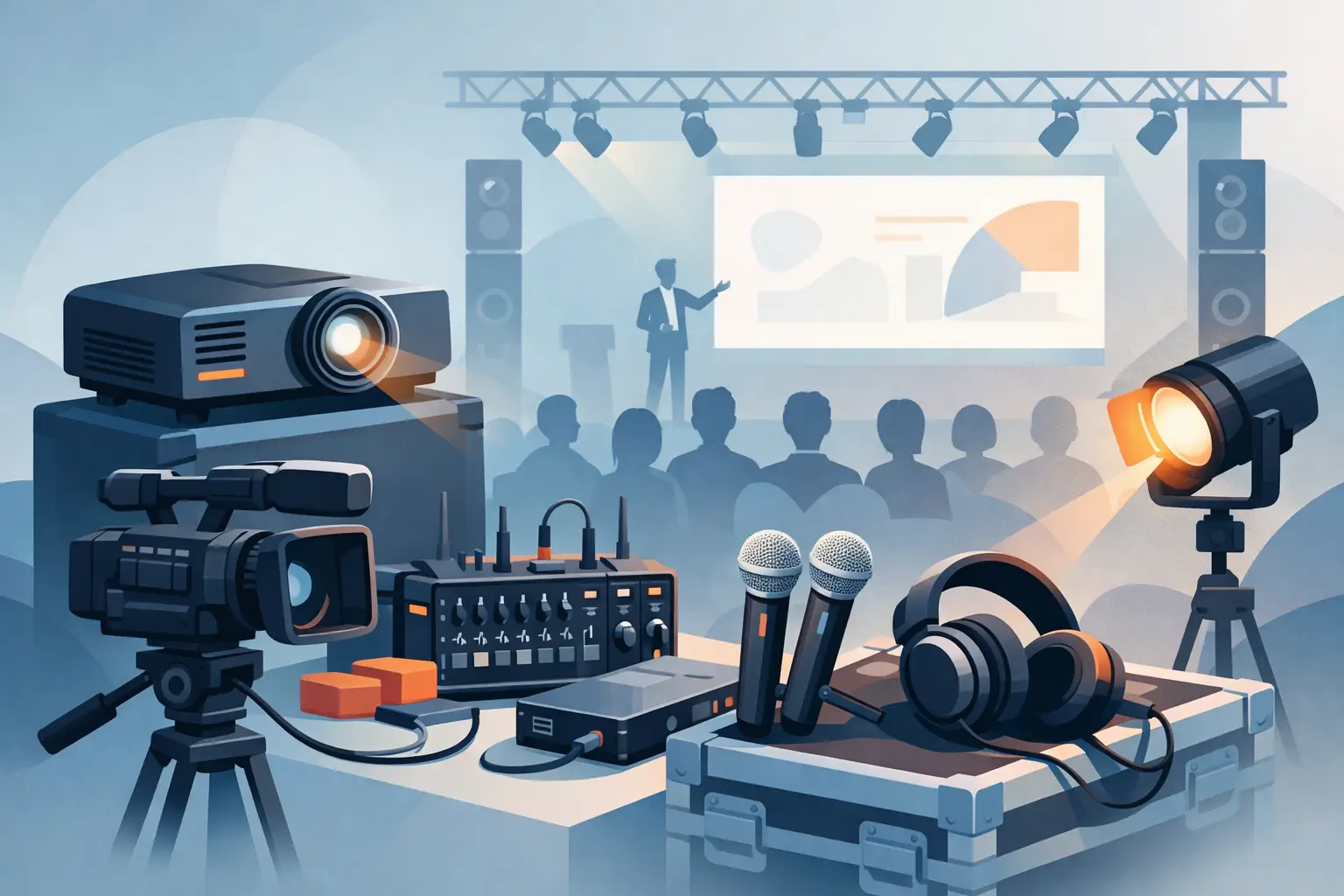
Audio is the first priority for most events because if guests cannot hear clearly, the rest of the experience suffers fast. That can mean wireless microphones for a panel, a distributed speaker system for a conference room, DJ and performance audio for a wedding, or full concert-grade reinforcement for a festival. The right system depends on room size, audience count, ceiling height, background noise, and the type of content on stage.
Video is just as important when your message depends on visibility. Depending on the event, that could mean projector rental and screens, confidence monitors, live camera feeds, switchers, presentation support, or LED video wall rental for brighter environments. A general session in a dim ballroom has very different needs than a trade show booth or outdoor event in daylight.
Lighting often gets treated as optional until clients see the difference it makes. Basic stage wash, uplighting, moving lights, and pin spotting can change how a room looks on camera and in person. Good lighting does more than add style. It improves visibility, supports branding, and helps direct attention where it belongs.
Then there is staging and structure. A stage rental, podium, risers, pipe and drape, truss, and power distribution may all be part of the same scope. If any one of those elements is missed, the entire production chain becomes harder to execute.
Why the lowest quote is not always the lowest cost
Price matters. Every planner has a budget, and responsible production partners should respect it. But AV is one of those categories where a cheap quote can become expensive very quickly.
Sometimes a low quote excludes labor, delivery, setup, strike, onsite techs, patching, or cable management. Sometimes it includes equipment that is technically available but not appropriate for the room or the audience size. On paper, two proposals may look similar. In the venue, they can perform very differently.
This is where experience matters. A dependable rental partner should be willing to explain why one speaker package is enough for a breakout room but not for a crowded reception, or why a projector that works indoors may fail in a bright venue. You want clear recommendations, not inflated specs or stripped-down packages that leave you exposed.
The right approach is budget-conscious, not budget-blind. There is usually a smart middle ground between overbuilding and underpreparing.
How to scope the right AV package
The best event setups start with the use case, not the equipment list. Before anyone starts naming models or quantities, it helps to answer a few practical questions.
What is the event type? A corporate conference, wedding, product launch, trade show activation, and live music event all require different systems. What is the audience size, and how is the room laid out? A hundred people seated theater-style is very different from a hundred people spread across an open networking space.
You also need to know what happens on stage. Will there be live music, video playback, remote presenters, audience Q and A, or multiple presenters sharing content? Are there scenic elements, branding requirements, or a need for recording and livestream support? The more clearly those details are mapped out, the more accurately the system can be designed.
Venue details are just as important. Ceiling height, load-in access, power availability, ambient light, union rules, noise restrictions, and setup windows all affect the plan. A strong AV partner asks these questions early because they know the room can make or break the equipment choice.
When standalone rental makes sense and when full support is better
Not every event needs a full production crew. If you have an experienced in-house team or a straightforward setup, standalone rental can be the right move. That might include a small PA for a private event, a basic projector package for a meeting, or stage lighting added to an existing venue system.
But there is a point where equipment alone is not enough. If your event includes multiple presenters, live cues, custom staging, show calling, or high guest expectations, onsite technical support becomes far more valuable. The same is true when the schedule is tight or the room has limitations that need active problem-solving.
Full-service support usually covers planning, equipment selection, delivery, installation, testing, live operation, troubleshooting, and teardown. It gives clients one accountable team rather than a stack of separate vendors trying to coordinate in real time. For many events, that is where the real value shows up – fewer handoff issues, faster decision-making, and less risk during the moments that matter.
Common mistakes in av equipment rental for events
The most common mistake is underestimating coverage. A room may look small during a site visit and feel much larger once it is filled with people, décor, and ambient noise. Sound absorption changes. Sightlines disappear. A single screen no longer works for the audience in the back.
Another issue is assuming venue AV is automatically enough. Some venues have excellent infrastructure. Others have limited in-house systems that are fine for simple meetings but not for a high-impact production. It depends on the room, the content, and the standard your event needs to meet.
Timing is another pressure point. Last-minute rentals are possible, but they reduce your options and increase the chance of compromises. Popular event dates, especially around conferences, weddings, and festival weekends, can tighten inventory and labor availability.
Clients also run into trouble when they rent gear without thinking through operation. A wireless mic is only useful if someone is managing frequencies, battery changes, handoffs, and cue timing. An LED wall only helps if content is formatted correctly and the playback workflow has been tested. Equipment is one part of the job. Execution is the rest.
What a dependable rental partner should help you figure out
A good AV company does not just send a quote. They help you define scope, pressure-test assumptions, and avoid preventable issues before load-in day.
That includes translating event goals into technical decisions. If you are hosting a general session, they should tell you how many microphones are realistic, whether delay speakers are needed, and what display format fits the room. If you are planning a wedding or private event, they should be able to guide you on ceremony audio, reception lighting, and transitions between program elements.
They should also be honest about trade-offs. If budget needs to come down, they should show you where to trim without damaging the audience experience. If a certain visual idea will require more power, rigging, or labor than expected, that should be explained clearly upfront.
For clients working across Los Angeles, San Diego, San Francisco, or Las Vegas, experience with local venues and event conditions can make planning faster and cleaner. Every market has its own logistical quirks, and that local operational knowledge often saves time during setup and strike.
Choosing a partner, not just a vendor
The difference between a smooth show and a stressful one often comes down to ownership. When your AV provider treats the job as a transaction, you usually feel it in communication gaps, vague planning, or avoidable day-of problems. When they treat it as a shared responsibility, the process becomes much easier to manage.
That is especially true for clients juggling multiple priorities at once. Event planners and producers should not have to chase five different companies for staging, audio, video, and labor updates. A single production partner with rental inventory, technical staff, and operational oversight can simplify the entire process.
That is the model GeoEvent is built around: practical recommendations, dependable gear, and hands-on support that scales from simple rentals to full event execution. For some clients, that means a straightforward equipment package. For others, it means planning, setup, show operation, and teardown handled by one team.
If you are planning an event and weighing your options, start by looking past the equipment list. Ask who is responsible for making the room sound right, look right, and run right when guests are in their seats. That answer usually tells you more than the quote ever will.