What a Full Service Event Production Company Does
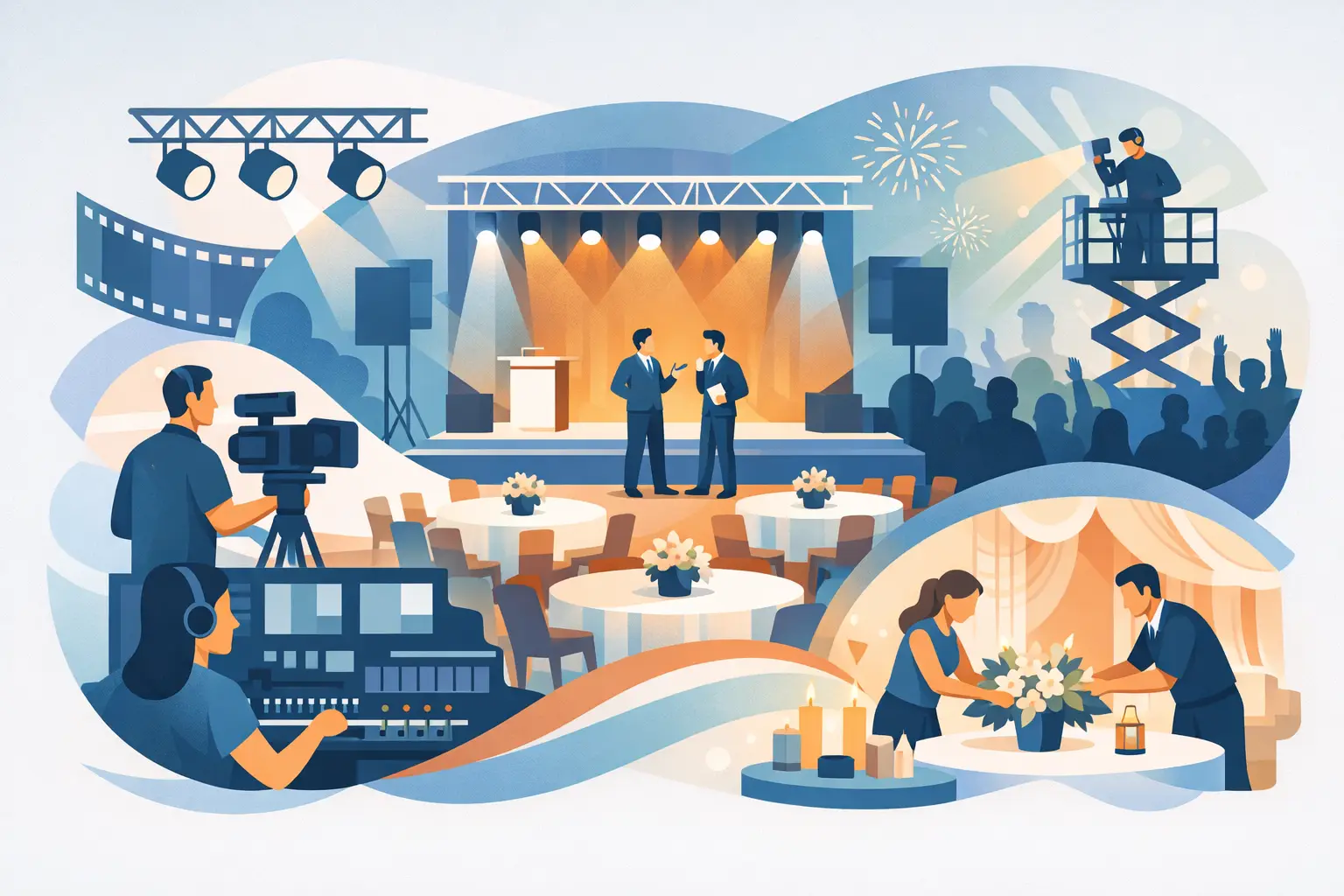
When show call is 7:00 a.m., load-in starts before most guests are awake, and three different vendors are texting three different answers, event planning stops feeling strategic and starts feeling fragile. That is exactly where a full service event production company earns its place. Instead of piecing together audio, lighting, staging, video, labor, and timing from separate providers, you get one team responsible for how the event looks, sounds, runs, and recovers when plans change.
For some clients, that means handing off the entire production. For others, it means filling the gaps around an internal team that already has a venue, creative concept, or run of show in place. The point is not just convenience. It is accountability. When one production partner manages the technical systems and the people behind them, there is less room for confusion, finger-pointing, and last-minute compromises.
What a full service event production company actually handles
A lot of companies use the phrase loosely. In practice, a true full service event production company does much more than drop off equipment. It plans around the event goals, translates those goals into technical requirements, coordinates logistics, staffs the show, and stays involved through teardown.
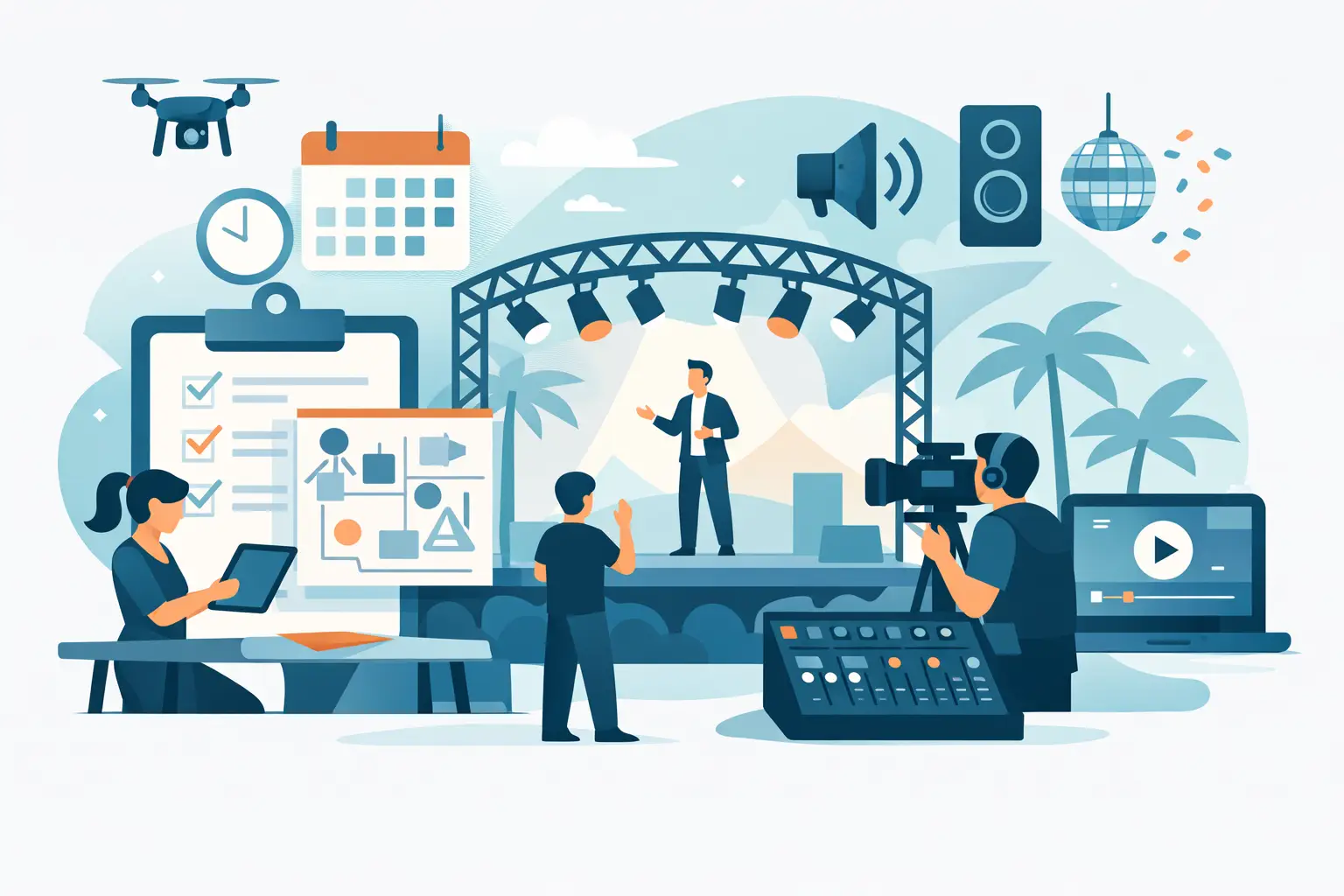
That can include audio systems for speeches or live music, lighting design for stage visibility and atmosphere, stage platforms and scenic elements, projection or LED video walls, power planning, technical direction, show calling, and on-site crew. It often also includes venue coordination, load-in scheduling, equipment transportation, cable management, testing, live operation, and strike.
The difference matters. Renting speakers and projectors is useful if you already know exactly what you need and have a crew to deploy it. Full-service production is different. It means someone is thinking through the room layout, the presenter experience, audience sightlines, cue timing, backup plans, and how every moving part connects.
Why clients choose a full service event production company
Most event issues are not caused by one major failure. They come from small gaps between vendors. The stage company assumes the AV team is providing risers. The lighting team does not get the final floor plan. The venue changes load-in access the night before. Nobody owns the whole picture, so everyone works hard and the event still feels harder than it should.
A full service event production company reduces those gaps by centralizing communication and execution. One point of contact can make decisions faster, flag technical conflicts earlier, and keep the event aligned with the budget. That is especially valuable for conferences, weddings, festivals, trade shows, and branded events where timing, guest experience, and presentation quality all matter at once.
There is also a cost conversation here. Hiring one production partner is not always the cheapest line-item option on paper. If you are comparing quotes only by equipment totals, a pieced-together approach can sometimes look lower. But events are rarely won or lost on rental numbers alone. Labor efficiency, truck logistics, setup time, troubleshooting, and avoiding duplicate charges often change the real cost. So does the value of having one accountable team if something shifts mid-show.
The planning stage is where the value starts
Good production begins long before equipment arrives. A capable team asks practical questions early. What is the purpose of the event? How many guests are expected? Is the priority clarity for speakers, impact for entertainment, brand presence, or all three? What are the venue restrictions? What does the load-in path look like? Will the room need pipe and drape, confidence monitors, backstage communication, or a generator?
Those questions shape the technical plan. A general session for 500 attendees does not need the same audio approach as an outdoor festival. A wedding with live music and speeches has different cueing needs than a trade show booth or a corporate awards dinner. Full-service support means the production plan is built around the event format instead of forcing the event to fit a generic package.
This is also where experienced guidance protects first-time buyers. Not every client knows whether they need front fill speakers, stage wash, switchers, or labor calls broken into setup and show ops. They should not have to. A dependable production partner translates technical decisions into clear recommendations, so clients can make smart choices without becoming AV specialists overnight.
Equipment matters, but coordination matters more
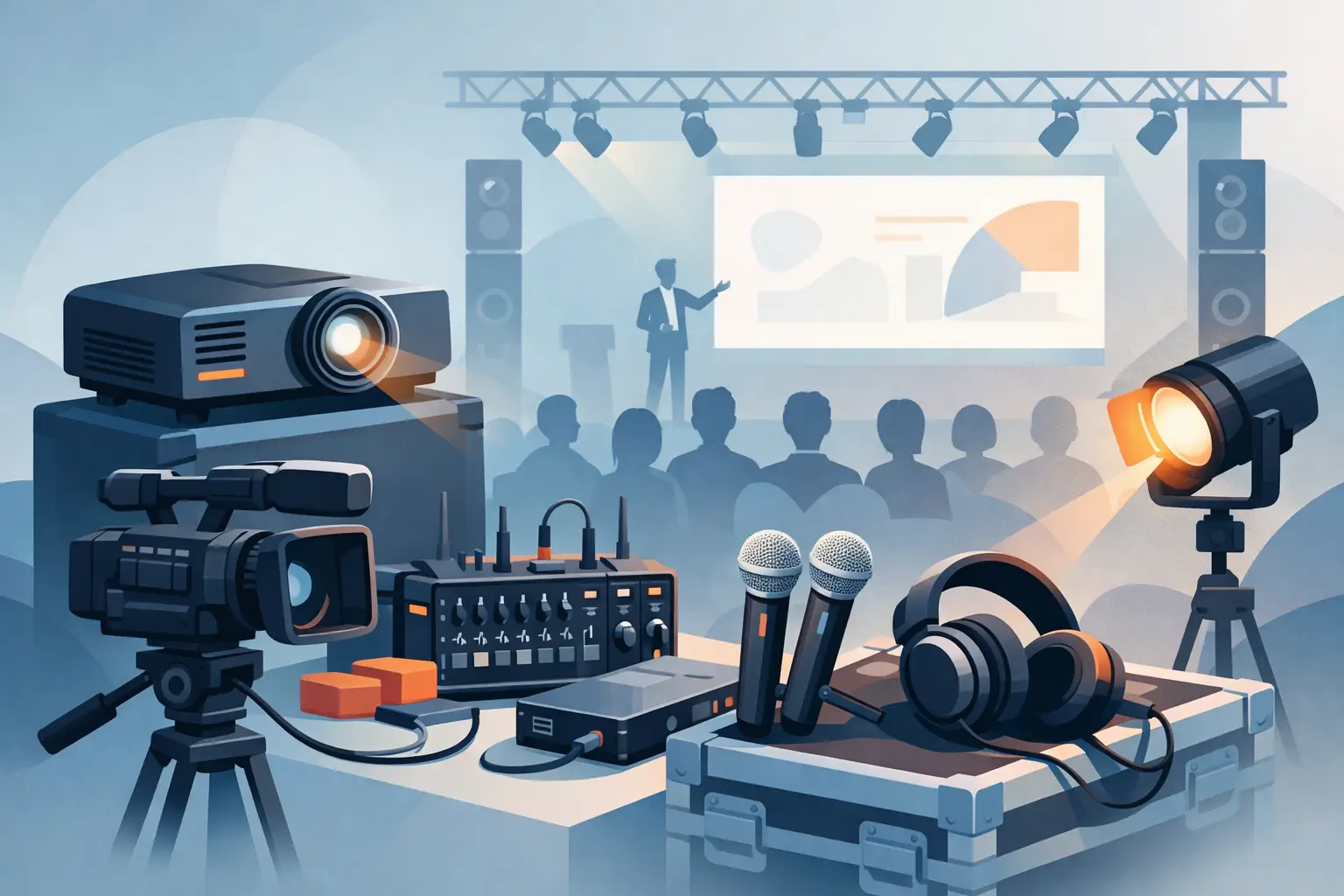
Clients often begin with a shopping list: microphones, moving lights, a stage, a projector, maybe an LED wall. Those pieces are important, but gear alone does not create a successful event. The real work is matching the right equipment to the room, audience size, content type, and schedule.
For example, projection can be a strong fit for indoor meetings with controlled lighting, while LED video walls may perform better in brighter environments or for larger audiences that need punch and visibility. A small panel discussion may need clean speech reinforcement and discreet lighting, while a concert or festival needs more output, more monitoring, and a stronger backstage workflow. Bigger is not always better. Better matched is better.
That is why a full-service approach tends to produce stronger results than assembling gear line by line. The team is not simply fulfilling a rental order. It is building a system that works together under show conditions.
Staffing and show operation are part of the service
One of the biggest misunderstandings in event planning is assuming the setup is the hard part and the show will take care of itself. In reality, live operation is where expertise shows. Someone has to manage audio levels when a panelist drifts off mic. Someone has to fire the right video cue, adjust lighting looks, coordinate transitions, and solve issues quietly before guests notice them.
A full service event production company provides that operational layer. Depending on the event, that may mean audio engineers, lighting technicians, video operators, stage managers, or general crew. It may also mean a production lead who keeps the day on track and communicates with the client, venue, and other vendors.
This support is especially valuable when the schedule is tight or the program has a lot of moving pieces. Walk-up music, keynote entrances, sponsor videos, first dances, live bands, award winners, and scene changes all need timing. A polished event rarely happens by accident.
Full service does not mean one-size-fits-all
There is a common concern that full-service production means paying for more than you need. Sometimes that is a fair concern. Not every event requires full takeover. Some clients have an experienced internal producer and only need audio rental, stage rental, or a crew to execute a plan already in place.
A good production partner should be flexible enough to support both models. If you need end-to-end management, they should handle it. If you need a targeted package built around lighting, projection, staging, or staffing, they should be able to scale accordingly. Full service should describe capability, not pressure.
That flexibility matters across the West Coast, where venues, labor conditions, outdoor environments, and event formats can vary widely from one market to another. The right partner adjusts to the event rather than forcing the event into a fixed package.
How to tell if a company is truly full service
The easiest test is to ask what happens after the quote is approved. Do they help with planning, venue coordination, scheduling, and crew assignments? Will they be on site for setup, operation, and teardown? Can they support different event types, from conferences and weddings to festivals and private events? Do they explain trade-offs clearly when budget and production goals are in tension?
You should also pay attention to how they communicate. Strong production companies do not hide behind jargon. They ask smart questions, identify risks early, and explain recommendations in plain language. They are confident, but not careless. They know where budget can be trimmed and where cutting corners creates real exposure.
For clients who want one accountable partner for gear, labor, logistics, and live execution, that level of support is what turns a vendor into a production team. That is also the standard GeoEvent is built around, whether a client needs a single AV category or a complete production plan managed from pre-production through strike.
The best events feel effortless to the audience because someone worked very hard to remove the friction behind the scenes. If you are weighing whether to coordinate multiple vendors or bring in one production partner, start with the real question: who do you want responsible when timing shifts, cues stack up, and the room is full? The right answer usually makes the next step clear.