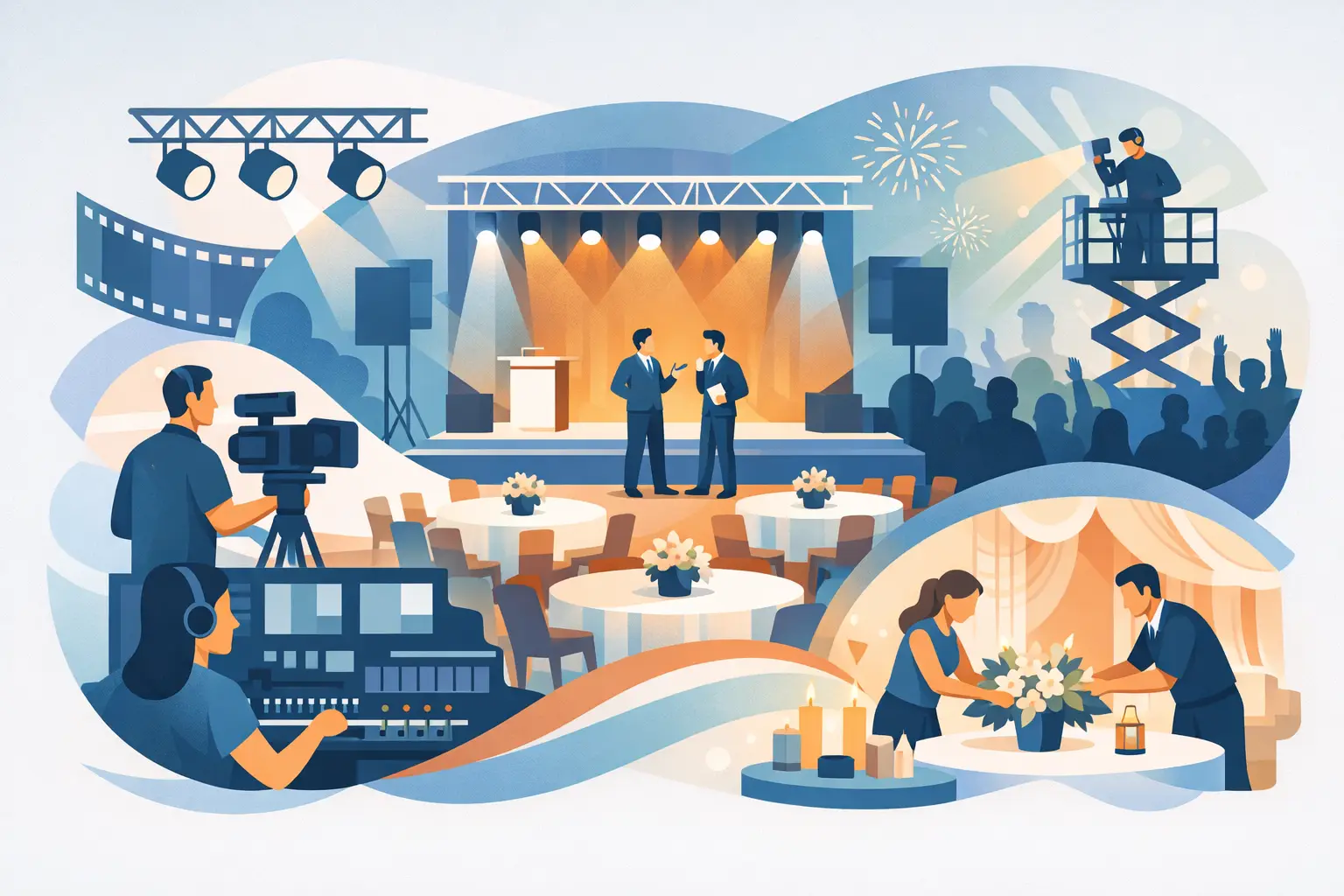
What Is Event Production?
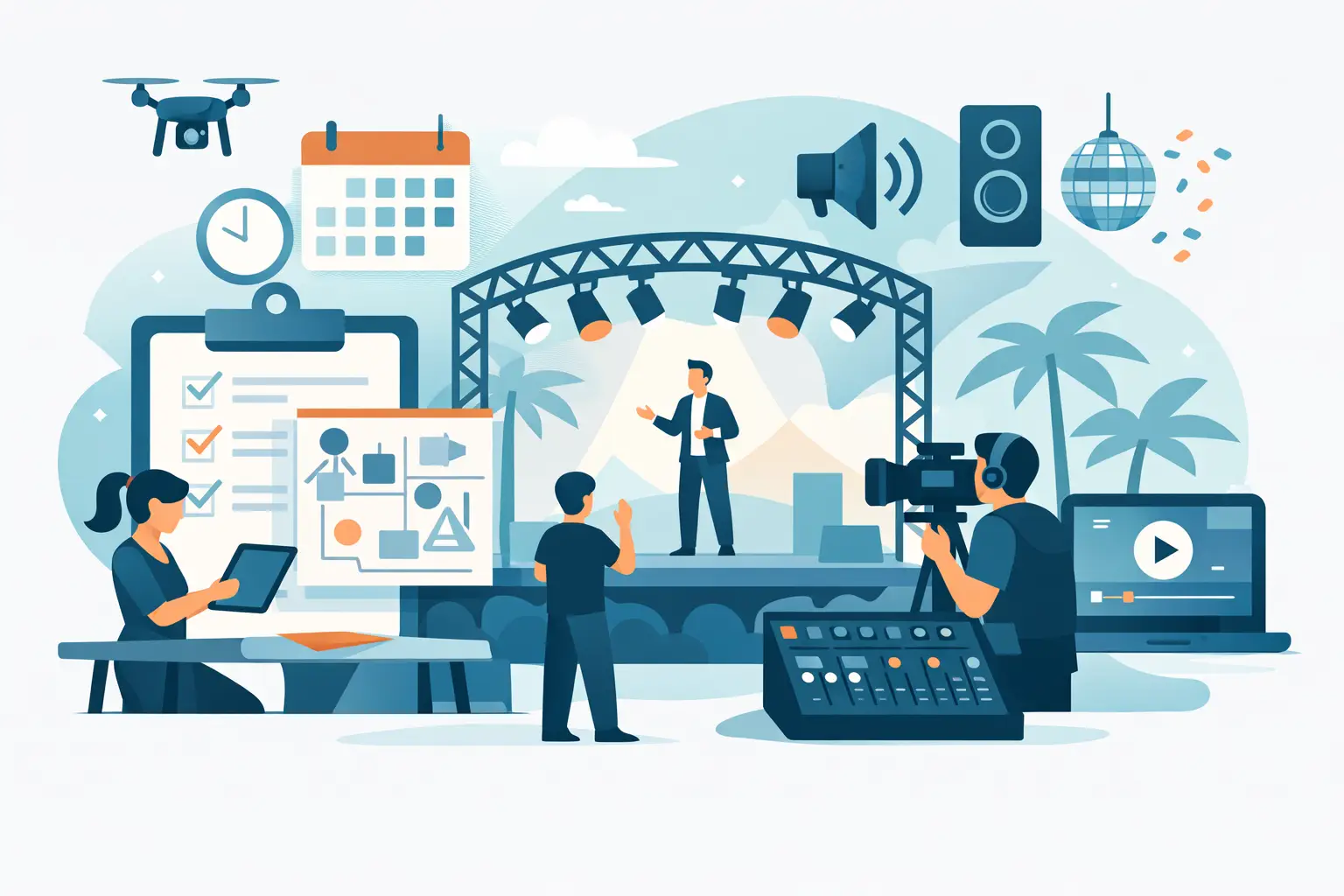
A packed ballroom with bad audio can make a strong keynote feel flat. A wedding with perfect timing, clean lighting, and clear sound feels effortless to guests, even though a lot is happening behind the scenes. That gap is the easiest way to explain what is event production: it is the planning, coordination, technical setup, and live execution that turn an event concept into a real experience people can see, hear, and move through comfortably.
Event production is not just equipment delivery, and it is not the same as general event planning. It covers the technical and operational side of an event – audio, lighting, staging, video, power, crew, show flow, setup, strike, and on-site management. In practical terms, event production is the work that makes the room function, supports the schedule, and keeps the audience focused on the event rather than the problems.
What Is Event Production in Practical Terms?
If you are asking what is event production because you are planning an event, the simplest answer is this: it is the system that supports every live moment. That includes what attendees hear from the stage, what presenters see on screens, how performers are lit, how a ceremony starts on cue, and how everything gets built and removed safely.
For a conference, production might include microphones, speakers, projection, LED walls, confidence monitors, stage lighting, scenic elements, and a crew to manage cues throughout the day. For a festival, it can expand to include large-format staging, power distribution, multiple performance areas, backstage coordination, and longer setup windows. For a wedding, production often means making sure the ceremony audio is clear, the reception lighting feels intentional, and the entertainment transitions smoothly from one part of the evening to the next.
The scope changes by event type, but the goal stays the same: deliver a polished experience with dependable technical support.
Event Production vs. Event Planning
This is where many clients get tripped up. Event planning usually focuses on the broader event strategy and guest-facing details. That may include venue selection, catering, invitations, décor, registration, and timeline development. Event production focuses on how the event is physically and technically executed.
There is overlap, and on smaller events one team may help with both. But they are not interchangeable roles. A planner might build the schedule for a product launch, while the production team handles the stage layout, microphones, playback, lighting looks, screen content support, and show calling. When both sides work well together, the event feels organized from every angle.
That distinction matters because some events only need AV rentals and a few technicians, while others need full production management from early planning through teardown. The right level of support depends on complexity, budget, venue rules, and how much internal bandwidth you actually have.
What Event Production Usually Includes
Most event production work starts before any equipment arrives. It begins with understanding the event goals, venue conditions, audience size, and program format. A corporate meeting has different needs than a concert, and a rooftop reception has different power and access constraints than a convention center ballroom.
From there, production typically includes system design, equipment selection, logistics, staffing, setup, live operation, and strike. Audio might involve wireless microphones, speaker coverage, playback systems, and mixing. Lighting may include stage wash, uplighting, intelligent fixtures, or atmospheric looks for entertainment segments. Video can range from a single projector and screen to a large LED wall with multiple content sources.
Staging is another major piece. That might mean a simple riser for speakers, a performance stage for a band, runway elements for a fashion show, or custom scenic design for a branded event. Crew support is just as important as gear. Equipment does not run itself, and even a well-designed system can fail in practice without experienced technicians monitoring levels, managing transitions, and solving problems in real time.
Why Event Production Matters More Than People Realize
Strong production protects the guest experience, but it also protects the event budget. Technical mistakes are expensive when they cause delays, rework, or audience disengagement. A weak sound system can derail a panel discussion. Inadequate lighting can make video capture unusable. Poor stage layout can create awkward transitions and dead time.
Good production reduces those risks by making decisions early. It considers sightlines, room acoustics, load-in timing, cable paths, power availability, and contingency plans. Those details may not be glamorous, but they are often the difference between a smooth show and a stressful one.
This is also why relying on multiple disconnected vendors can become difficult. One company handles staging, another brings speakers, another provides screens, and no one fully owns the complete execution. That setup can work on simple events, but as complexity grows, gaps appear fast. A single accountable production partner often makes communication cleaner and troubleshooting faster.
The Main Stages of Event Production
The production process usually starts with discovery. This is where the team learns what the event needs to accomplish, what the venue allows, and where the pressure points are likely to be. Budget conversations matter here too. Not every event needs a full concert-style lighting package, and not every conference needs a large LED display. The job is to match production value to the goals of the event.
Next comes planning and design. This may include floor plans, equipment lists, run-of-show development, staffing plans, and venue coordination. At this stage, an experienced team is not just saying yes to requests. They are identifying trade-offs. For example, a lower ceiling height may limit screen placement. A tight load-in window may require more crew. An outdoor event may need weather protection and additional power planning.
Then comes setup and testing. Gear is delivered, built, wired, tuned, and checked before guests arrive. This is where production discipline shows. Testing microphones, verifying content playback, labeling signal paths, and rehearsing cue timing all reduce pressure during showtime.
Live operation is where all that preparation pays off. Technicians mix sound, trigger cues, adjust lighting, support presenters, and respond to changes as they happen. No matter how organized the plan is, live events move. Speakers go long. Videos fail to load. Guests shift seating patterns. Production crews keep those moments from becoming audience problems.
Finally, teardown closes the loop. Equipment is removed, the venue is cleared, and the event wraps out safely and efficiently.
Who Needs Event Production Services?
Almost any live event with an audience benefits from some level of production support. The question is not whether production is needed, but how much. A small private event may only need rented speakers, a microphone, and basic lighting. A trade show booth may need display monitors, branded scenic elements, and setup support. A multi-day conference may require full technical management across several rooms.
Corporate planners often need production help because they are balancing messaging, stakeholders, and tight schedules. Wedding clients usually need guidance translating a vision into realistic audio, lighting, and entertainment logistics. Festival operators and venues need scalable systems, experienced crew, and a team that can work under pressure.
First-time buyers often assume production is only for large events. It is not. Smaller events can be just as vulnerable to technical issues, especially when the venue has limitations or the timeline is tight. The right support level is about complexity, not ego.
Choosing the Right Event Production Partner
Not every provider offers the same kind of support. Some only rent equipment. Others provide full-service production, including planning, staging, staffing, operation, and breakdown. Neither model is automatically better. It depends on whether you have the internal experience to manage the moving parts yourself.
When evaluating a production partner, look beyond inventory. Ask how they approach timelines, venue coordination, staffing, backup planning, and budget control. Technical gear matters, but execution matters more. A team with solid equipment and real on-site experience will usually outperform a vendor with a bigger catalog but weaker operational support.
It also helps to work with a company that is comfortable scaling up or down. Some events need complete takeover services, while others just need audio rental, lighting rental, staging, or a video wall package with a few technicians. A flexible partner can meet you where you are instead of forcing a one-size-fits-all solution. That practical mindset is a big reason clients across the West Coast work with teams like GeoEvent when they want one source for both gear and execution.
What Clients Often Underestimate
The most commonly underestimated parts of event production are labor, timing, and venue constraints. Clients may budget for speakers and lights but forget the crew needed to install and operate them. They may assume a one-hour setup is realistic when the event actually needs sound check, content testing, and room adjustments. Or they may not realize that union rules, freight access, power locations, or outdoor conditions can reshape the plan.
None of this means events need to become overproduced. It means production should be right-sized and thought through. A good team will tell you when a simpler setup is enough and when cutting too far will create unnecessary risk.
The best events rarely feel technical to the audience. They feel clear, comfortable, and well-paced. That is what event production is really doing. It takes the moving parts that could distract from your message, your performance, or your celebration and manages them with care. If you are planning an event, the smartest next step is not guessing what equipment to order. It is figuring out what kind of support will let the event run the way you want it to feel.