How to Plan Event Production That Holds Up
A run-of-show can look perfect on paper and still fall apart when power is too far from the stage, load-in takes twice as long, or the speaker deck arrives in the wrong format. That is why learning how to plan event production starts with more than ideas. It starts with the practical decisions that protect the event from preventable problems.
Whether you are producing a corporate meeting, wedding, festival, trade show, or private event, production planning is really the process of turning expectations into an executable plan. The goal is not just to make the event look good. It is to make sure the schedule, crew, equipment, venue, and guest experience all work together under real conditions.
How to plan event production from the inside out
The fastest way to create problems is to start by picking gear before defining the event itself. Production should follow the purpose of the event, not the other way around.
Start with the non-negotiables. What kind of event are you producing? How many attendees are expected? Is the focus on speeches, entertainment, dining, product demos, or all of the above? Will the audience be seated, standing, rotating between spaces, or watching from a distance? These answers shape everything from speaker coverage and screen size to stage layout and staffing levels.
At this stage, the smartest move is to define success in plain language. A conference may need every attendee to clearly hear panelists and see presentation content without delay. A wedding may need elegant lighting, strong sound for vows and toasts, and a fast transition into dancing. A festival may need reliable power distribution, durable staging, high-output audio, and a crew that can keep pace with changing conditions. Different goals require different production strategies.
This is also where budget discipline matters. A smaller budget does not automatically mean a weak show. It usually means choices need to be more focused. If the guest experience depends most on clear audio and a clean stage look, that is where the money should go first. Decorative extras and optional upgrades come after the essentials are covered.
Build the plan around the venue, not assumptions
A venue can make an event easier or much harder. Photos and floor plans help, but they never replace asking the right questions early.
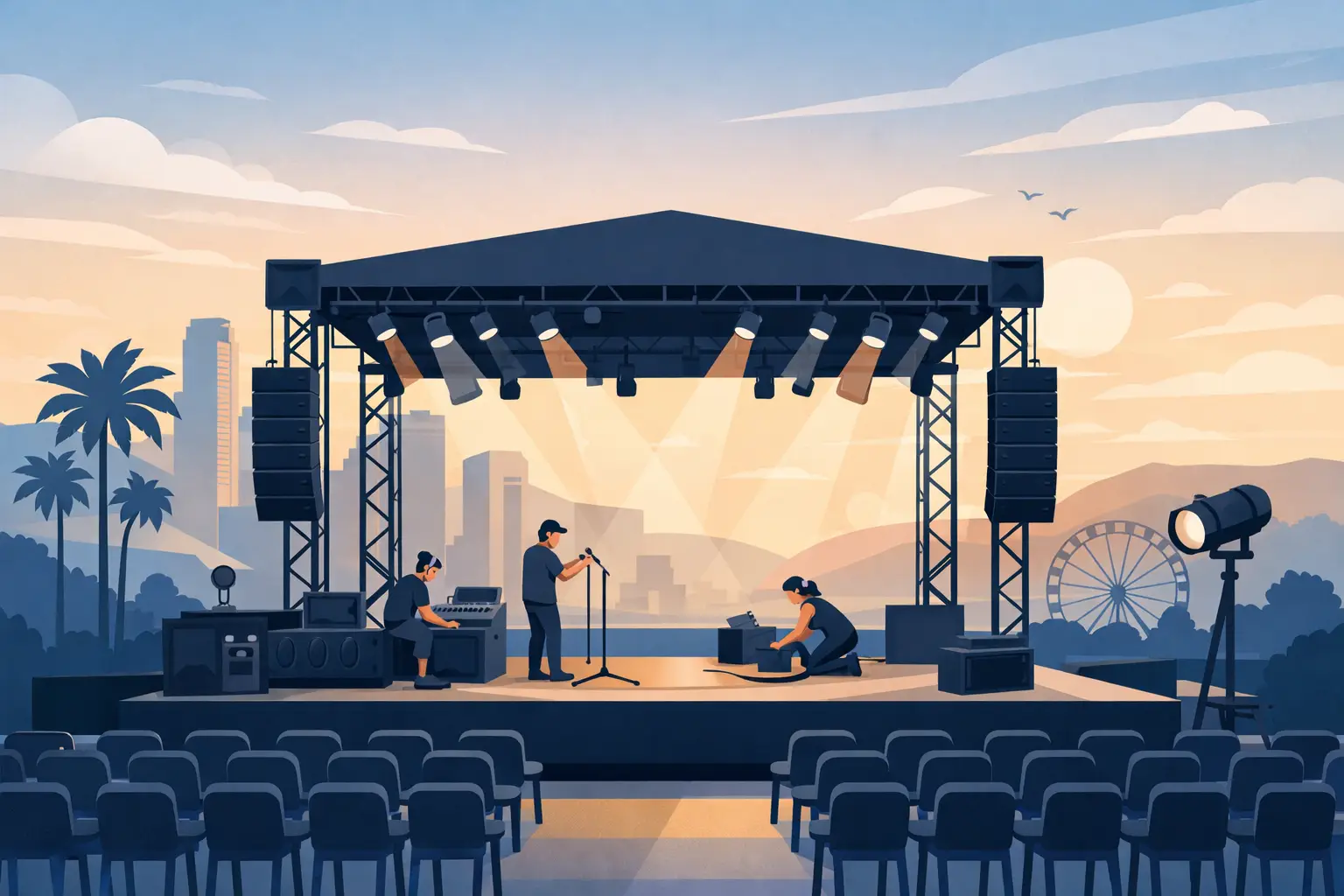
You need to understand load-in access, ceiling height, power availability, rigging restrictions, noise limits, union rules if applicable, and the real amount of setup time allowed. A ballroom with limited power may need distribution planning. An outdoor site may need weather protection, generator support, and different staging choices. A historic venue may restrict mounting points, cable paths, or lighting positions.
One of the most common production mistakes is underestimating how much the venue will affect labor and timing. If access is through a freight elevator or a narrow service corridor, setup will take longer. If the event has a tight turnaround between another booking and your install window, your crew size may need to increase. Those are not small details. They directly affect cost and execution.
When possible, do a site visit with the people responsible for production decisions. If that is not possible, get measurements, diagrams, photos, and written venue rules. Guesswork is expensive.
Budget for performance, not just equipment
Clients often think of event production as a list of rentals, but gear alone does not produce an event. Planning, labor, transportation, setup, operation, and teardown are what turn equipment into a functioning show.
A realistic production budget should account for audio, lighting, video, staging, power, drape or scenic needs, crew, delivery, show operation, and strike. It should also include contingency room. Last-minute additions are common, and so are changes driven by the venue, weather, presenters, or revised schedules.
There is always a trade-off between ambition and reliability. A highly complex setup with custom scenic elements, multiple screens, advanced lighting cues, and tight transitions can be effective, but only if the timeline and budget support it. If they do not, simplifying the design often produces a stronger event than trying to force too much into too little time.
That is one reason many planners prefer a single production partner. When audio, lighting, staging, video, and crew are coordinated by one accountable team, there are fewer gaps between what was promised and what actually gets installed.
Map the guest experience before choosing technical solutions
A practical answer to how to plan event production is to think like an attendee first. What do people need to see, hear, and feel at each point in the event?
Guests notice production when it fails, but they remember it when it supports the experience without distraction. Clear speech coverage, cue timing, room lighting, screen visibility, stage placement, and transition flow all shape how polished the event feels.
For example, if your keynote room has wide seating and low ceilings, the right audio system matters more than adding visual effects that the audience may barely notice. If your wedding reception moves from dinner into dancing, lighting should support that energy shift without forcing a long reset. If a trade show booth needs to attract foot traffic, the display strategy should be built around viewing angles, ambient light, and message clarity rather than just screen size.
Production decisions should match the moments that matter most. Not every event needs a video wall. Not every event needs moving lights. Almost every event does need clean audio, clear communication between departments, and a schedule that is realistic enough to survive the day.
Create a timeline that includes the work behind the scenes
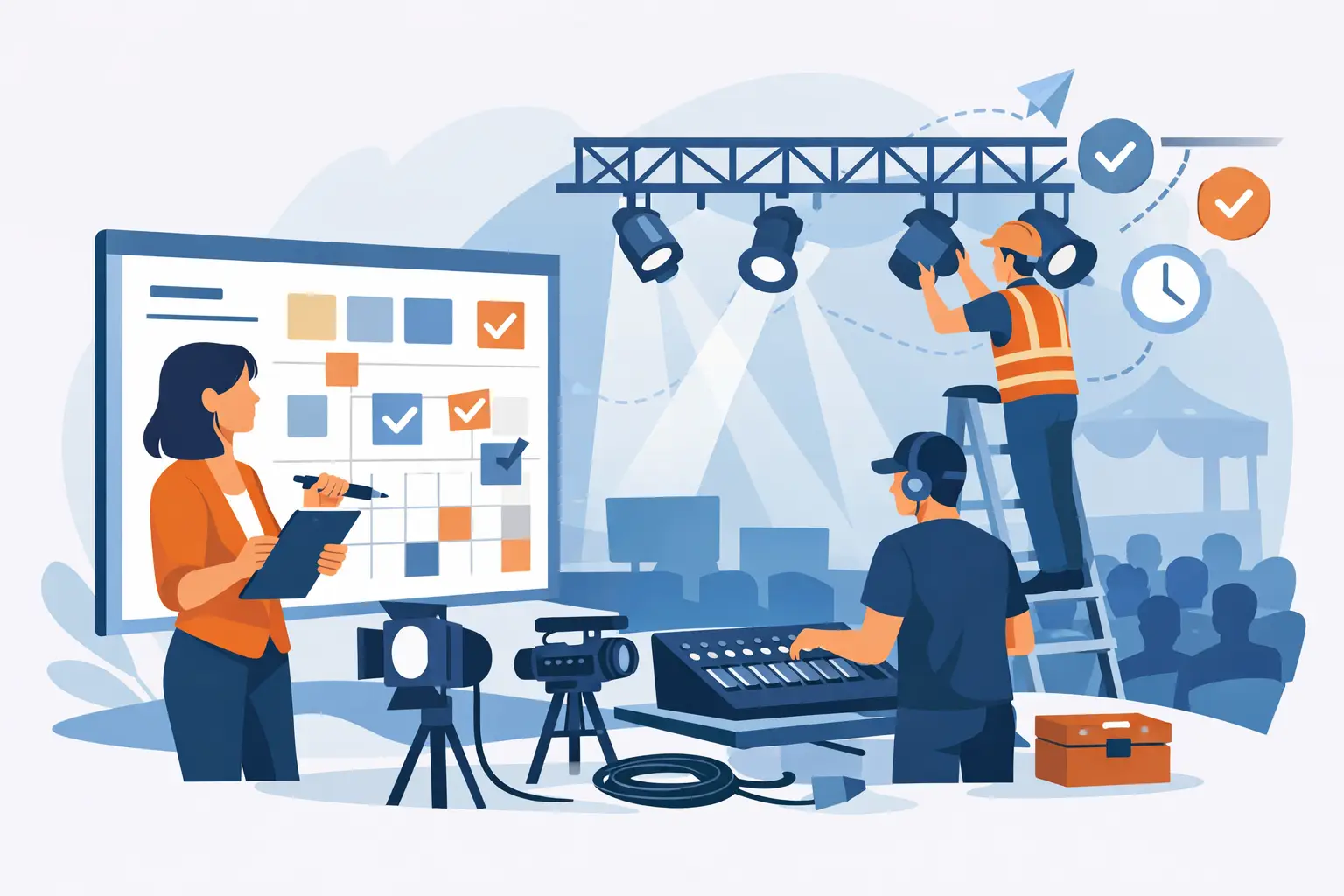
A strong event schedule covers far more than guest-facing moments. It should include vendor arrival times, load-in windows, setup milestones, soundcheck, rehearsal, meal breaks, show cues, strike timing, and venue cutoff requirements.
This is where many events become fragile. The published program might say doors open at 5:30 and the show starts at 6:00, but the production timeline needs to go much deeper. When do presenters arrive? When are slides tested? When is the wireless microphone frequency checked? When does the lighting team shift from setup to show mode? Who approves the final stage layout before doors?
The more moving parts an event has, the more the run-of-show needs to assign ownership. A good schedule does not just state what happens. It identifies who is responsible for each step and what has to be completed before the next step begins.
Rehearsal time is often the first thing people try to cut. That can work for a simple event, but for a program with multiple speakers, performances, playback cues, or live transitions, rehearsal is not extra. It is risk reduction.
Staffing is part of production planning
The best equipment in the world will not save an event that is understaffed. Planning crew needs early is one of the clearest signs of professional event production.
Some events only need delivery, setup, and pickup. Others need audio engineers, lighting operators, video technicians, stagehands, stage managers, and production leads on site throughout the program. It depends on show complexity, venue conditions, and how much live adjustment the event requires.
There is also a difference between having enough people and having the right people. A corporate general session needs a different operational mindset than a wedding reception or outdoor music event. Experience matters because live events do not pause when something changes. A seasoned crew can troubleshoot quietly, adapt quickly, and keep the client focused on the event instead of the issue.
For planners managing events in busy markets like Los Angeles, San Diego, San Francisco, or Las Vegas, local logistics can add pressure fast. Parking, dock scheduling, labor timing, and venue turnover windows can affect staffing choices more than people expect.
Backup plans are part of the real plan
If there is no contingency planning, the event is only ready for perfect conditions. That is rarely enough.
Your production plan should account for weather exposure, power risks, late presenters, content changes, equipment redundancy, and communication protocols. That does not mean overbuilding every event. It means identifying the points where failure would have the biggest impact and protecting them.
Sometimes that means a backup microphone, spare playback device, extra projector lamp, rain cover strategy, or revised stage orientation for wind. Sometimes it means something simpler, like making sure the person advancing slides knows exactly who has final cue control. Good backup planning is not dramatic. It is calm, specific, and proportional to the risk.
Work backward from show day
If you want a cleaner planning process, stop treating production as something to finalize at the end. The earlier production is involved, the easier it is to make smart decisions on scope, budget, and design.
That is especially true when one team can handle rentals, staging, technical planning, and show support together. GeoEvent often works with clients who start with a simple equipment need and then realize they also need layout guidance, crew support, or full execution management. That shift is common because production details tend to expand once the event becomes real.
The strongest event plans are not the most complicated. They are the ones where the goals are clear, the budget is honest, the timeline is realistic, and the technical plan reflects the actual venue and audience. When those pieces line up, the event feels polished because the work behind it was disciplined.
If you are planning an upcoming event, the right production questions asked early will save far more than they cost. They save time, prevent avoidable stress, and give your event room to perform the way it is supposed to when the doors open.