What Event Production Management Services Cover

A show can look simple from the audience side. A stage, clear audio, well-timed lighting, a screen that works, a crew that seems to know exactly where to be. Behind that polished result, there is usually a long list of moving parts that only stay under control when event production management services are doing their job.
For planners, venues, brands, and private clients, that matters more than ever. Expectations are high, budgets are watched closely, and very few events have room for technical mistakes. When one partner is responsible for planning, equipment coordination, crew management, show flow, and on-site troubleshooting, the entire process becomes easier to manage and far less risky.
What event production management services actually include
Event production management services sit between the creative vision and the technical execution. They are not limited to renting speakers or hanging lights. They cover the work required to turn an event plan into a functioning live environment.
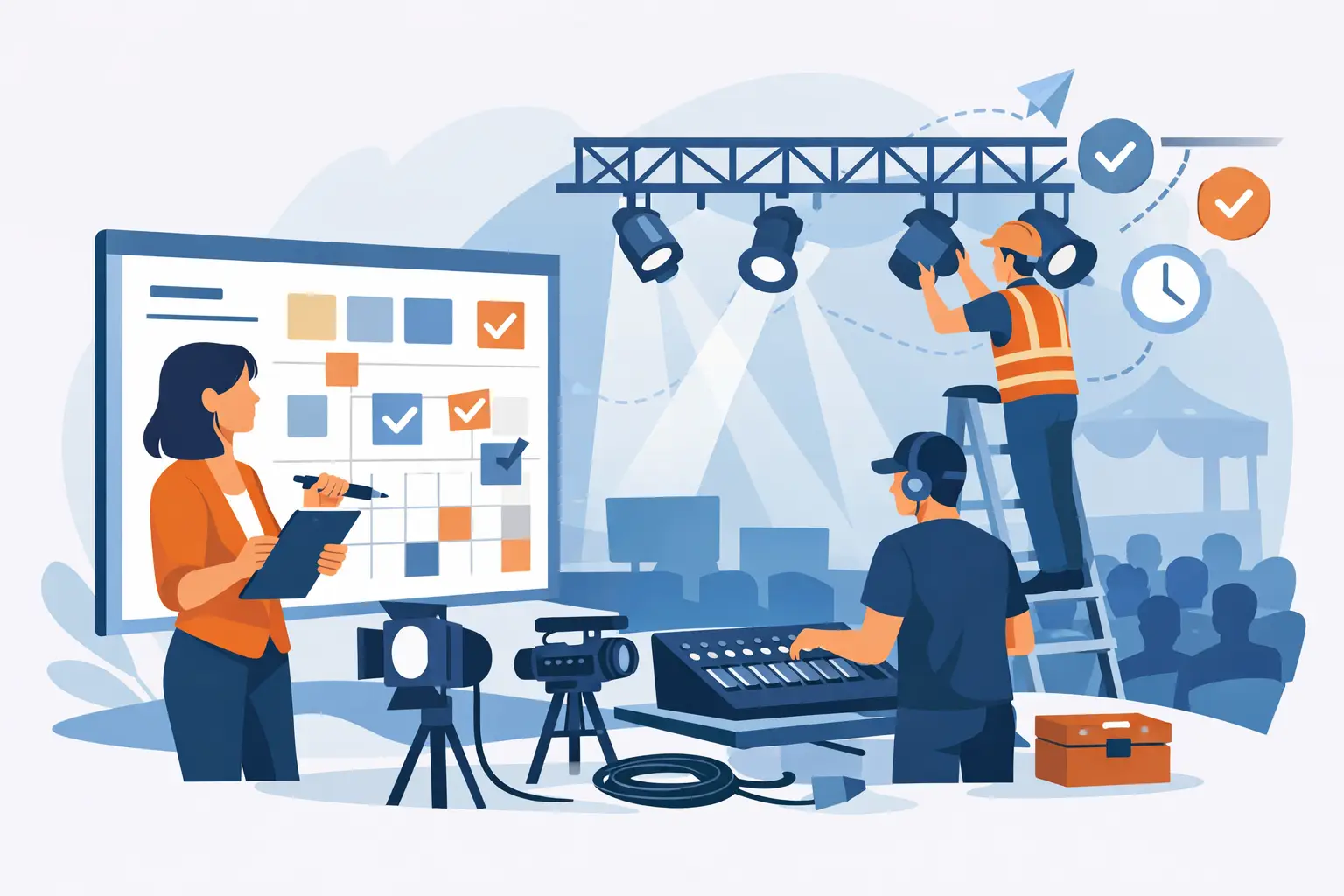
That usually starts with pre-production. The production team reviews the event goals, venue conditions, schedule, audience size, power access, load-in limitations, and presentation needs. From there, they shape the technical plan – audio, lighting, staging, video, rigging if needed, staffing, and timing.
The next layer is coordination. Equipment has to be sourced correctly, transported on time, set up in the right order, tested thoroughly, and operated by people who understand both the gear and the event itself. If multiple vendors are involved, someone has to keep those timelines aligned. If a single production company handles everything, that accountability becomes much clearer.
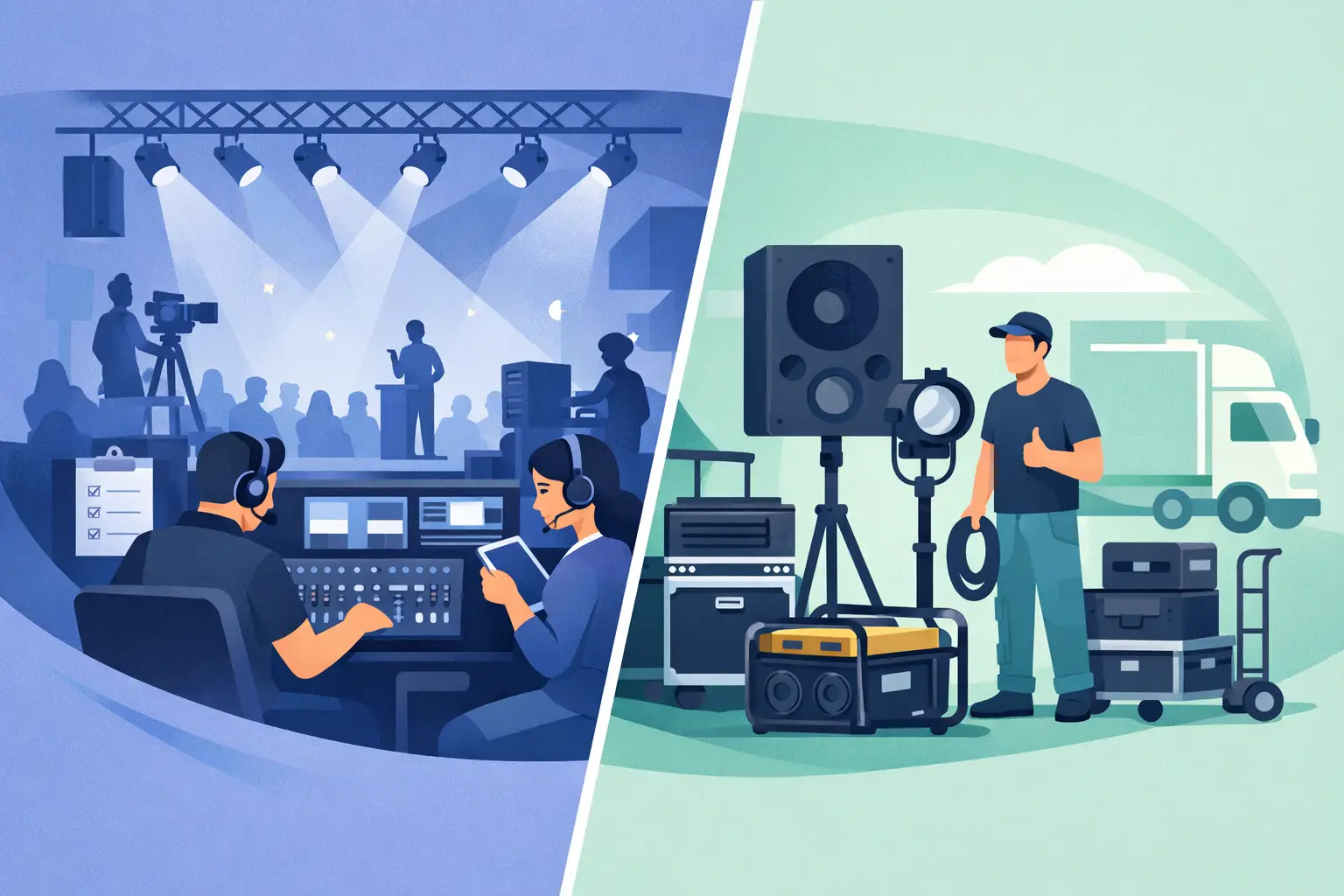
Then comes show-day management. That includes supervising setup, managing cues, coordinating presenters or performers, solving problems in real time, and keeping the run of show on track. After the event, teardown and load-out still need the same level of control. A good production management team treats those final hours as seriously as the opening moment.
Why clients ask for event production management services
Most clients do not hire production management because they want more meetings. They hire it because they want fewer surprises.
If you have ever tried to coordinate separate providers for stage rental, sound, lighting, video, labor, and scheduling, you already know where problems start. One vendor assumes another is handling power distribution. A delivery window gets missed. A venue rule changes the setup plan. A presenter arrives with a laptop that does not match the playback system. None of these issues are unusual. What matters is whether someone is actively responsible for catching them early.
That is where full-service production support earns its value. It reduces handoff points. It gives the client one clear contact. It also creates a more realistic budget because the technical plan is being built as one system, not as a patchwork of disconnected rentals.
There is also a quality benefit. Audio, lighting, staging, and video do not perform well in isolation. They affect each other. A larger stage can change speaker placement. Lighting positions can interfere with projection. LED walls may shift power and rigging needs. Production management keeps those choices coordinated so the event feels intentional instead of pieced together.
The difference between rentals and full production support
Not every event needs complete management. Sometimes a client simply needs a projector package, a small PA, or stage decks delivered and picked up. That can be the right move for experienced teams with internal staff and a straightforward format.
But once an event includes multiple technical elements, tight timing, live cues, presenters, entertainment, or a higher guest count, the balance changes. Renting the equipment is only one part of the job. Someone still has to decide what is actually needed, make sure it fits the venue, build a show schedule around setup realities, and manage the crew during the event.
That is the real dividing line. Equipment rental supplies tools. Production management supplies responsibility.
For corporate meetings and conferences, that can mean managing microphones, confidence monitors, playback, room lighting, scenic elements, and session transitions. For weddings, it may involve ceremony audio, reception lighting, staging for entertainment, timing with planners and venues, and making sure the mood stays right throughout the night. For festivals and concerts, the scale is often larger, but the core need is the same – one team managing the details so the event can actually happen as planned.
Where production management saves money
Some clients assume management services automatically add cost. Sometimes they do add line items, but they can also prevent expensive mistakes.
Ordering oversized equipment is one common budget drain. So is under-ordering and then scrambling for last-minute additions. Labor can also get out of control when setup plans are unclear or when crews are waiting on missing gear, delayed access, or incomplete stage plots. A strong production manager helps avoid those losses by building a plan that matches the event instead of guessing.
There is a second kind of savings that matters just as much: protecting the event outcome. If a keynote starts late because the video system was not tested properly, or if a wedding toast is inaudible because microphone coverage was an afterthought, the cost is not just financial. It affects guest experience, brand perception, and trust.
Budget-conscious execution is not about choosing the cheapest possible setup. It is about spending where it improves the event and cutting what does not add value.
What to look for in a production partner
Experience matters, but experience alone is not enough. The best production partners are organized, responsive, and realistic. They ask detailed questions early because they know small oversights become large problems later.
A good team should be able to explain why they are recommending certain gear, staffing levels, or staging choices. They should also be comfortable adjusting the plan when the event calls for it. Some clients need a fully managed production with technical direction and on-site show calling. Others need a lighter level of support with targeted rentals and a few key crew positions. Good service means matching the support level to the event, not forcing every project into the same package.
It also helps to work with a company that can support events of different sizes. A private celebration for 100 guests and a multi-day conference are very different jobs, but both require attention to detail and ownership. That flexibility is especially useful for planners and venues that run a variety of event types across the West Coast and want one dependable partner they can call for different formats.
Common situations where full management makes the biggest difference
Some events clearly benefit from event production management services from the start. Multi-room conferences are one example because they involve schedule overlap, speaker changes, presentation support, and room turnover. Outdoor events are another, since power, weather planning, staging stability, and audience coverage all become more complex.
Events with entertainment also tend to need tighter coordination. Bands, DJs, presenters, and video content all have technical requirements that can conflict if no one is managing the whole picture. The same is true for venues with access restrictions, union rules, short load-in windows, or noise limits. In those settings, planning discipline matters as much as the equipment itself.
Even smaller events can benefit when the host does not want to manage vendors personally. That is often the case with weddings, private events, and branded activations where the priority is guest experience, not backstage logistics.
Why one accountable team changes the outcome
When an event has too many separate providers, issues can get stuck in the gaps between them. Everyone may be skilled, but no one owns the complete result. That is usually when timelines slip, communication gets messy, and the client ends up solving problems they should never have had to touch.
A single production partner simplifies that chain of responsibility. Planning, equipment, staffing, setup, operation, and teardown are managed as one connected process. That does not guarantee a perfect show every time – live events always involve variables – but it does create faster decisions, better communication, and a stronger response when something shifts.
At GeoEvent, that approach is central to how production should work. Clients need more than gear. They need a team that can think ahead, adapt on site, and carry the responsibility from the first planning call through final load-out.
The best events are not the ones with the most equipment. They are the ones where every technical decision supports the experience, the schedule holds, and the client can focus on the people in the room instead of the problems behind it.