Event Production vs Equipment Rental
A lot can go wrong between load-in and showtime, and most of it has nothing to do with the gear itself. That is why the choice between event production vs equipment rental matters more than many planners expect. The real question is not just what equipment you need. It is how much responsibility you want your vendor to carry before, during, and after the event.
For some events, a straightforward rental is the smart move. You know the room, your team knows the system, and you simply need quality audio, lighting, staging, or video equipment delivered on time. For other events, renting gear without production support can leave major gaps in planning, labor, cueing, troubleshooting, and show flow. Choosing correctly can protect your budget and your event experience at the same time.
Event production vs equipment rental: what is the difference?
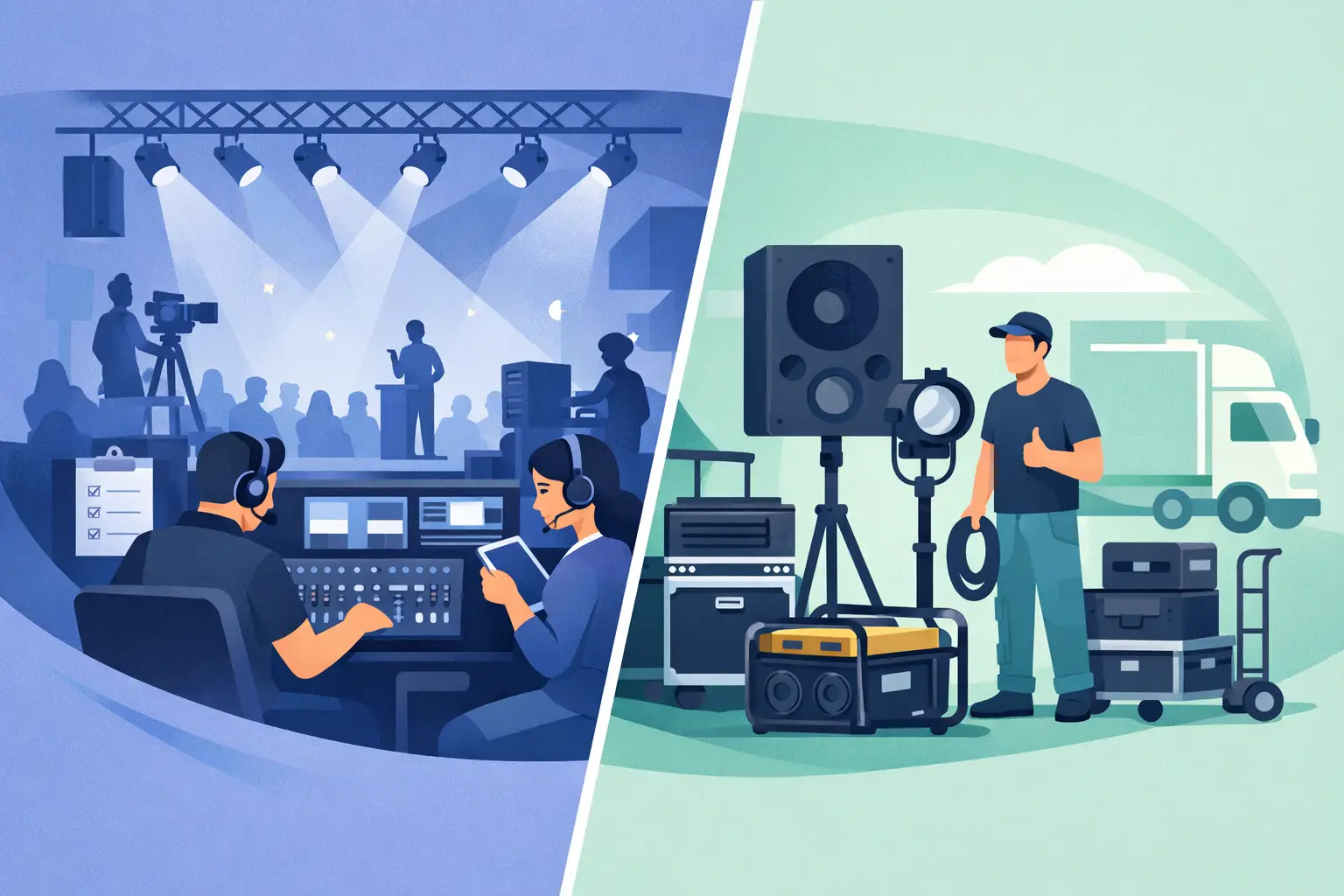
Equipment rental is exactly what it sounds like. You are sourcing the tools needed for the event – speakers, microphones, projectors, LED walls, lighting fixtures, staging, truss, or related AV components. Depending on the vendor and scope, rental may include pickup, delivery, setup, or basic instructions, but the client usually retains a larger share of operational responsibility.
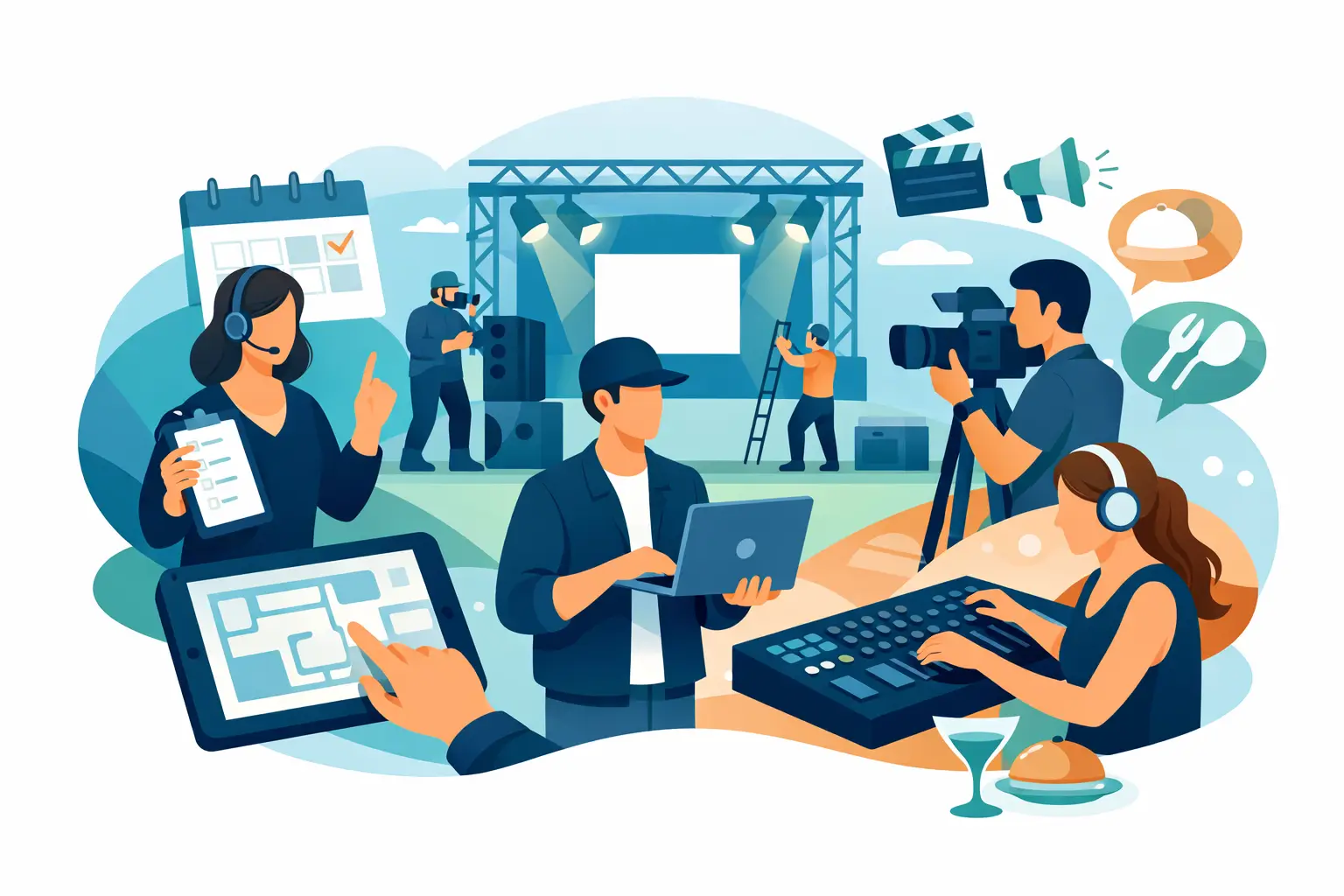
Event production is broader. It includes the equipment, but also the planning, technical design, labor, logistics, coordination, and on-site execution required to make the event run properly. A production partner helps determine what is needed, how it should be deployed, who will run it, how the venue affects the setup, and how issues will be handled in real time.
That distinction matters because most event problems are not caused by a lack of equipment. They are caused by missed details. Power is insufficient. The stage layout blocks sightlines. The speaker placement creates coverage issues. The run of show changes at the last minute. The presenter arrives with the wrong video format. Rental fills the inventory need. Production manages the moving parts.
When equipment rental is the right fit
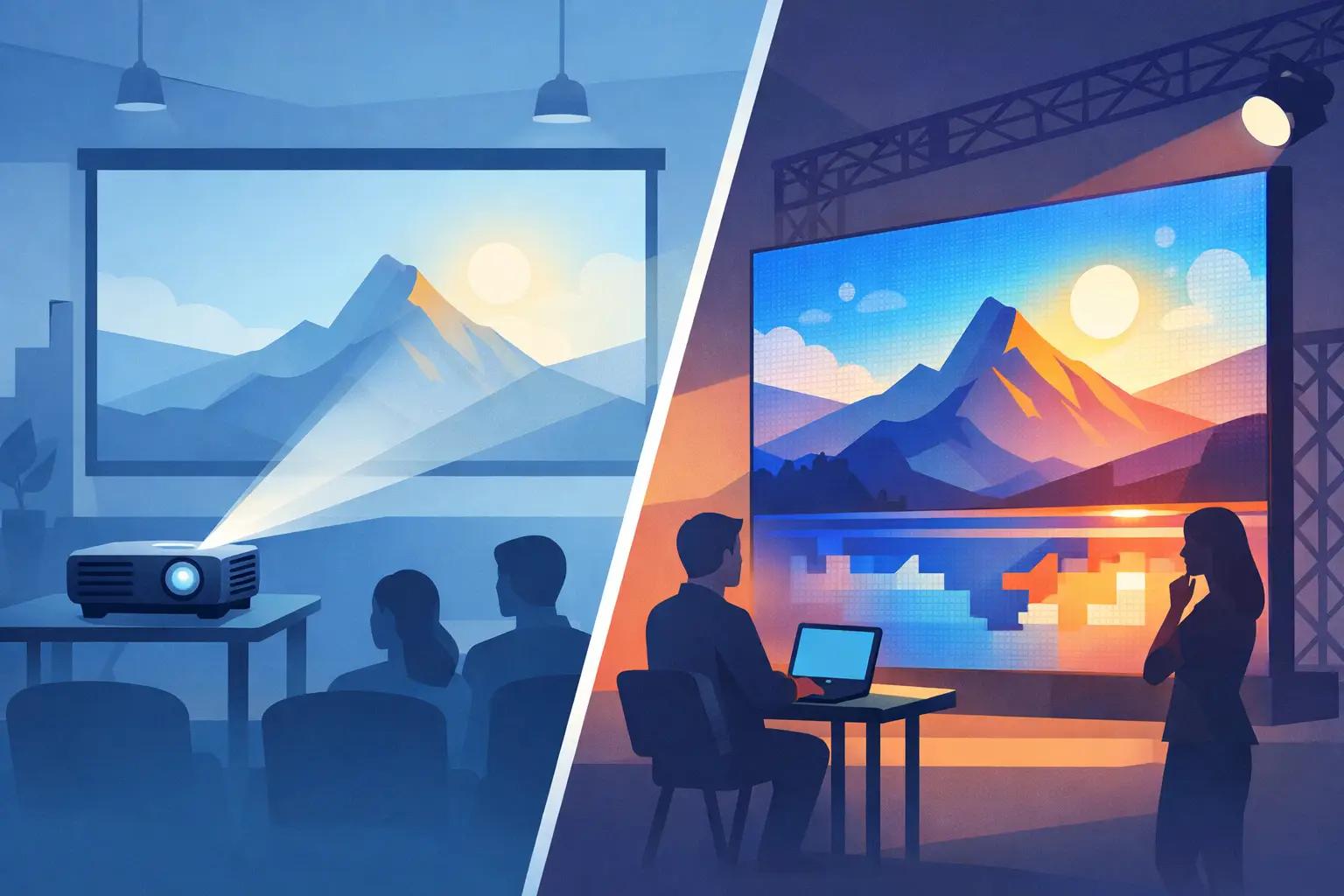
Equipment rental works best when the event is technically simple or when your team already has the knowledge and staffing to handle execution. If you are producing a small corporate meeting in a familiar venue, adding extra wireless microphones for a panel, or renting a projector and screen for a private event, a rental-only approach can be efficient and cost-conscious.
It also makes sense when your internal team already includes experienced AV staff, stage managers, or production leads. In that case, you may not need a vendor to build the show plan. You may only need dependable inventory, punctual delivery, and equipment that is ready to perform.
This route can save money, but only if your event has clear technical ownership. Someone still needs to handle setup, testing, operation, strike, and problem-solving. If that responsibility is unclear, a lower rental quote can become more expensive once delays, labor gaps, or show-day fixes enter the picture.
When full event production is the better investment
Full production is usually the better choice when the event has multiple technical elements, a live audience, tight timing, or little room for error. Conferences, weddings, brand activations, festivals, trade shows, and concerts often fall into this category because they rely on more than equipment. They rely on coordination.
If your event includes a stage build, multiple presenters, playback, lighting cues, live mixing, video display, audience management, or several vendors working at once, production support can prevent small mistakes from becoming visible failures. It also gives you one accountable partner instead of separate providers pointing fingers when something shifts.
Production support is especially valuable for clients who are planning in unfamiliar venues or managing events in busy markets like Los Angeles, San Diego, San Francisco, or Las Vegas, where load-in windows, venue rules, union conditions, and timing constraints can affect every decision. In those cases, experience is not a luxury. It is part of risk management.
The hidden trade-off in event production vs equipment rental
The biggest trade-off is control versus coverage.
With equipment rental, you keep more direct control over decisions and budget line items. That can be appealing, especially for experienced planners who know exactly what they want. But you also keep more of the operational burden. Your team is responsible for making the equipment work within the realities of the venue, schedule, staffing plan, and show content.
With production services, you are paying for broader coverage. That includes technical planning, crew coordination, setup strategy, live operation, and accountability when changes happen. You may spend more upfront, but you reduce the odds of paying for preventable mistakes later.
This is where many buyers miscalculate. They compare the cost of rental against the cost of production as if both options cover the same scope. They do not. One provides gear. The other provides gear plus technical responsibility. Once you compare them on that basis, the price difference makes much more sense.
How to decide what level of support you need
Start with your event, not the inventory list. A planner who asks only, “How many speakers do I need?” may miss the bigger question: “Who is making sure the room sounds right for every person in it?” The same goes for lighting, staging, and video.
A few practical factors usually point you in the right direction. First, consider complexity. A single podium mic and screen is very different from a general session with walk-in music, breakout rooms, confidence monitors, and remote presenters. Second, consider staffing. If nobody on your team is qualified to troubleshoot signal flow, wireless coordination, or playback issues under pressure, rental alone may be too thin.
Third, look at the stakes. If the event is internal and informal, the risk of minor hiccups may be acceptable. If it is client-facing, ticketed, recorded, or tied to revenue or brand reputation, stronger production support is usually worth it. Finally, think about time. Rental can work when you have bandwidth to plan and manage details. Production is often the better choice when you need a partner to take work off your plate.
A middle ground often makes sense
This is not always an all-or-nothing decision. Many events benefit from a hybrid approach.
You might rent core AV equipment and add labor for setup and strike. You might need a video wall and staging package, but also want a technician on-site during show hours. You might handle creative direction internally while relying on a production partner for system design, rigging, power distribution, or show operation.
That flexibility matters because budgets are real. Not every event needs a full takeover. But many events need more than a drop-off rental. A good provider helps you scale support to match the event instead of pushing you into more service than you need.
For example, a wedding client may not need a complex production office, but they may absolutely need professional audio coverage, ceremony and reception transitions, lighting support, and a crew that can solve problems quietly. A conference organizer may have an internal event team, but still want an outside partner to manage staging, projection, breakout room AV, and technician scheduling. The right scope sits between bare-minimum gear and oversized production.
What to ask before you book
Before choosing between event production vs equipment rental, ask who is responsible for each phase of the event. Who confirms the power requirements? Who builds the setup timeline? Who communicates with the venue? Who tests the microphones before doors open? Who stays during the event? Who fixes the issue if a signal drops five minutes before a keynote?
Those answers reveal the real scope much faster than a line-item quote.
It is also wise to ask how adaptable the provider is. Events change. Agendas shift, attendance grows, weather moves outdoor plans indoors, and presenters bring surprises. The right partner is not just the one with the equipment. It is the one that can respond without turning every adjustment into a crisis.
That is where a full-service company like GeoEvent can be useful for a wide range of clients. Some need a single rental category. Others need planning, staging, staffing, and live technical management under one roof. The advantage is not just convenience. It is clearer accountability and a smoother path from planning through teardown.
The best choice is the one that matches your event’s complexity, your team’s capacity, and your tolerance for risk. If you only need gear, a rental may be the right call. If you need confidence that the whole room, schedule, and technical experience will hold together under pressure, production support is often the better value. A good event does not just happen because the equipment showed up. It happens because the right people and the right plan showed up with it.