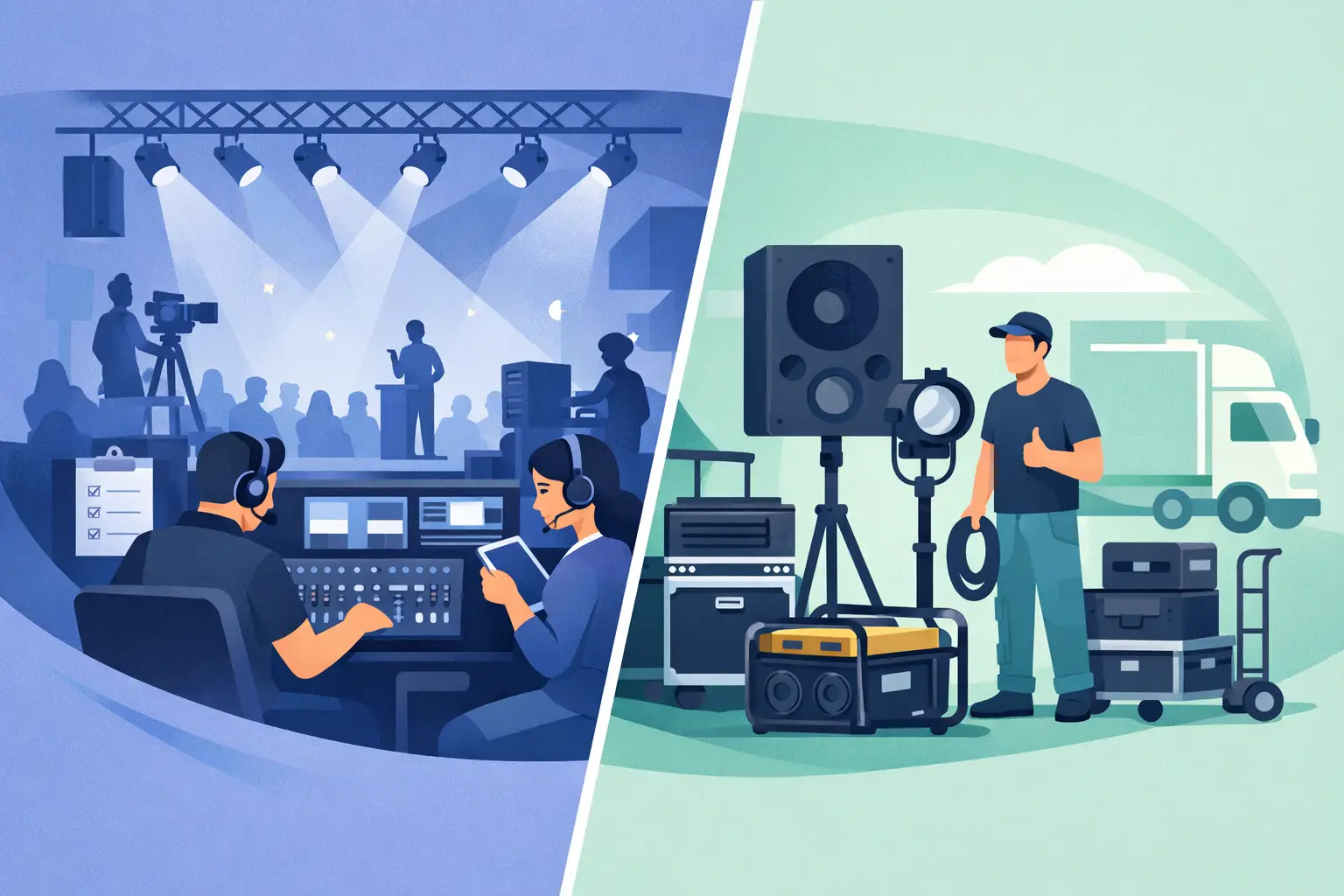
Projector Rental vs LED Wall: Which Fits?
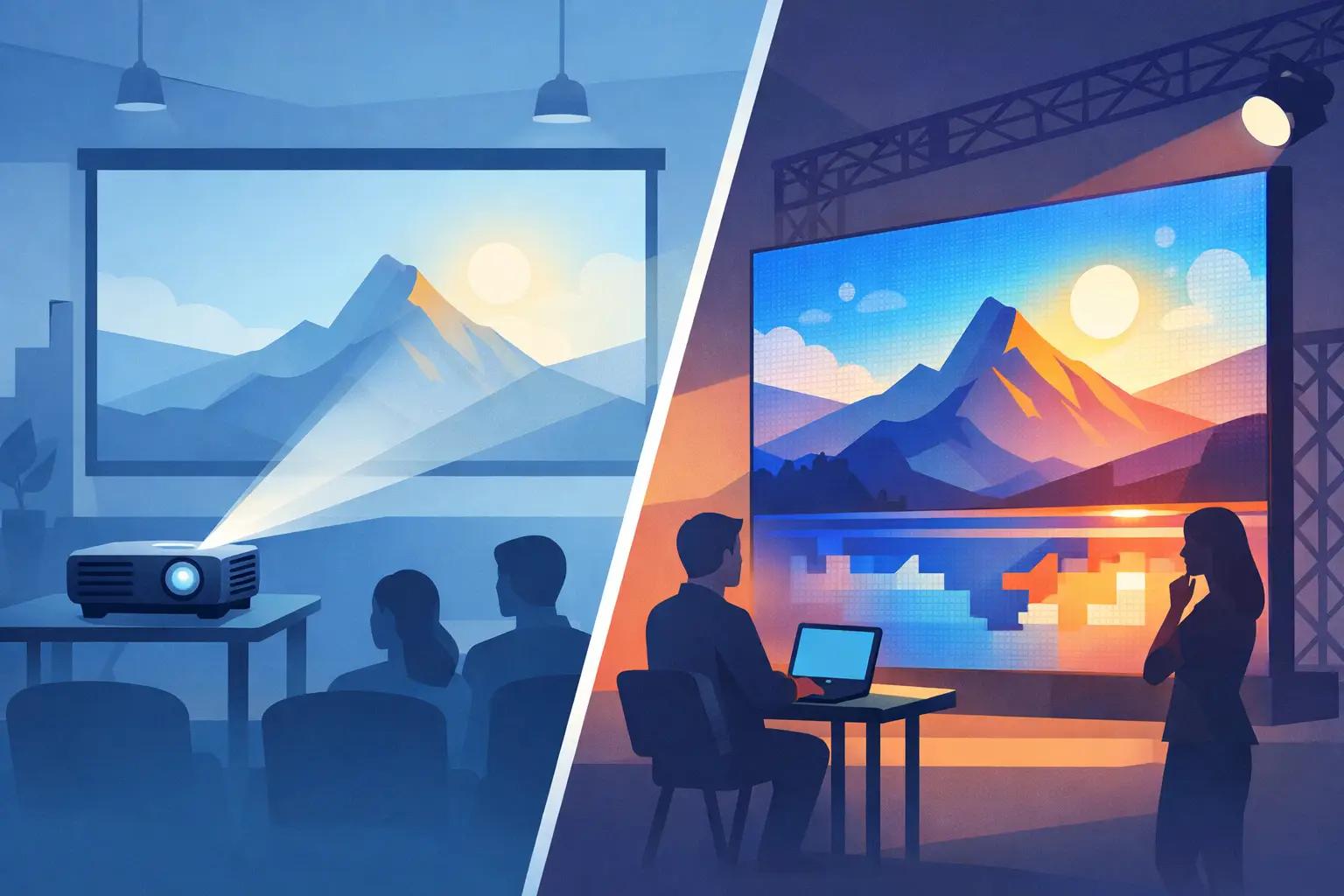
A ballroom with controlled lighting can make a projector look sharp and cost-effective. That same setup moved outdoors at 4:30 p.m. can turn into a washed-out screen that leaves sponsors, speakers, and guests squinting. That is why projector rental vs LED wall is not a simple gear choice. It is an event decision that affects visibility, budget, setup logistics, and the way your audience experiences the show.
For some events, a projector is the smart answer. For others, an LED wall is the only option that will truly hold up. The right choice depends on where the screen will live, what content you need to show, how much ambient light you are dealing with, and how much production flexibility you need once show day starts.
Projector rental vs LED wall: the core difference
At the most basic level, a projector throws an image onto a surface, usually a projection screen, wall, or scenic element. An LED wall generates the image directly from light-emitting panels. That difference sounds technical, but it changes nearly everything.
Projection relies heavily on environment. The darker the room and the better the screen surface, the better the result. LED walls are far less dependent on ambient conditions because the display itself is producing brightness. If your event includes daylight, bright house lights, uplighting, moving fixtures, or an open-air venue, that distinction matters immediately.
There is also a practical difference in physical presence. A projection setup often needs throw distance, line of sight, rigging or placement for the projector, and protection from people crossing the beam. An LED wall has its own footprint and support requirements, but it does not need the same projection path. In tight rooms or complex stage designs, that can simplify the layout.
When a projector rental makes the most sense
Projectors still have a strong place in live events, especially when the room supports them. Corporate meetings, indoor presentations, breakout sessions, training environments, and general sessions with moderate screen demands are often excellent candidates.
If your primary content is slides, keynote visuals, branded presentation decks, or video playback in a controlled indoor venue, a projector can deliver a polished result at a lower cost than a comparably sized LED wall. For clients balancing production quality with budget, this can be the right move.
Projection also works well when image size matters more than extreme brightness. Large screens can be built efficiently with front or rear projection, and in some scenic applications projection blends nicely into the event design rather than becoming the design itself.
That said, projection asks more from the room. Ceiling height, projector placement, audience sightlines, stage lighting angles, and room brightness all affect performance. A projector is not forgiving when the environment changes at the last minute.
When an LED wall is the better investment
LED walls are the stronger choice when visibility cannot be compromised. Outdoor events, general sessions with high ambient light, trade show booths, product launches, concerts, festivals, and high-energy brand events usually benefit from LED.
The biggest reason is brightness. An LED wall remains readable and vibrant in conditions that would challenge most projection systems. If attendees need to see content clearly from across a large room, or if you expect photos and video from the event to matter, LED tends to create a stronger visual impression.
LED walls also offer flexibility in shape and staging. They can be built as a center wall, side screens, scenic columns, backdrop features, or custom layouts that support brand design. That gives production teams more room to create a visual environment rather than just a display surface.
For events with camera coverage, live IMAG, sponsor loops, entertainment programming, or fast transitions between content sources, LED walls also tend to feel more dynamic. They support high-impact visuals without depending on a darkened room.
Brightness and visibility are often the deciding factor
If a client asks which option looks better, the honest answer is that it depends on the space. In a dark hotel ballroom, a quality projector setup can look excellent. In a sunlit tent, lobby, rooftop, or outdoor venue, an LED wall usually wins by a wide margin.
This is where many event plans go off track. A screen may look fine during a site visit or rehearsal, then become difficult to read once doors open and the lighting package is active. Bright stage washes, decorative lighting, and venue lighting all reduce projection contrast. Small text, detailed charts, and lower-contrast graphics are often the first things to suffer.
LED walls are not automatically better in every case, but they are more reliable when conditions are unpredictable. If your event schedule runs from daylight into evening, or if your venue staff has limited flexibility with house lights, that reliability can be worth the added cost.
Budget matters, but so does risk
In a straight comparison, projector rental is often the more budget-friendly option. For clients who need a clean presentation screen without the premium cost of LED, it can be the most efficient use of funds.
But cost should not be judged by the display line item alone. If projection requires heavier drape to darken the room, extra rigging, a larger projector to fight ambient light, scenic adjustments, or labor to solve placement challenges, the savings can narrow quickly. On the other side, LED walls may cost more upfront, but they can reduce compromises and lower the risk of poor visibility.
The real question is not just which one is cheaper. It is which one protects the event outcome. If a keynote presentation, sponsor deliverable, or branded reveal depends on audience visibility, the cheapest option is not always the most economical one.
Projector rental vs LED wall for different event types
Corporate meetings often land in the middle. If the venue is a standard ballroom and the content is mostly presentation-based, projection is usually a strong fit. If the event includes polished show graphics, camera feeds, walk-in loops, and a more modern staging look, LED may better match the experience the client wants.
Weddings can go either direction. A projector can be perfect for photo montages, speeches, and elegant indoor receptions where the screen is used occasionally. An LED wall is more useful when the display is a major visual feature, especially for large receptions, entertainment-heavy celebrations, or partially outdoor setups.
Festivals, concerts, and outdoor community events almost always lean toward LED because brightness and durability matter more than budget savings alone. Trade shows also favor LED when exhibitors want to stand out on a busy floor with strong visual impact.
Private events and brand activations depend heavily on goals. If the display is informational, projection may do the job. If it is part of the attraction, LED usually delivers more presence.
Setup, space, and technical planning
A good display choice is never just about the screen. It is about how that system fits into the room, schedule, and crew plan.
Projectors need throw distance and a clean path to the screen. Front projection can create shadow issues if presenters walk through the beam. Rear projection solves that, but it requires enough backstage depth to place the projector behind the screen. Some venues simply do not give you that space.
LED walls require proper support, power planning, and enough room for safe assembly. Depending on the size, they may need ground support or rigging coordination. They also carry weight considerations that matter in hotels, temporary structures, and certain venues.
This is why experienced planning matters. A display that looks right on paper can become difficult once load-in starts and real-world constraints show up. Working with one production partner that handles staging, lighting, power, labor, and screen systems together can prevent the kind of last-minute compromises that affect the whole show.
How to choose the right one
The best decision usually comes down to five factors: venue lighting, content type, audience size, event style, and budget tolerance for risk. If the room is controllable and the content is presentation-focused, projection is often the practical answer. If the event needs brightness, impact, and flexibility under less predictable conditions, LED is often the safer choice.
It also helps to think beyond specs. Ask what the audience absolutely needs to see, what the event should feel like, and what would be hardest to fix on show day. That framing usually makes the answer clearer.
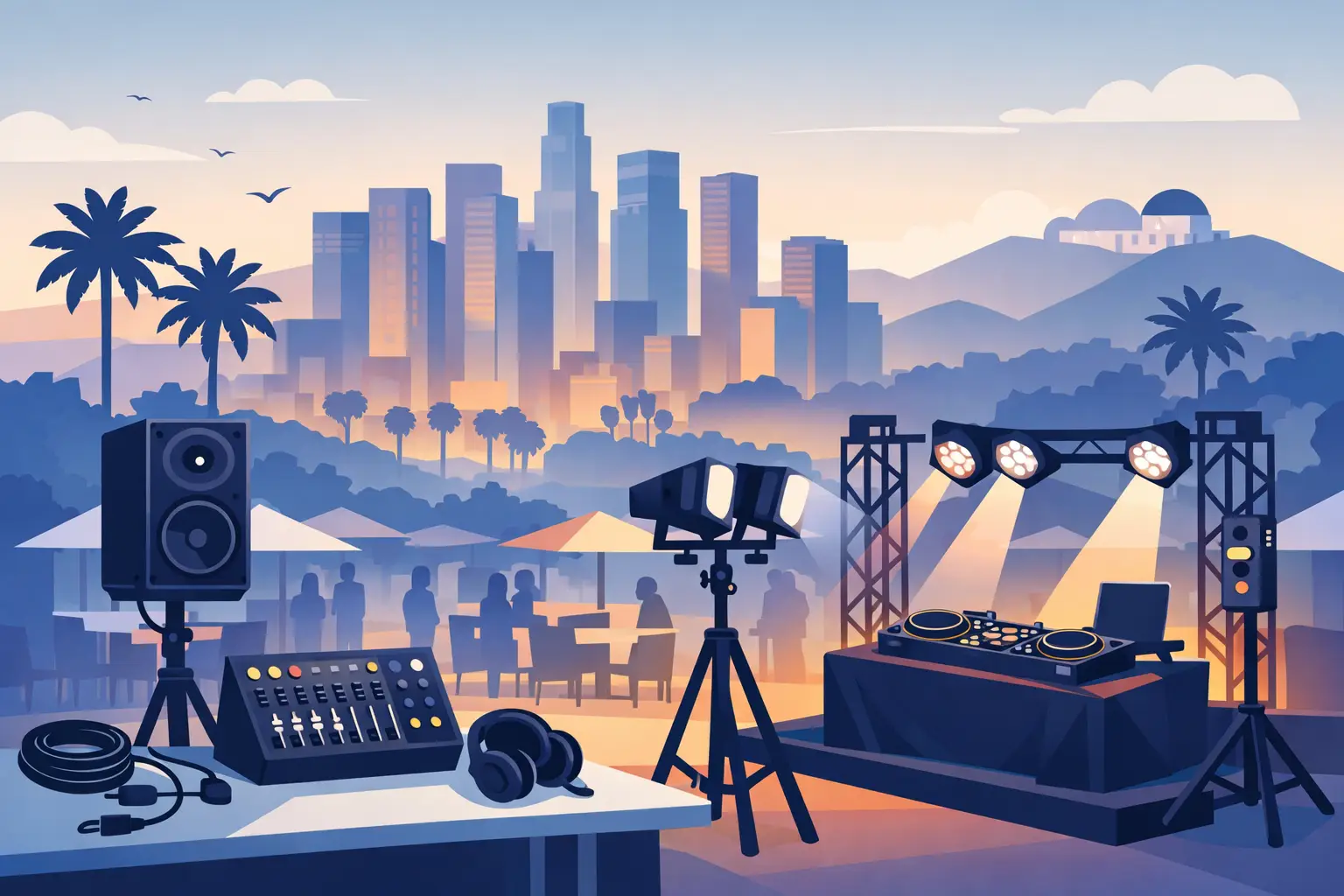
For clients planning events across places like Los Angeles, San Diego, San Francisco, or Las Vegas, venue conditions can vary widely from dark indoor ballrooms to bright outdoor spaces and modern hybrid venues. That makes early display planning even more valuable.
At GeoEvent, these choices are usually part of a larger production conversation, not a standalone equipment debate. The screen has to work with the room, the stage, the lighting, the run of show, and the expectations for the event.
If you are deciding between the two, the smartest move is to choose the system that gives your audience the clearest, most dependable experience once the room is live, not just the one that looks best on a quote.