Why Single Vendor Event Production Works
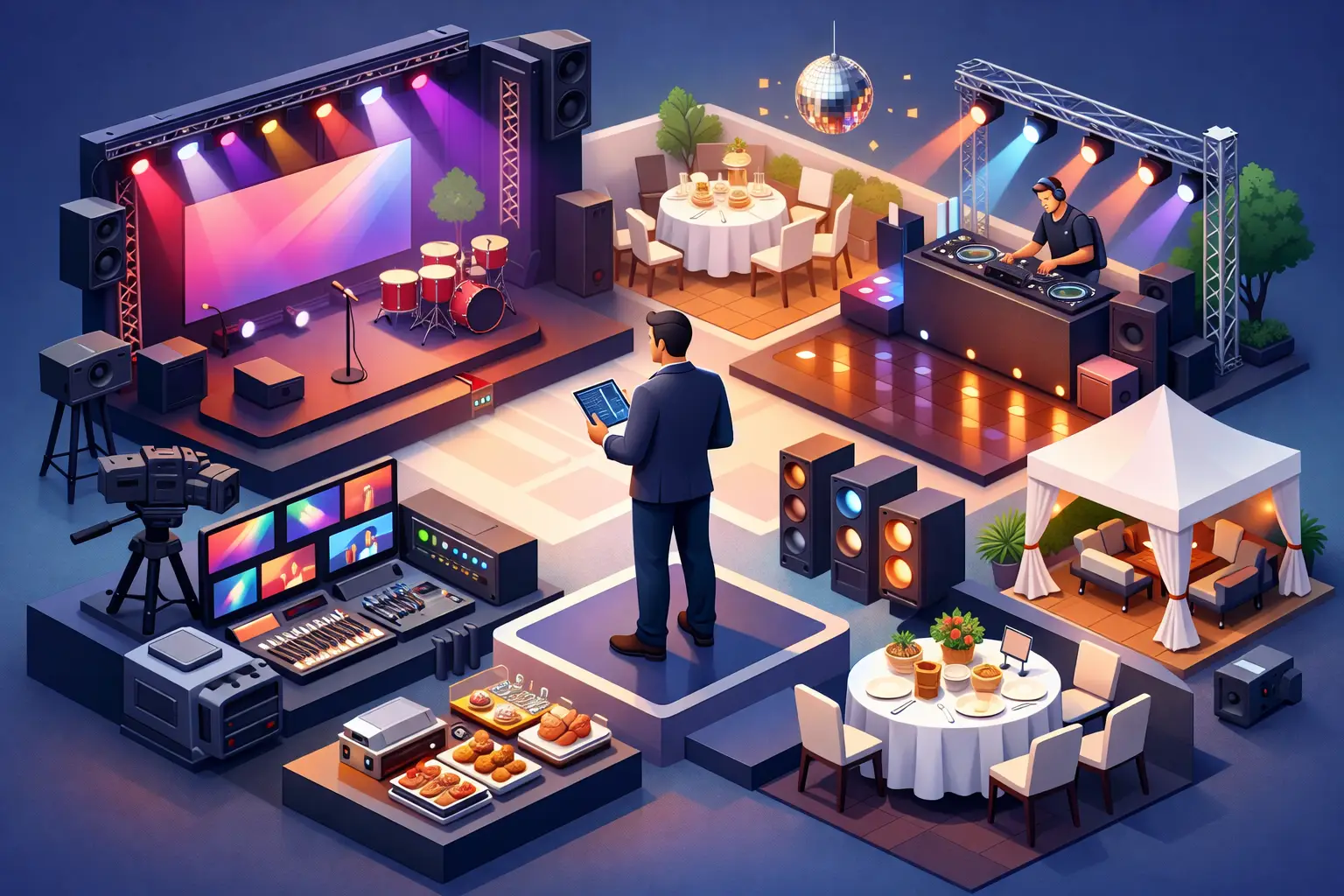
When an event goes sideways, it usually is not because one speaker was two minutes late or a light cue missed by half a beat. It is because five different vendors were each handling one piece of the show, and no one owned the full picture. That is where single vendor event production changes the outcome. Instead of juggling separate AV, lighting, staging, video, and staffing partners, you work with one production team that sees the entire event from planning through teardown.
For planners, that shift is not just about convenience. It affects budget control, response time, accountability, and the guest experience. Whether you are building a corporate conference, wedding, festival, trade show, or private event, fewer handoffs usually mean fewer surprises.
What single vendor event production actually means
Single vendor event production means one company manages the technical and operational elements that shape the live experience. That can include audio, lighting, staging, projection, LED video walls, crew, show flow, setup, live operation, and strike. In some cases, it also includes planning support, venue coordination, and production management.
The key benefit is not simply getting all services from one place. It is that the same team is making decisions across departments. Your audio plan is not created in isolation from your stage layout. Your video setup is not being figured out after the lighting rig is already designed. Your labor schedule is aligned with the load-in plan from the start.
That kind of coordination matters more than people think, especially when timing is tight or the venue has limits on access, power, ceiling height, rigging, or noise.
Why one accountable team makes events easier to manage
Most event problems live in the gaps between vendors. The lighting company assumes the stage provider will handle power distribution. The AV team expects someone else to confirm the screen sightlines. The staffing agency is never told the keynote rehearsal moved up by an hour. Everyone may be competent, but competence alone does not fix fragmented communication.
With single vendor event production, responsibility is clearer. There is one point of contact, one production plan, and one team that has to make the whole show work together. That gives planners faster answers and fewer rounds of back-and-forth.
It also changes the tone of pre-event meetings. Instead of spending your time translating information between separate companies, you can focus on outcomes. What does the room need to feel like? Where are the pressure points in the schedule? What matters most if weather, delays, or guest count changes force adjustments?
That does not mean every event should automatically be built this way. If a client already has a trusted creative agency, a venue-exclusive provider, or a specialty fabricator for a custom build, a multi-vendor setup may still make sense. But even then, the more technical scope that can be coordinated under one production lead, the easier execution tends to be.
The real advantages beyond convenience
The biggest reason clients choose a single-source production partner is usually simplicity. But the deeper value shows up in execution.
Budget management often improves because the same team can help prioritize spend across the whole event, not just within one category. If your budget is tight, it may make more sense to scale back decorative lighting and protect audio coverage for a keynote-heavy program. Or to reduce stage size slightly and invest in better IMAG support so the audience stays engaged. Separate vendors rarely optimize across the full system this way because each one sees only its own scope.
Setup is usually more efficient too. A unified crew knows how the pieces fit together, so load-in tends to be more organized. Equipment arrives in the right sequence. Cable paths are planned with the stage layout in mind. The person calling cues understands what was promised in prep and what changed at rehearsal.
Then there is troubleshooting. On show day, speed matters. If video content is not displaying properly, the issue may involve the playback machine, switcher settings, screen mapping, signal conversion, or power. When one team owns all of it, there is less finger-pointing and a faster path to a fix.
Where this model works especially well
Some events benefit from single vendor production more than others.
Corporate meetings and conferences are a strong fit because they often depend on timing, presentations, panel changes, confidence monitors, room audio, and branded visuals all working in sync. Weddings also benefit because the production team often supports moments that cannot be repeated, from ceremony audio to first dance lighting to reception entertainment.
Festivals, outdoor events, and multi-zone activations can gain even more because logistics are more demanding. Power, staging, front-of-house position, screen visibility, weather backup plans, and crew movement all need centralized oversight. Trade shows and brand events are another common fit, especially when the client needs a mix of rental equipment, scenic support, and technical staff without building a long vendor list.
On the West Coast, where venue rules, access windows, and labor timing can vary widely between cities and properties, having one production partner manage the moving parts can remove a lot of risk.
What to look for in a single vendor event production partner
Not every company that rents gear is equipped to run a full event. That distinction matters.
A true production partner should be able to translate goals into a workable technical plan. That includes asking smart questions early, identifying risk areas, and recommending solutions that match the event rather than upselling equipment you do not need. Experience across different event formats matters because a conference general session, a wedding reception, and a music performance all place very different demands on sound, lighting, and crew.
Inventory depth matters too, but so does operational discipline. A large catalog of equipment is useful only if the company can prep it properly, transport it reliably, and support it with technicians who know how to use it under pressure.
You also want clarity around who is doing what. Will the same team handle prep calls, venue walkthroughs, load-in, show operation, and strike? Who is your lead on site? How are changes handled if your run of show shifts or attendance grows? Good production companies answer those questions in a way that builds confidence, not confusion.
The trade-offs clients should understand
Single vendor event production is not magic, and it is worth being honest about the trade-offs.
You may have fewer opportunities to shop each category separately. If your only goal is to chase the absolute lowest price on every individual line item, a fragmented vendor model can sometimes look cheaper on paper. But paper savings often disappear when coordination costs, delivery overlap, change orders, and show-day fixes start adding up.
There is also the question of specialization. Some events call for a niche scenic builder, a broadcast-only team, or a highly specific creative technology vendor. In those cases, the strongest approach may be a lead production company coordinating with select specialists rather than trying to force everything into one box.
That is why the best conversations start with the event requirements, not a rigid model. The goal is not to make every show identical. The goal is to build the simplest, most accountable setup for the result you need.
How the planning process gets better with one team
One of the most overlooked benefits of this approach is how much smoother pre-production becomes.
Instead of repeating the same event details to multiple companies, you can work through scope, schedule, budget, venue limitations, and technical priorities with one team that turns those inputs into an integrated plan. That usually means fewer revisions, cleaner diagrams, more realistic timelines, and better foresight around labor and logistics.
It also gives first-time planners a better experience. If you do not speak in production terms every day, you should not have to manage signal flow, speaker placement, projector brightness, stage dimensions, and staffing ratios by yourself. A good partner guides those decisions and explains the trade-offs in plain language.
That is where a company like GeoEvent can be especially valuable. When rental inventory, technical support, staging, and on-site execution are handled under one roof, clients get practical guidance without losing flexibility.
Single vendor event production is really about control
At a glance, this model looks like a staffing choice. In practice, it is a control choice.
You are choosing whether the event will be managed as one connected system or as a collection of separate services. For straightforward events, either route can work. For events with live cues, multiple departments, tight schedules, or little room for error, a connected system usually performs better.
If your priority is a polished event with fewer handoffs, clearer accountability, and faster problem-solving, single vendor event production is often the smarter structure. It gives your team more room to focus on guests, content, and experience instead of spending the day coordinating vendors who should have been coordinated long before doors opened.
The best production setup is the one that makes show day feel calm, even when a lot is happening behind the scenes.