How to Rent Stage Lighting Without Guesswork
A ballroom wash that looks flat on camera, a band that disappears into shadow, a podium speaker squinting under the wrong color temperature – lighting problems show up fast, and guests notice them even when they cannot name the issue. If you are figuring out how to rent stage lighting, the real job is not just booking fixtures. It is making sure the room, the run of show, and the audience experience all work together.
That starts with a simple mindset shift. Stage lighting is not one item. It is a system built around your event type, venue, schedule, power access, and labor plan. When those pieces line up, lighting feels effortless. When they do not, even expensive gear can underperform.
How to rent stage lighting for your event
The first step is defining what the lighting needs to do. A conference keynote, a wedding reception, a live concert, and a trade show booth may all use stage lighting, but they need very different results. Some events need clean front light for faces and video. Others need color, motion, and dramatic cues. Some only need to make a stage look polished. Others need a full show package with programming and live operation.
Before you request a quote, get clear on five basics: venue size, ceiling height, stage dimensions, event schedule, and whether the lighting needs to support photo or video capture. Those details shape fixture choice far more than a general request for “stage lights.”
A small indoor awards event might need front wash, uplighting, and a few moving fixtures for energy. A festival stage may need truss-mounted wash lights, beam fixtures, blinders, hazers, and a lighting console with an operator. A wedding might prioritize warm ambiance, dance floor effects, and elegant room lighting over theatrical looks. The more specific your goals are, the more accurate the recommendation will be.
Start with the outcome, not the equipment
Many clients begin by asking for LED pars or moving heads because those are familiar terms. That is understandable, but it can lead to the wrong package. The better approach is to describe what you want the audience to see.
Do you need presenters lit evenly from the front? Do you want a stage backdrop in brand colors? Should the room feel formal, high-energy, intimate, or concert-ready? Is there a live stream? Will there be moments that need cue-based transitions? Those answers help a production partner build a package that fits the event instead of forcing the event to fit the gear.
This is especially important if you are balancing budget and visual impact. Not every event needs intelligent fixtures or complex programming. In some cases, a clean, well-placed static wash does more for the attendee experience than a larger package with effects you will barely use. In other cases, cutting too much from lighting can make the entire production feel underpowered.
Know the core fixture categories
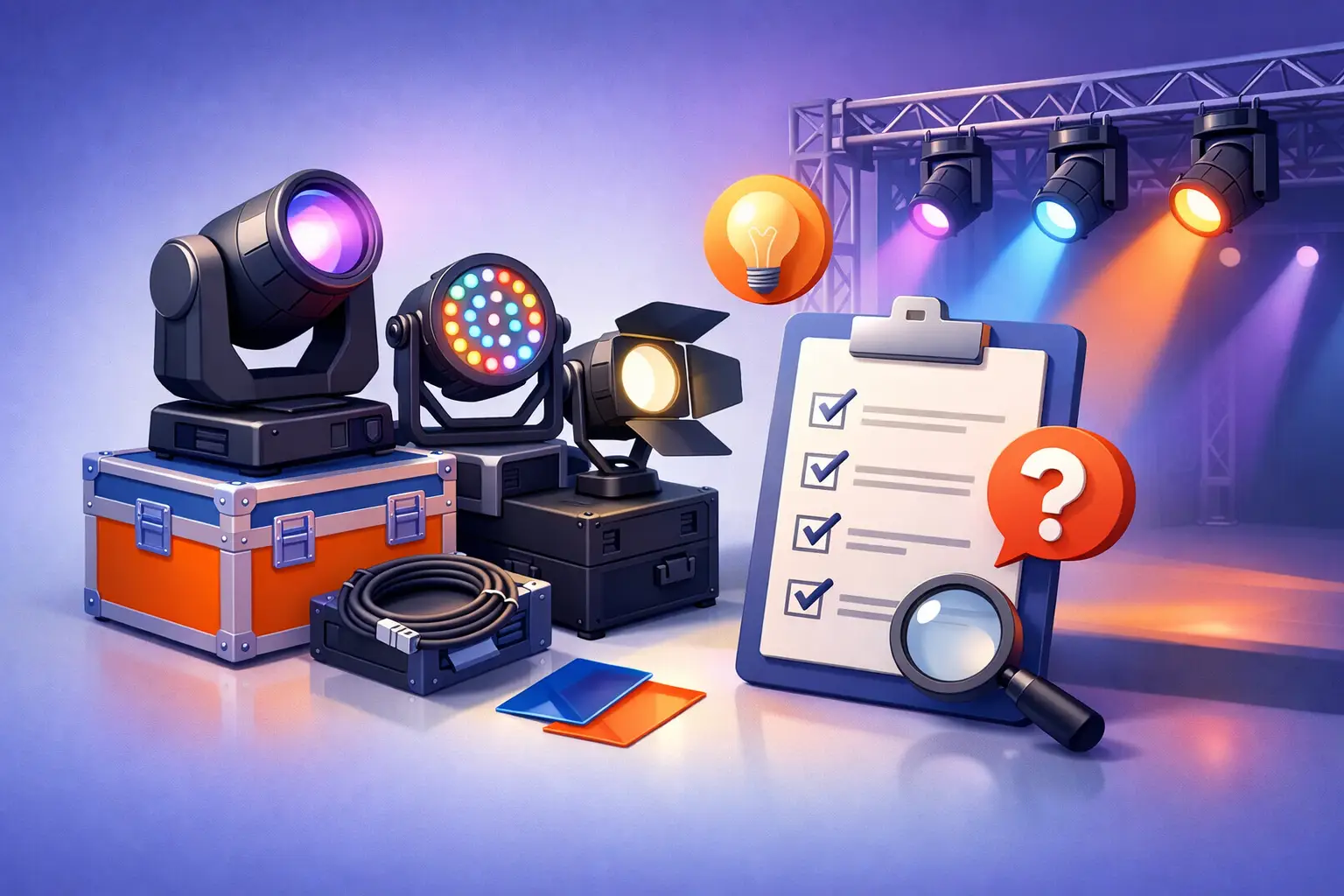
You do not need to become a lighting designer to rent wisely, but it helps to understand the main categories. Wash lights provide broad, even coverage and are often used for stages, walls, and ambient room color. Spot or profile fixtures are more precise and useful when you need focused beams, texture, or highlight moments. Moving lights add motion, beam effects, and dynamic looks for concerts, galas, and high-energy productions.
Uplights are commonly used around the room perimeter, behind drape, or along architectural features. They are a cost-effective way to improve the overall look of a space. Followspots are used when a person on stage needs to stay highlighted while moving. Blind ers, strobes, and effect lighting can add excitement, but they should match the event style and audience expectations.
Control matters too. Even a modest lighting setup may need a console or controller, dimming, distribution, and signal management. If your show includes multiple scenes, timed moments, or live entertainment, the operator can be just as important as the fixtures.
Venue details can change the whole package
The venue is often the deciding factor in how to rent stage lighting successfully. Ceiling height affects beam angles and rigging options. Power availability affects how much equipment can be used without additional distribution. Load-in access affects labor time. House lighting may help or hurt your design depending on whether it can be controlled.
Ask early whether the venue allows ground-supported truss, ceiling rigging, haze, or lifts. A hotel ballroom and an outdoor festival site have very different constraints. Outdoor events bring weather, generator planning, wind exposure, and earlier setup needs. Historic venues may limit rigging points or power tie-ins. Venues with lots of windows can also reduce the visible impact of lighting during daytime programs.
If the event includes video recording or live streaming, share that immediately. Lighting that looks good in the room is not always enough for camera. You may need stronger front light, more even facial coverage, and careful color temperature choices.
Labor is not optional on every show
One of the biggest budgeting mistakes is assuming the rental is only about equipment. Some stage lighting packages are simple enough for client pickup or basic setup, but many are not. If fixtures need to be rigged, addressed, programmed, focused, and operated during the event, you need trained crew.
That can include technicians for load-in and strike, a lighting programmer, a board operator, or a full production team depending on show complexity. This is where working with one vendor can simplify the process. Instead of renting fixtures from one source and finding freelance labor elsewhere, you have one accountable team handling the plan, setup, show operation, and teardown.
For corporate events and weddings, this also reduces stress on planners and venue staff. No one wants to troubleshoot DMX, power, or focus positions while guests are arriving.
Budget realistically without overbuying
Lighting costs vary widely because the scope varies widely. A simple stage wash package for a small indoor event is very different from a concert rig with truss, moving fixtures, haze, and an operator. The right budget depends on the event goals, but the smartest way to control spend is to prioritize visible impact.
If budget is tight, focus first on making people and key spaces look right. That usually means the stage, podium, performance area, dance floor, or head table. Decorative layers and dynamic effects can come after the essentials are covered. It is also worth asking whether a combined audio, lighting, video, and staging package will lower coordination costs overall. Bundling services often saves both time and money compared with managing separate vendors.
Be careful with very low quotes that leave out labor, delivery, setup windows, programming time, or on-site support. A cheaper rental can become more expensive when the missing pieces show up late.
Questions to ask before you book
A good rental conversation should feel consultative, not transactional. You want a provider to ask about your event flow, venue, audience size, and technical requirements. If they are only asking how many lights you want, that is a sign the planning may be too shallow.
Ask what is included in the quote, whether delivery and pickup are included, who handles setup, whether an operator is recommended, how power will be managed, and what contingency plan exists if a fixture fails. If your event has branded moments or performance cues, ask when programming happens and how show changes are handled.
It is also smart to ask for package options. In many cases there is a good, better, best approach that lets you compare visual impact against cost. That helps clients make practical decisions without guessing.
When full production support makes more sense
Some clients only need lighting gear. Others need a partner who can coordinate staging, audio, video, and crew as one system. If your event has multiple moving parts, a single production team can remove a lot of risk.
That is particularly true for conferences, festivals, and weddings where timing is tight and several departments depend on each other. Lighting affects video. Stage design affects lighting positions. Audio timing affects cueing. When one team oversees the whole picture, the result is usually cleaner and easier to manage.
For events in markets like Los Angeles, San Diego, San Francisco, or Las Vegas, where venue rules, labor timing, and client expectations can move fast, experience matters. A dependable production partner should be able to scale from a straightforward rental to a full technical takeover without making the process feel complicated.
The best lighting rental is rarely the biggest package. It is the one that fits the room, supports the schedule, respects the budget, and gives your audience the experience you intended. If you approach the process with clear goals and the right technical support, renting stage lighting becomes a planning advantage instead of a last-minute variable.
When you are choosing lighting, think less about how many fixtures you can afford and more about what needs to look right the moment the doors open.