Event Logistics Planning Checklist That Works
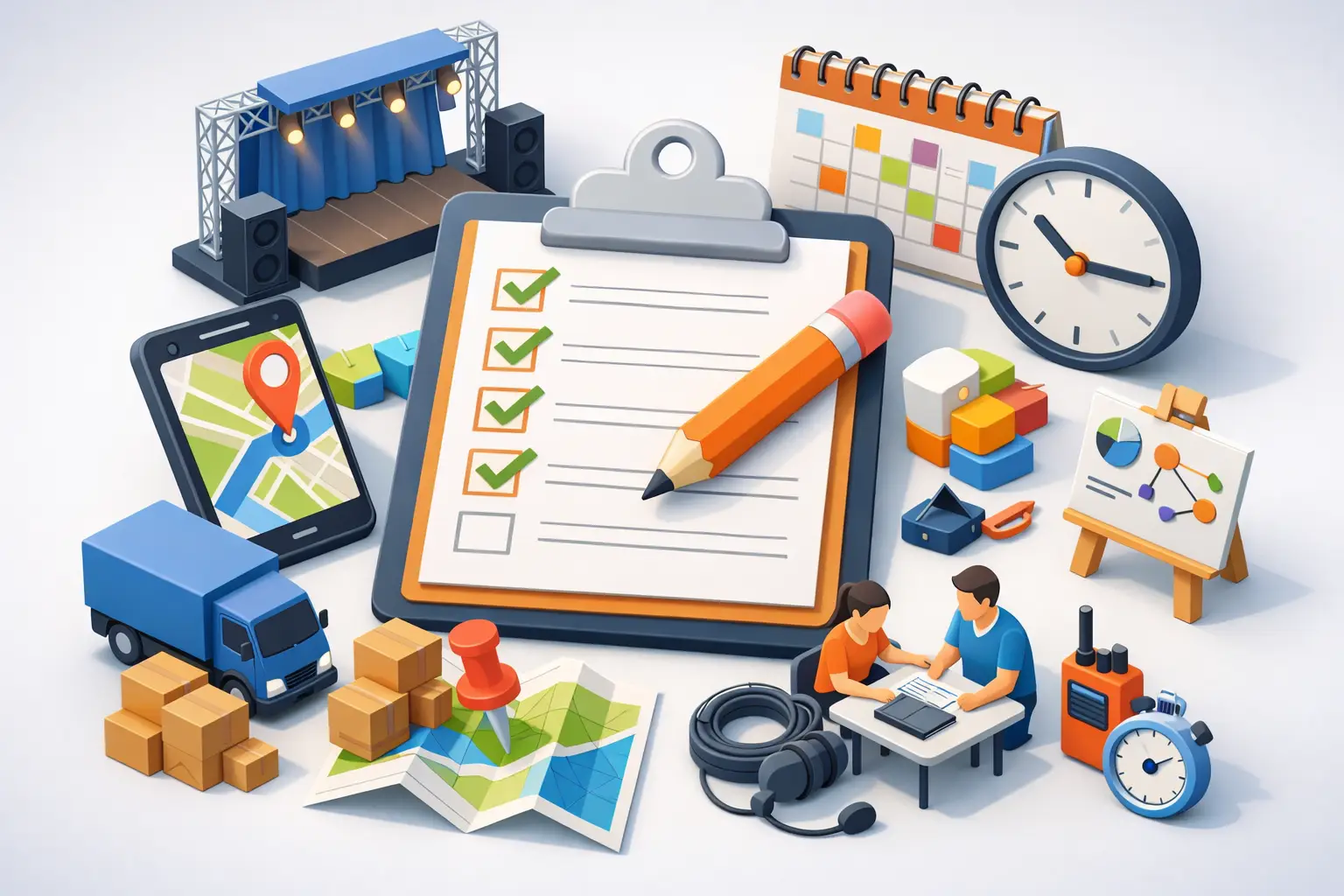
A great run of show can still fall apart if the loading dock is backed up, the power drop is wrong, or the microphones arrive without enough hands to set them. That is why an event logistics planning checklist matters so much. It keeps the event grounded in the real work of getting people, gear, timing, and responsibility lined up before guests ever walk through the door.
For planners, venues, and production teams, logistics is where budgets are protected and surprises are reduced. It is also where small decisions stack up fast. A ballroom keynote, a wedding reception, and an outdoor festival all need different solutions, but they share the same truth – strong logistics planning is what turns a good concept into an event that actually runs on time.
What an event logistics planning checklist should cover
At its core, an event logistics planning checklist should answer a few practical questions. What is happening, where is it happening, who is responsible, when does each step occur, and what happens if something changes? If any one of those answers is vague, the risk usually shows up later in the form of delays, extra labor costs, technical issues, or a stressed-out client team.
The checklist should not just be a shopping list of tasks. It needs to reflect the event’s actual operating conditions. A corporate conference in a hotel has different constraints than a rooftop brand launch or a multi-day outdoor event. Some venues have easy dock access and built-in AV support. Others require freight elevators, tight setup windows, union labor coordination, parking permits, or quiet-hour restrictions. Planning logistics without accounting for those realities is where trouble starts.
Start with the venue and access details
Most event problems look technical on the surface, but many start with access. Before selecting equipment, staffing, or setup times, confirm how the team and gear will enter the venue, where staging can happen, what the allowed load-in hours are, and whether there are restrictions on vehicle size, noise, rigging, or power use.
This is also the point where measurements matter. Ceiling height, stage footprint, screen sightlines, backstage space, and cable paths all affect what can be built safely and efficiently. A beautiful stage design that fits on paper can become a problem if the room has low trim height or limited power in the wrong place.
If the event is in a market like Los Angeles or San Francisco, access planning often deserves extra attention because parking, freight timing, union rules, and traffic windows can all affect crew schedules. That does not mean the event becomes harder by default. It means the checklist should treat venue access as a major planning item, not a footnote.
Align AV, staging, and power early
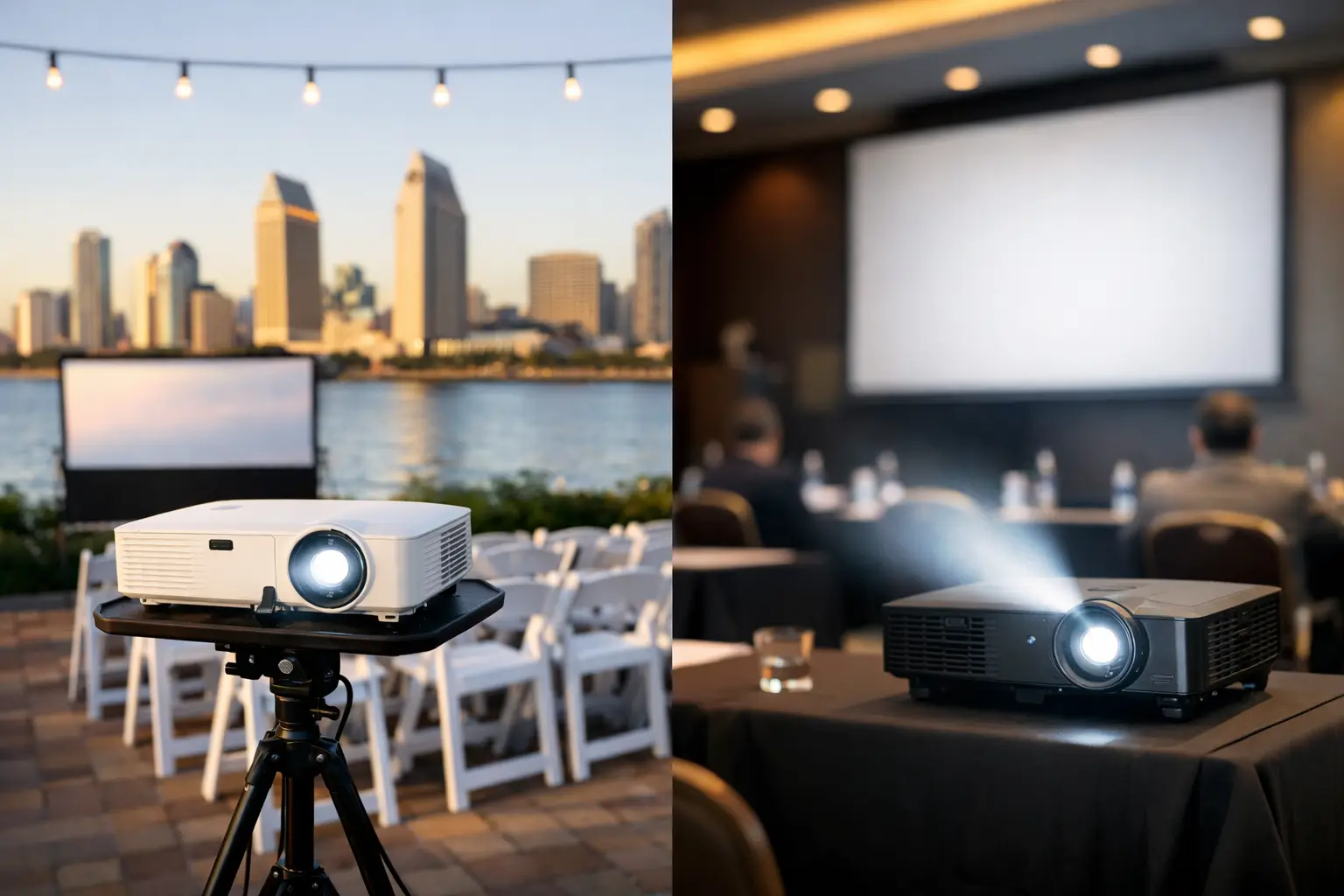
Production elements should never be planned in isolation. Audio affects stage layout. Lighting affects power draw and ceiling clearance. LED walls affect load-in time, rigging needs, and camera exposure. A projector package that works for a dim ballroom may fail in a bright expo hall.
This is where many planners benefit from having one production partner handle multiple categories instead of splitting rentals across several vendors. When audio, lighting, staging, and video are planned together, it is easier to avoid duplicated labor, conflicting install schedules, and finger-pointing if something shifts.
Your checklist should confirm equipment scope, power requirements, signal flow, placement, operator needs, and testing time. It should also distinguish between what is essential and what is optional. If the budget changes, you want to know which line items support core event function and which are presentation upgrades.
Build the timeline backward from show-critical moments
Many schedules are too optimistic because they start with desired event times instead of actual labor and setup demands. A better approach is to identify the moments that cannot move – doors open, guest arrival, first cue, meal service, keynote start, entertainment set, strike deadline – and build backward from there.
That backward timeline should include vendor arrivals, unload windows, setup milestones, rehearsal blocks, soundcheck, content testing, final walkthroughs, and contingency time. The contingency piece matters. If every minute is spoken for, one late truck or one venue delay can affect the whole day.
An experienced crew will usually ask for more prep time than a client expects, and there is a reason for that. Technical work done under pressure tends to create avoidable mistakes. Extra time is not waste. It is protection for the show.
Assign ownership, not just tasks
A checklist only works if every item belongs to someone. “Confirm stage layout” is not enough. The plan should state who confirms it, who approves it, and by when. That applies to vendor coordination, venue communication, signage, rentals, permits, entertainment, catering timing, security, and guest services.
For smaller events, one planner may hold several roles. For larger productions, responsibilities usually need to be split more clearly between producer, venue contact, technical lead, stage manager, catering manager, and client representative. Either way, the handoffs should be visible.
This is one of the biggest differences between events that feel calm and events that feel chaotic. The issue is rarely that no one cared. It is that too many people assumed someone else had it covered.
Include staffing, not just equipment
Equipment lists are easy to focus on because they are tangible. Staffing is where execution often succeeds or fails. Your event logistics planning checklist should account for setup crew, show operators, stagehands, stage managers, producers, security, registration staff, and teardown labor where needed.
The right staffing level depends on the venue, timeline, and complexity of the build. A simple speaking program may need only a compact technical team. A multi-room conference, festival, or large wedding usually needs more layered support. Understaffing can look cheaper on paper, but it often costs more later through delays, overtime, or missed details.
Crew scheduling should also reflect meal breaks, call times, shift changes, and overnight security for equipment if the event spans multiple days. Those practical details are not glamorous, but they keep operations stable.
Plan for guest flow and experience
Logistics is not only about trucks and trusses. It also shapes how the event feels to attendees. Registration lines, wayfinding, seating layouts, ADA access, restrooms, green rooms, VIP holding areas, and transition timing all affect the guest experience.
For example, a beautifully produced stage show can still feel disorganized if guests cannot hear check-in instructions, if signage is unclear, or if room flips take too long. On the other hand, a modest production can feel polished when movement through the space is simple and well timed.
That is why event operations and guest experience should be planned together. The event team should know where guests enter, where lines may form, when rooms need clearing, and how transitions will be communicated.
Do not treat backup planning as optional
The best logistics plans account for change. Weather can shift. Speakers can run late. Power can become an issue. A venue can suddenly limit access. Deliveries can miss their window. Backup planning does not mean expecting failure. It means reducing the cost of disruption.
At minimum, the checklist should cover weather contingencies for outdoor events, spare equipment for mission-critical items, alternate cueing methods, emergency contacts, medical and safety procedures, and a communication chain for urgent decisions. It should also clarify what happens if the schedule slips. Which segments can compress, move, or be cut without damaging the event’s main goals?
Trade-offs matter here. Not every event needs duplicate systems across the board. But the higher the stakes, the less room there is for single points of failure. A wedding ceremony, executive keynote, or live performance often deserves more redundancy than a lower-risk internal meeting.
Review the load-out before the event starts
Teams often spend weeks on setup planning and then rush through teardown decisions at the last minute. That can create overtime, venue penalties, lost gear, or exhausted crews making avoidable mistakes after a long day.
Your checklist should confirm strike timing, packing order, dock access after the event, labor coverage, equipment pickup assignments, and venue closeout requirements. If multiple vendors are involved, the load-out sequence should be coordinated ahead of time. The fastest teardown is usually the one that was planned early.
This is also where a full-service production partner can simplify the process. When one team is responsible for the equipment, crew, operation, and strike, there are fewer gaps in accountability and fewer last-minute coordination calls.
A checklist is only useful if it gets used
The strongest event logistics planning checklist is not the longest one. It is the one the team actually reviews, updates, and works from. Plans change. Headcounts move. Floor plans evolve. Timelines tighten. A good checklist is a living document tied to real decisions, not a file that gets opened once and forgotten.
If your event includes staging, sound, lighting, screens, or full production support, the logistics conversation should start earlier than most people think. That is where an experienced partner can save time, protect the budget, and help you avoid preventable problems before they become event-day emergencies.
When the logistics are handled well, guests rarely notice them. That is the point. They notice the show starting on time, the audio sounding right, the room feeling ready, and the day moving the way it should.