Best Outdoor Event Lighting Setups That Work
A beautiful outdoor venue can turn into a safety issue, a flat photo backdrop, or an early ending if the lighting plan is treated as an afterthought. The best outdoor event lighting setups do more than make a space visible after sunset. They guide guests, support the program, create atmosphere, and give every vendor the working light they need to perform.
For a wedding, festival, corporate reception, or private celebration, the right setup depends on the site, schedule, guest count, power access, and what needs to happen on stage. A lighting plan should be built around the event experience, not around a collection of fixtures.
Start With How Guests Will Use the Space
Before selecting string lights, uplights, moving fixtures, or LED washes, map the guest journey. Consider where attendees arrive, park, check in, walk, eat, gather, and exit. Each area needs a different level and type of illumination.
Entry paths, stairs, curbs, ramps, and parking areas need clear functional lighting. This is not the place for overly dim decorative fixtures. Warm path lights, low-profile floods, or carefully aimed LED fixtures can make movement safer without making the site feel like a parking lot.
Once guests reach the main event area, lighting can become more expressive. A dinner space may call for soft overhead warmth and subtle architectural uplighting. A concert or awards program needs clear stage visibility, controlled audience lighting, and enough contrast for cameras. A festival site may need color-coded zones and brighter wayfinding because guests are moving between several activations.
The most effective plans layer these purposes instead of asking one fixture type to do everything.
Build the Setup in Layers
The best outdoor event lighting setups usually combine four lighting layers: safety, ambient, architectural, and show lighting. Each layer has a job, and each should be controlled separately whenever possible.
Safety and wayfinding lighting
This layer helps people move confidently through the site. It covers walkways, entrances, exits, service routes, restrooms, stairways, and any change in elevation. It also supports staff during load-in, service, and teardown.
Avoid placing lights where they create glare at eye level or cast harsh shadows across steps. Cable paths need protection, fixtures should be secured against accidental contact, and emergency access must remain visible. If a venue has strict rules around egress or fire lanes, address those requirements before finalizing placement.
Ambient lighting
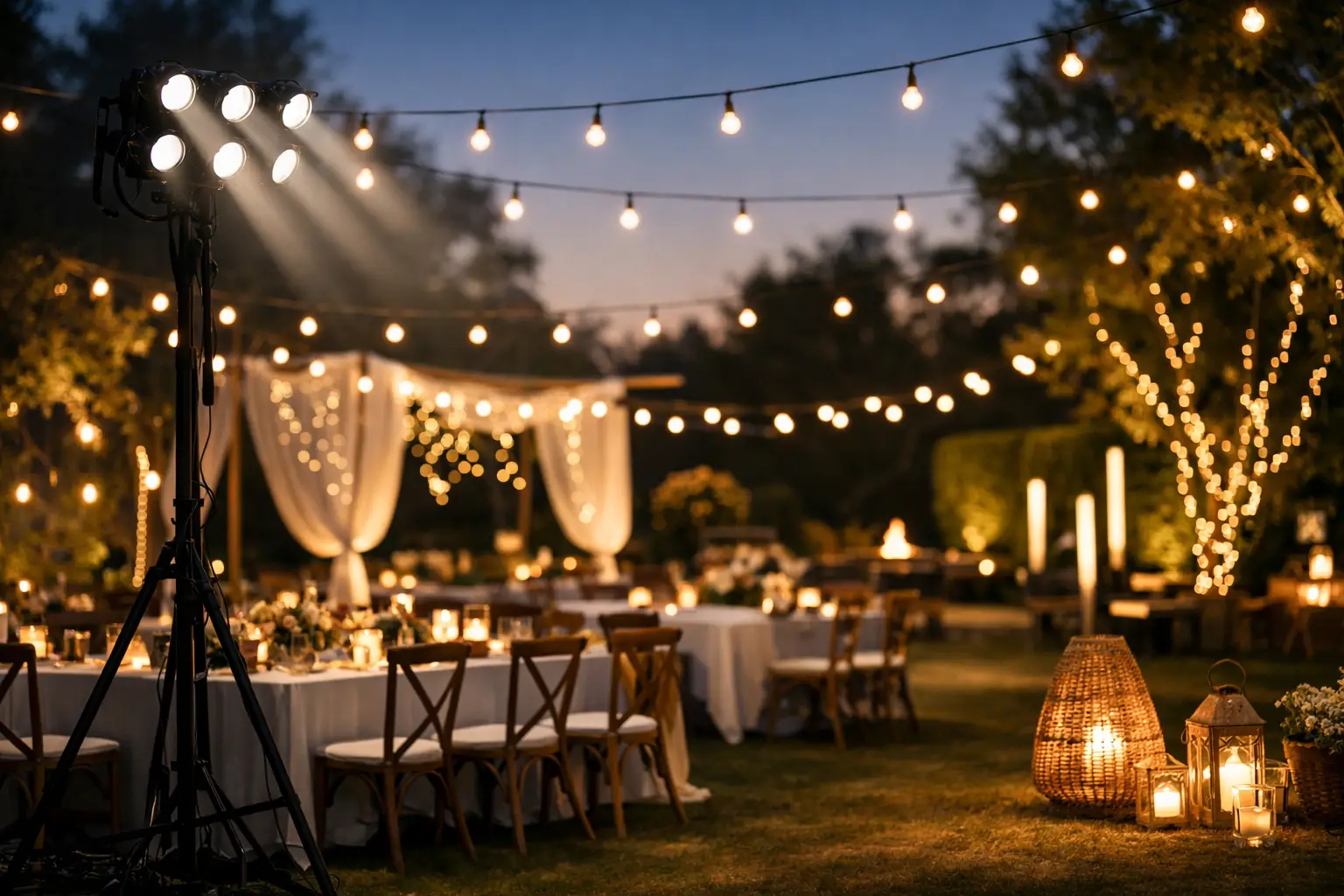
Ambient lighting establishes the overall mood. Café string lights, festoon lighting, lanterns, soft LED washes, and indirect tent lighting are common choices because they create a welcoming base level without overwhelming the event design.
Warm white works especially well for weddings, dinners, and upscale receptions. Color can be used with more intention for brand activations, nightlife events, concerts, and themed parties. The trade-off is that saturated color may look dramatic in person while making food, faces, and décor appear less natural in photos. A balanced design keeps some neutral or warm front light where people will be photographed.
Architectural and décor lighting
Outdoor sites often have features worth highlighting: trees, facades, columns, landscaping, water elements, terraces, or custom scenic pieces. Uplighting and narrow-beam fixtures can add depth to a large open area and make a temporary venue feel designed rather than simply lit.
The key is restraint. Lighting every tree, wall, and structure with the same color can make an event feel visually busy. Focus on the elements guests will notice from key sightlines, including the entry, dining area, stage, and photo moments.
Stage and entertainment lighting
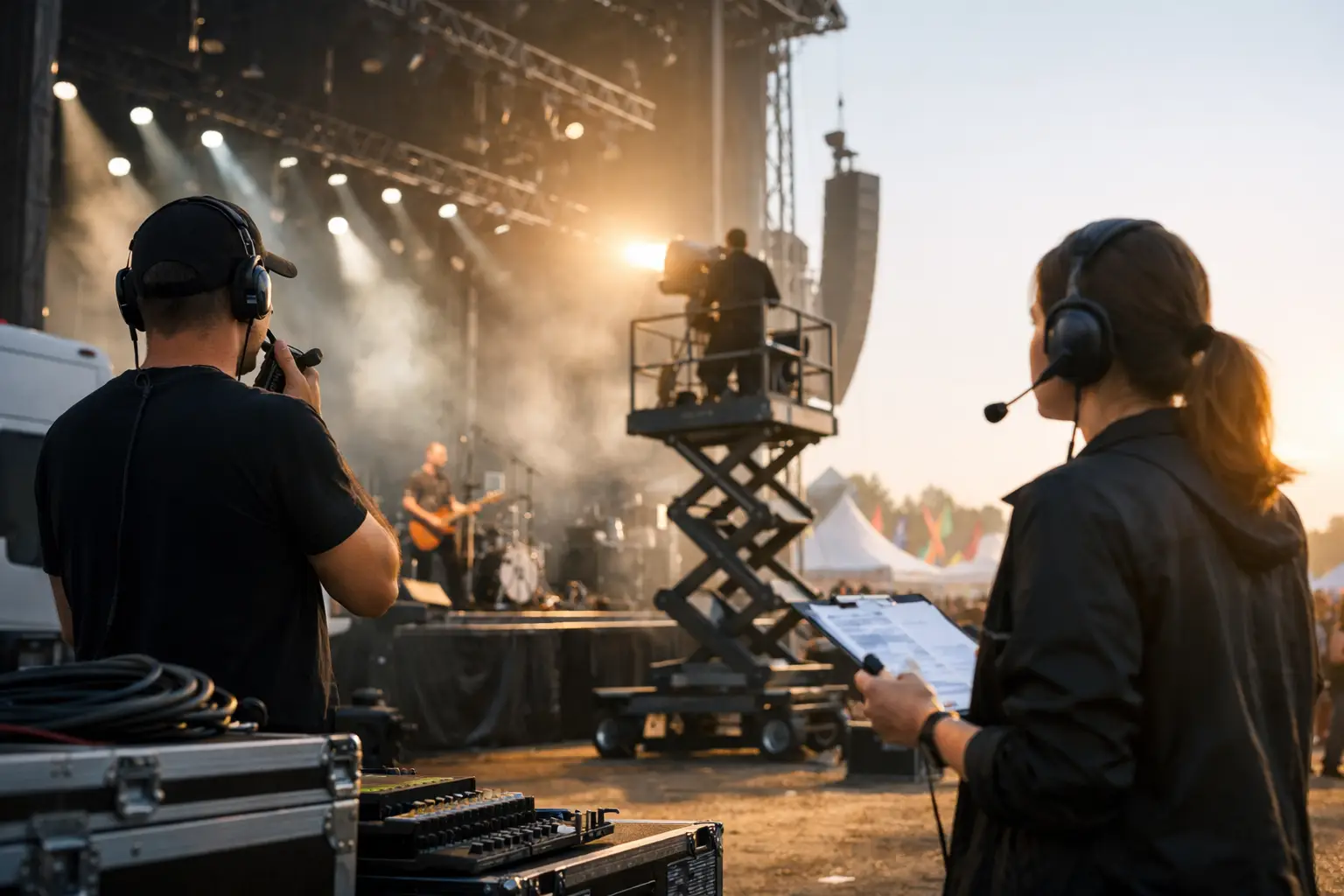
If the event includes speakers, performers, DJs, a band, or presentations, stage lighting needs its own plan. The goal is not just dramatic movement or color. Presenters need clean front light so attendees and cameras can see faces clearly. Musicians need enough light to perform safely, while the audience benefits from lighting that creates energy without distracting from the stage.
For live entertainment, a professional lighting operator can make a major difference. Cueing looks for walk-ons, speeches, performances, and transitions keeps the program polished and prevents the common problem of a stage that is either too dark or unintentionally overlit.
Match Fixtures to the Outdoor Conditions
Outdoor lighting equipment must be selected for the actual environment, not just the desired look. Wind, dust, heat, coastal moisture, uneven ground, and unexpected weather can change what is practical.
Weather-rated LED fixtures are often the right choice for exposed areas because they produce less heat, use less power, and offer flexible color control. Still, weather-rated does not mean invincible. Connections, power distribution, rigging points, and control equipment all need protection and planning.
Wind is another factor that gets underestimated. Decorative overhead lighting, light stands, truss, flags, and scenic elements need proper ballast, secure rigging, and inspection throughout the event. On a breezy waterfront, rooftop, or desert site, the lighting design may need to favor lower, more stable placements over tall temporary structures.
Noise restrictions can affect lighting decisions as well. If a generator is required, its placement, sound level, and cable run should be coordinated with the event layout. A quiet dinner can be disrupted by a generator placed too close to guest seating, even when the lighting itself looks excellent.
Plan Power Before You Fall in Love With the Design
Power is the backbone of an outdoor lighting setup. Venues may offer limited circuits, distant outlets, or power that must also serve catering, audio, video, bars, and other vendors. Assuming that a few available outlets can handle the entire event is a fast route to tripped breakers and delayed programming.
A production team should calculate the expected electrical load, identify dedicated circuits, and determine whether generator power or temporary distribution is needed. LED lighting reduces demand considerably, but larger events can still require substantial power once video walls, sound systems, refrigeration, and staging are included.
Cable management matters just as much. Cables should follow planned routes, be ramped or protected where guests and vehicles cross, and remain accessible to technicians. A clean cable plan protects guests, reduces troubleshooting time, and keeps the site looking intentional.
Use Control and Timing to Make Lighting Feel Premium
Good fixtures are only part of the result. Control is what allows lighting to change with the event instead of staying frozen in one look all night.
At minimum, separate functional lighting from decorative lighting so essential pathways stay illuminated when the mood lighting changes. For a reception, lighting may begin bright enough for arrivals and dining, shift warmer as daylight fades, then transition into more energetic colors for dancing. For a corporate event, a clean branded color palette can support networking before changing to focused stage looks during the program.
Timing should account for the sunset, not the invitation time. In Los Angeles, San Diego, San Francisco, and Las Vegas, sunset conditions can vary significantly by season and venue exposure. Schedule a site walkthrough or lighting check close to the actual event time whenever possible. A space that looks perfect at 3:00 p.m. may reveal serious gaps at 7:30 p.m.
Decide When a Rental-Only Plan Is Enough
A smaller backyard dinner or simple outdoor reception may only need a rental package with clearly identified power access and straightforward fixture placement. In that case, the priority is choosing reliable equipment, confirming setup requirements, and allowing enough time for installation before guests arrive.
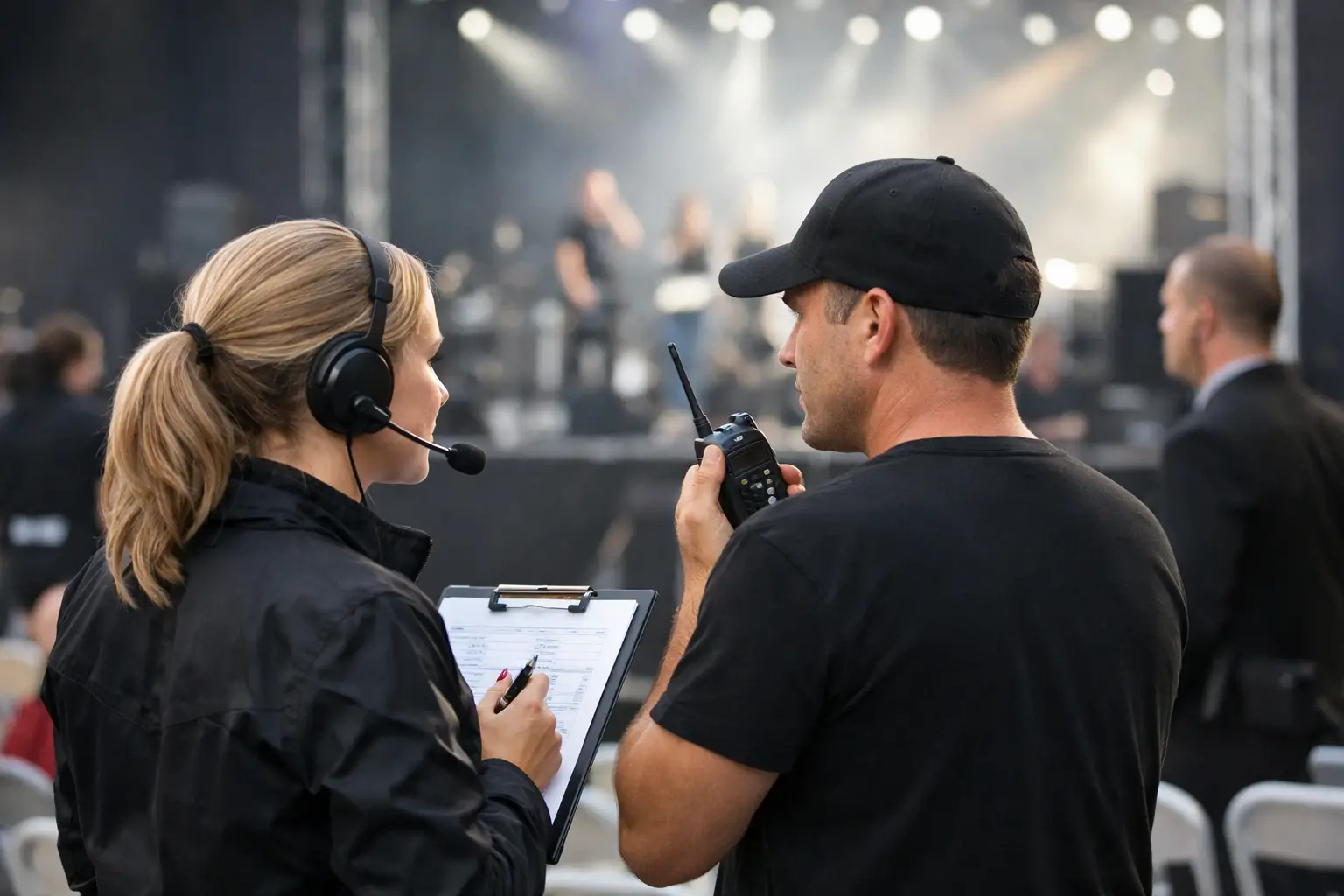
A staffed production approach is usually the better choice when the event has a stage program, multiple zones, complicated power needs, large guest counts, custom design, or no margin for technical failure. One accountable production partner can coordinate lighting with audio, staging, video, power, and event timing instead of leaving separate vendors to solve conflicts on-site.
GeoEvent supports both approaches, from targeted lighting rentals to complete outdoor production management. The right level of support is the one that protects the guest experience without adding unnecessary complexity to the budget.
Common Outdoor Lighting Mistakes to Avoid
The most common mistake is designing for photos only. A room or lawn may look impressive in a single image but fail guests if pathways are dark, restrooms are hard to find, or speakers cannot be seen. Another is relying solely on string lights. They add warmth, but rarely provide enough coverage for a full event site or live program.
It is also risky to wait until event day to test power, fixture positions, and sightlines. Outdoor production has too many variables for guesswork. A thoughtful advance plan leaves room for weather changes, venue restrictions, and the simple reality that every site behaves differently after dark.
The strongest lighting design gives guests a clear path, gives the program a professional stage, and gives the event its own sense of place. Start with the experience you want people to have after sunset, then build the equipment and crew plan around making that experience dependable.