Festival Production Services That Keep Shows Moving
A festival can have a strong lineup, a great site, and enthusiastic ticket sales, then still lose momentum because the production plan falls apart at the gates. A delayed stage change, weak sound coverage, unclear crew roles, or a video wall that cannot be seen in daylight all affect the attendee experience. Professional festival production services bring the technical systems, people, and operating plan together before those issues reach the crowd.
For festival operators, the goal is not simply to rent equipment. It is to create an environment where artists can perform confidently, attendees can engage with every stage, vendors can operate safely, and the production team has a clear response when plans change. That takes more than speakers and lights. It takes coordination from site planning through final load-out.
What Festival Production Services Should Cover
A full production partner should begin with the festival’s practical realities: venue layout, crowd size, number of stages, performance schedule, power availability, local regulations, access routes, and weather exposure. Those details determine what equipment is appropriate and how the crew should deploy it.
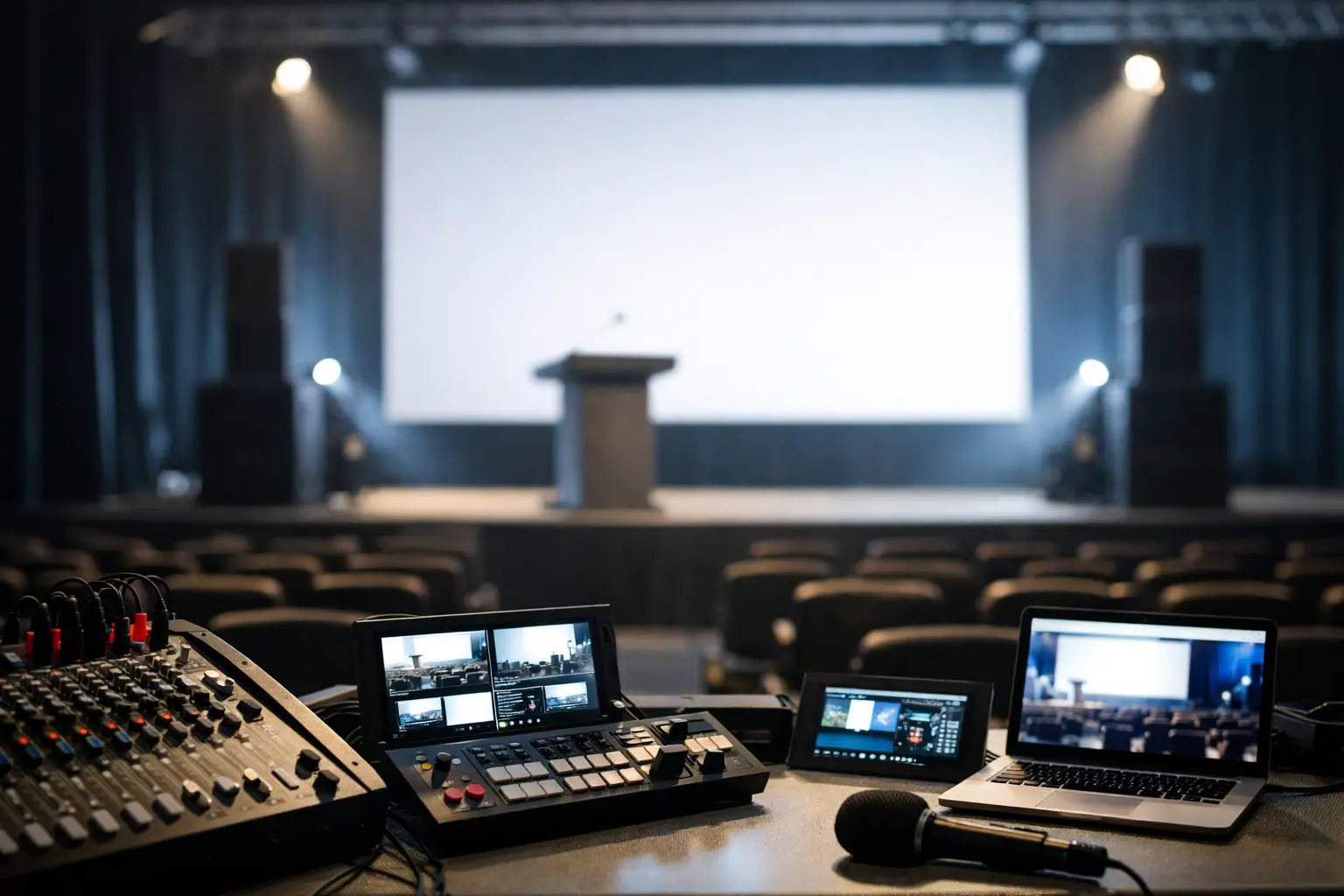
Audio is usually the first major consideration. Each stage needs a sound system sized for its audience area, with proper speaker placement to deliver clear coverage without creating unnecessary sound bleed into neighboring stages. Artist monitor systems, microphones, DJ equipment, mixing consoles, signal distribution, and experienced audio engineers are part of the same conversation. A powerful system is not automatically the right system. The best choice depends on the site, permitted volume levels, programming style, and how close stages sit to one another.
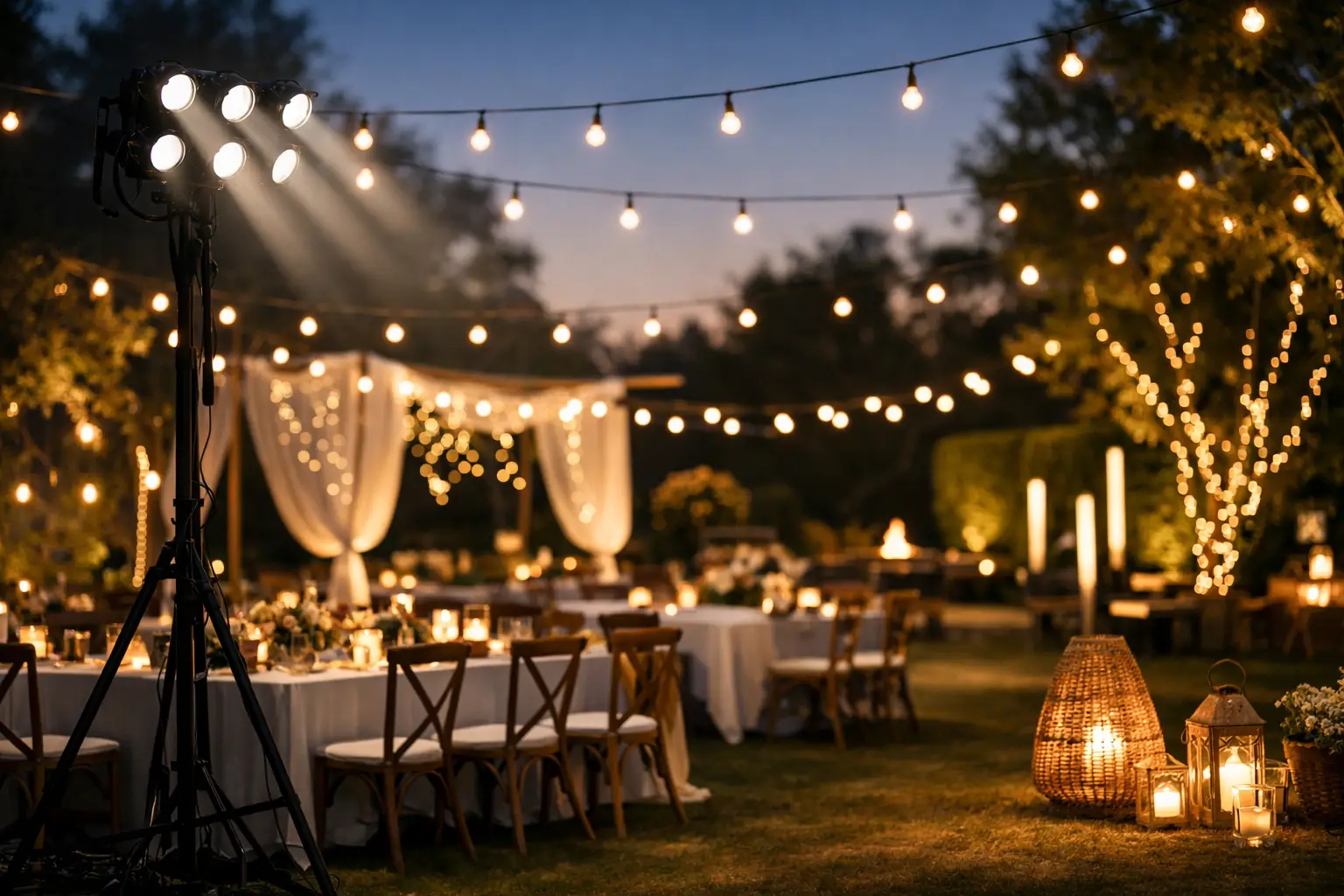
Lighting supports both performance quality and site safety. A daytime outdoor festival may require modest stage lighting during most of the program, then need a much more intentional look after sunset. Lighting packages can include stage wash, moving fixtures, uplighting, truss, control systems, and practical lighting for backstage paths, entrances, and work areas. The design should match the event’s creative identity while giving performers enough visibility and technicians enough control.
Staging and roof systems need equal attention. The stage must accommodate performers, backline, technical positions, scenic elements, and safe artist access. It also needs to be appropriate for the site surface and anticipated conditions. A compact community event may need a clean, efficient mobile stage, while a multi-day music festival may require larger decks, covered roofs, delay towers, barricade plans, and separate platforms for front-of-house control.
Video can make a major difference when audiences extend beyond the front rows. LED video walls help guests see performers, sponsor content, schedule updates, and emergency messaging from across the site. Projectors may be effective for nighttime installations or indoor festival activations, but they are rarely the right solution for direct daylight. Choosing the right display technology early prevents expensive last-minute adjustments.
The Production Plan Starts Before Equipment Arrives
The most successful festivals are planned around operations, not equipment lists. Before load-in, the production team should understand where trucks will enter, where gear will be staged, when the site is available, how artists will check in, and which teams have decision-making authority. A production schedule should account for build time, sound checks, doors, set changes, curfews, and teardown.
Power planning deserves particular care. Festivals often combine audio, lighting, video, food vendors, artist trailers, site lighting, and guest services in one temporary environment. Those systems should not be treated as an afterthought or connected to whatever outlet is nearby. Proper distribution, generator capacity, cable routing, backup planning, and load calculations protect both the show and the people working it.
Communication planning matters just as much. Radio channels, crew call times, stage manager responsibilities, emergency contacts, and escalation procedures should be clear before show day. When a performer arrives late or weather forces a pause, a prepared production team can adjust with less disruption because everyone knows who is handling the next step.
Why One Accountable Production Partner Helps
Festival organizers often start by hiring separate vendors for sound, lighting, staging, video, labor, and power. That approach can work when there is an experienced internal production manager with the time to coordinate every handoff. It can also create gaps: a stage provider may not know the video wall footprint, the audio company may not be included in the power discussion, or the labor team may arrive without a complete build schedule.
Working with one production partner gives organizers a single point of accountability across the technical plan. Equipment choices can be coordinated with site constraints. Crews can build in the correct sequence. Technical leads can communicate directly throughout setup and live operation. It also simplifies budgeting because the plan is evaluated as a complete system rather than as disconnected rentals.
That does not mean every festival needs a fully outsourced takeover. Some clients have an in-house producer and only need an LED wall, stage rental, audio package, or additional technical staff. Others need support from the first site walk through to the final truck departure. The right scope depends on the event team’s experience, the complexity of the site, and the consequences of a production delay.
How to Build a Festival Production Scope That Fits the Budget
Budget-conscious production is not about stripping away the elements that protect the show. It is about identifying what attendees will notice, what performers require, and what the site demands. Investing in clear audio coverage, safe staging, reliable power, and capable crew leadership generally has a greater impact than adding features that do not serve the audience or program.
Start with the essentials: audience capacity, stage count, operating hours, artist technical requirements, venue conditions, and the desired experience after dark. From there, prioritize the systems that make the event function. If the budget has room for enhancements, consider video reinforcement, scenic design, upgraded lighting, branded content, or additional site activations.
Flexibility should be built into the plan. A daytime event that extends into evening may need more lighting than expected. A sponsor may request last-minute video content. A second stage may require a faster changeover after the schedule is released. A production partner that owns and manages a broad rental inventory can often adapt more efficiently than a team waiting on multiple outside suppliers.
On-Site Staffing Is Part of the Product
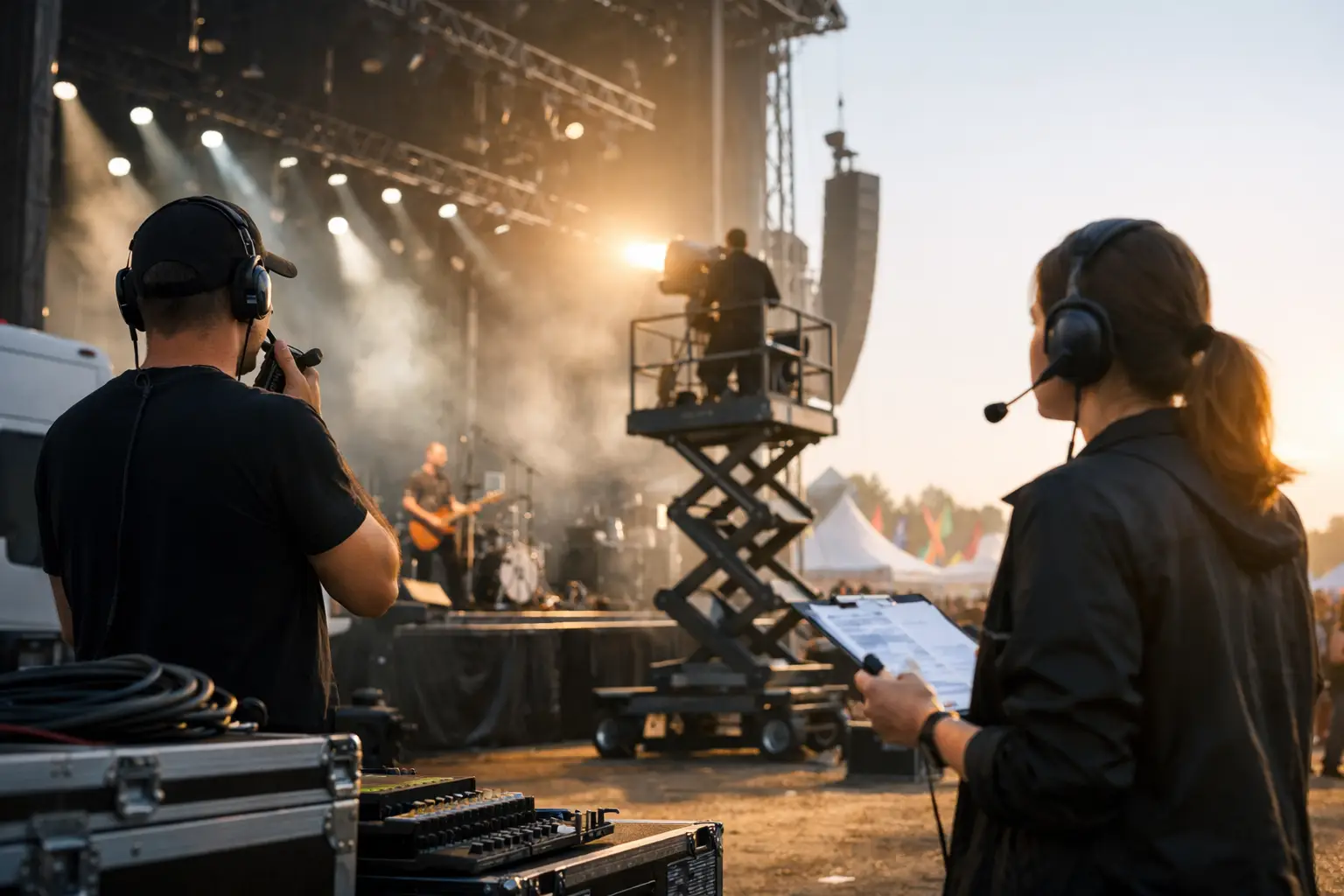
Equipment does not operate itself, especially at a live festival. Skilled technicians manage audio mixing, lighting cues, video playback, stage changes, cable safety, and troubleshooting while the event is underway. Stage managers keep artists, backline, and show timing aligned. Production managers coordinate the bigger picture, balancing creative requests with schedule, safety, and site operations.
The staffing level should reflect the show. A single-stage local festival may need a focused crew with clear roles. A large, multi-stage event may require separate teams for each stage, dedicated video operators, utility technicians, runners, and an on-site production manager. Understaffing can look like savings on paper, but it increases the chance that small issues become visible problems.
Experienced crews also improve the guest experience in ways attendees may never see. They tape and protect cable paths, keep working areas organized, manage changeovers efficiently, and respond calmly when a technical issue appears. That quiet competence is one of the strongest reasons to invest in professional support.
Questions to Ask Before Hiring Festival Production Services
Before choosing a provider, ask whether they can support your event from planning through teardown, not just deliver equipment. Confirm who will create the site and technical plan, who will operate the systems during the show, and who is responsible for coordinating load-in and load-out. Ask how the team handles weather, power concerns, changing schedules, and artist riders.
It is also reasonable to ask for a clear explanation of what is included. A quote may cover equipment but exclude labor, transportation, setup, operators, cable management, permits, or overtime. The lowest initial number is not always the most cost-effective option if critical needs appear later as add-ons.
For festivals in Los Angeles, San Diego, San Francisco, or Las Vegas, local site familiarity and responsive support can be especially valuable. GeoEvent helps organizers match audio, lighting, staging, video, staffing, and production management to the scale of the event, whether the need is a specific rental package or a complete technical operation.
A well-produced festival lets the audience focus on the music, the speakers, the food, and the shared experience instead of the mechanics behind it. Give the production plan the same attention you give the program, and the team behind the scenes can keep the show moving when it matters most.