Event Stage Design That Works on Show Day
A stage can look impressive in a rendering and still create problems the minute the room opens. Sightlines get blocked, presenters lose confidence, LED walls overpower the speaker, or load-in takes twice as long as planned. That is why event stage design is never just about appearance. It has to support the way the event actually runs.
For planners, venues, and production teams, the best stage design solves two jobs at once. It creates a strong visual focal point for the audience, and it gives the show a practical framework for audio, lighting, video, staging, and crew operations. If either side gets overlooked, the event pays for it later in stress, delays, or uneven audience experience.
What event stage design really needs to do
A well-designed stage sets expectations before anyone speaks. At a corporate conference, it signals professionalism and helps reinforce brand presence. At a wedding, it shapes the emotional center of the room. At a concert or festival, it influences energy, pacing, and how people connect with the performance.
But strong event stage design also has a less visible role. It needs to make transitions manageable, keep equipment placement logical, support camera angles, and work with the venue instead of fighting it. A beautiful stage that leaves no room for speakers to enter safely or no clean path for cable runs is not a successful design.
This is where experienced production planning matters. The design has to account for what the audience sees and what the crew needs behind the scenes. Those two priorities are connected, not separate.
Start with the event goal, not the backdrop
One of the most common mistakes in stage planning is choosing visual elements before defining the purpose of the event. A general session, awards show, product launch, wedding reception, and live performance all ask different things from the stage.
If the priority is spoken content, the design should support clarity, screen visibility, and presenter confidence. If the event depends on performance energy, the stage may need more depth, stronger lighting positions, and a layout that gives talent room to move. If the client wants a high-end branded environment, scenic elements and video surfaces may carry more weight than a large physical set.
The budget should follow those goals. Not every event needs custom scenic construction. In many cases, smart lighting, clean staging, pipe and drape, and a well-sized video wall can create a polished result without overspending. Other events justify more elaborate builds because the stage is central to the guest experience or brand impact.
The venue changes everything
No stage exists in isolation. Ceiling height, rigging points, power access, room width, loading dock constraints, union rules, and audience seating all shape what is realistic. A design that works in a ballroom may fail in a low-ceiling meeting room. A stage that feels balanced in a wide general session can look undersized in a deep outdoor setting.
This is why site visits and accurate measurements matter. Even small details can affect the final setup. Column placement may block side screens. House lighting positions may interfere with custom truss. The venue may have strict timing for load-in and teardown. These are not minor technicalities. They directly influence cost, labor, and what can be delivered without risk.
For events across markets like Los Angeles, San Diego, San Francisco, and Las Vegas, venue conditions can vary fast from one property to the next. Planning stage design around the actual room, not a generic concept, is what keeps execution on track.
How stage design and AV work together
Event stage design is strongest when audio, video, lighting, and staging are planned as one system. Problems usually start when those pieces are handled separately.
Take screen placement. A large center screen or LED wall can create strong visual impact, but it also affects where speakers stand, how cameras frame shots, and whether presentation content is readable from the back of the room. Lighting has similar trade-offs. Bold color looks great in photos, but if it washes out faces or makes branding inconsistent on camera, the design starts working against the event.
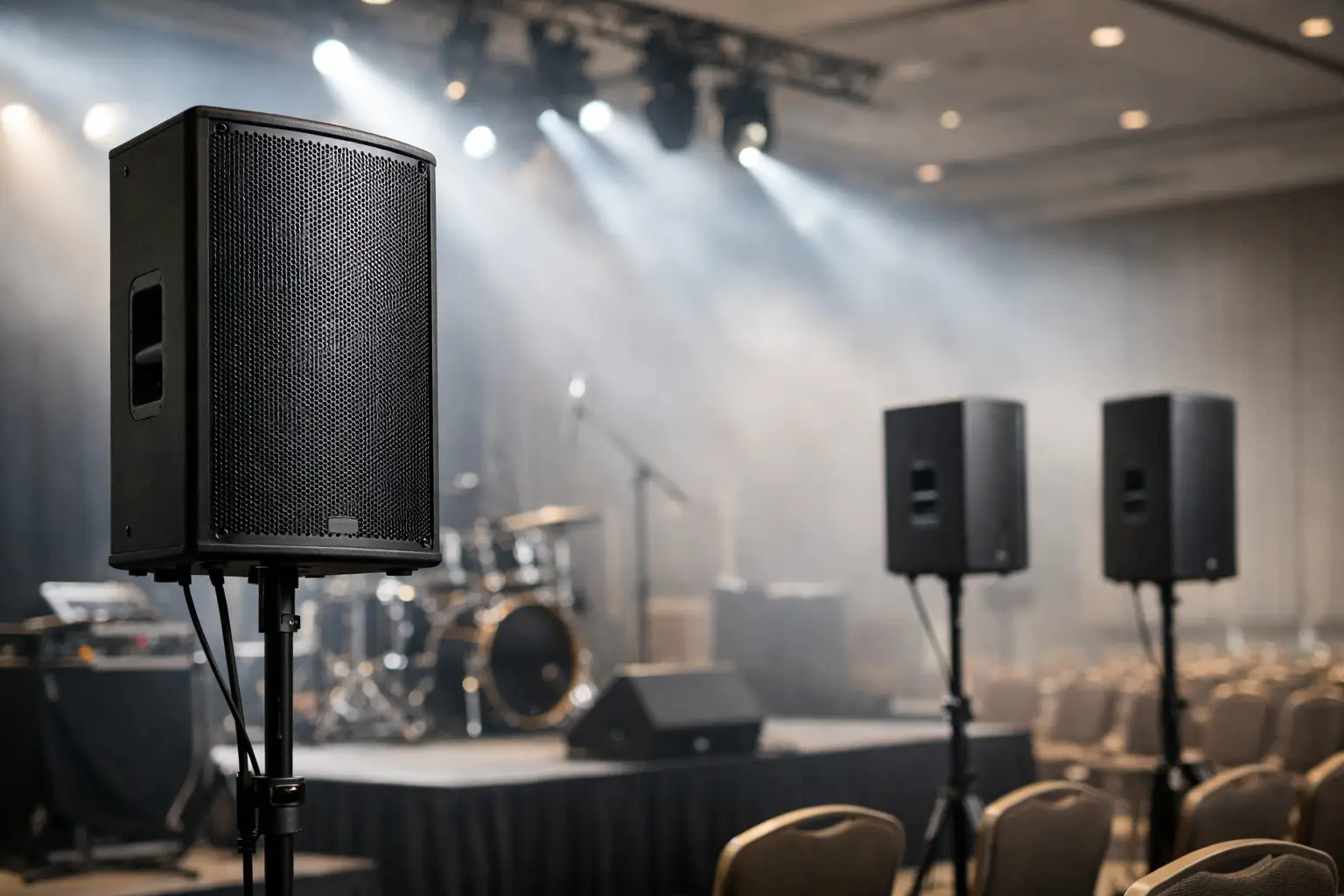
Audio is another area where design decisions matter more than clients often expect. Stage height, scenic surfaces, and speaker placement all affect coverage and clarity. A clean look on stage means very little if guests struggle to hear from side seating or if microphones pick up reflections from hard set pieces.
The best results come from designing with production realities in mind from the beginning. That avoids the late-stage scramble where the creative concept has to be trimmed back to fit the technical plan.
Scale matters more than spectacle
Not every event needs a dramatic build. In fact, oversizing the stage is one of the fastest ways to make a room feel awkward. A stage that is too large for the audience can make turnout feel thin. A stage that is too small can make the event look underpowered and limit movement.
Good design feels proportional. The stage should match the room, audience count, content format, and overall energy of the event. A leadership summit for 200 guests needs a different visual approach than a festival crowd of 2,000. So does a wedding where the couple wants intimacy rather than a concert-style presentation.
This is where practical guidance matters. Clients do not always need more gear. They need the right combination of stage size, risers, scenic treatment, screens, lighting, and support infrastructure to create a complete environment.
Event stage design for different event types
The same design logic does not apply to every show.
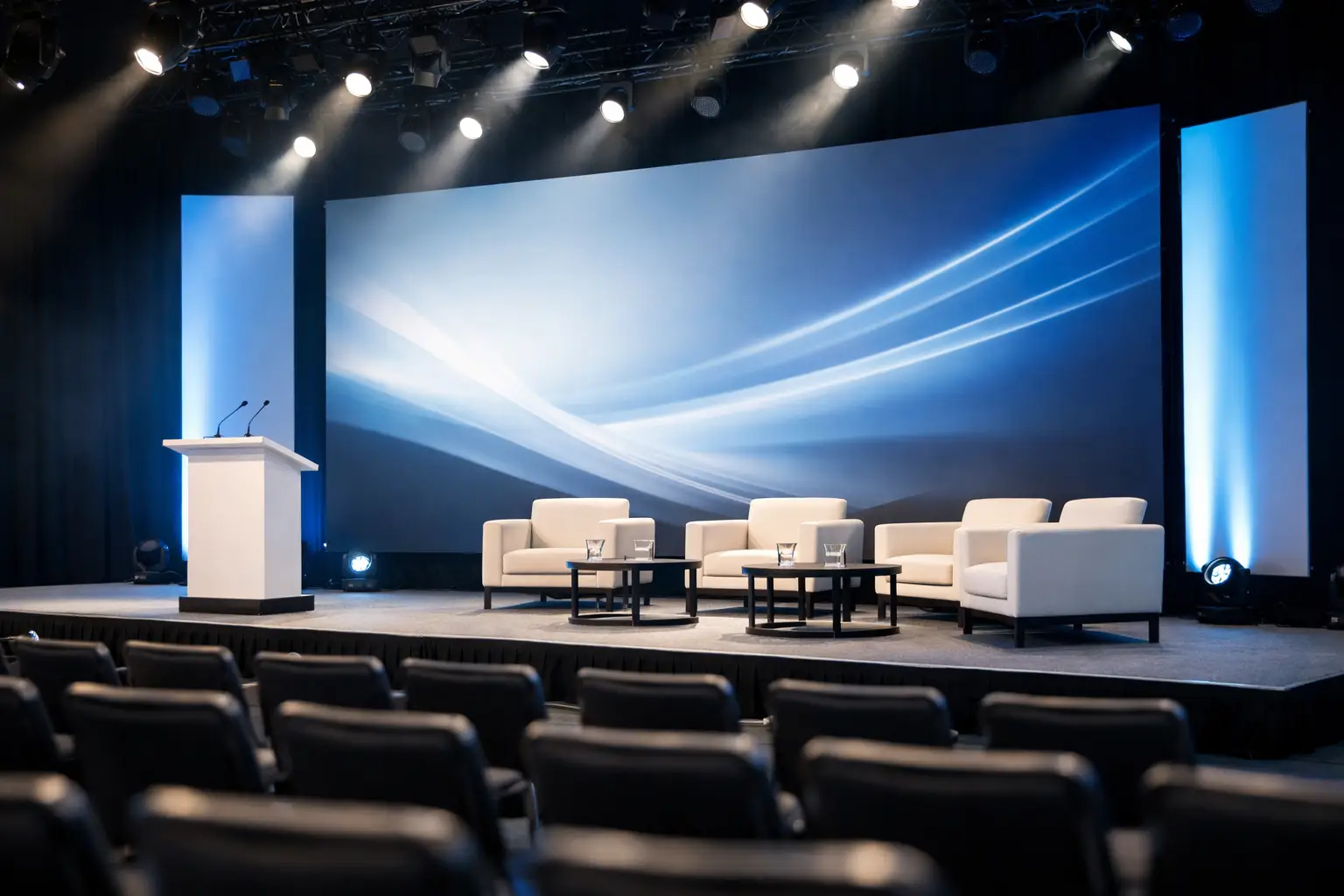
Corporate events usually benefit from clean lines, clear branding, readable screens, and lighting that flatters speakers on camera and in person. The design needs to feel polished without distracting from the message.
Weddings often call for a softer visual approach, but they still need technical discipline. Band stages, ceremony platforms, dance floor lighting, and video support all have to fit the room and timeline. Elegant design works best when it also keeps the evening flowing.
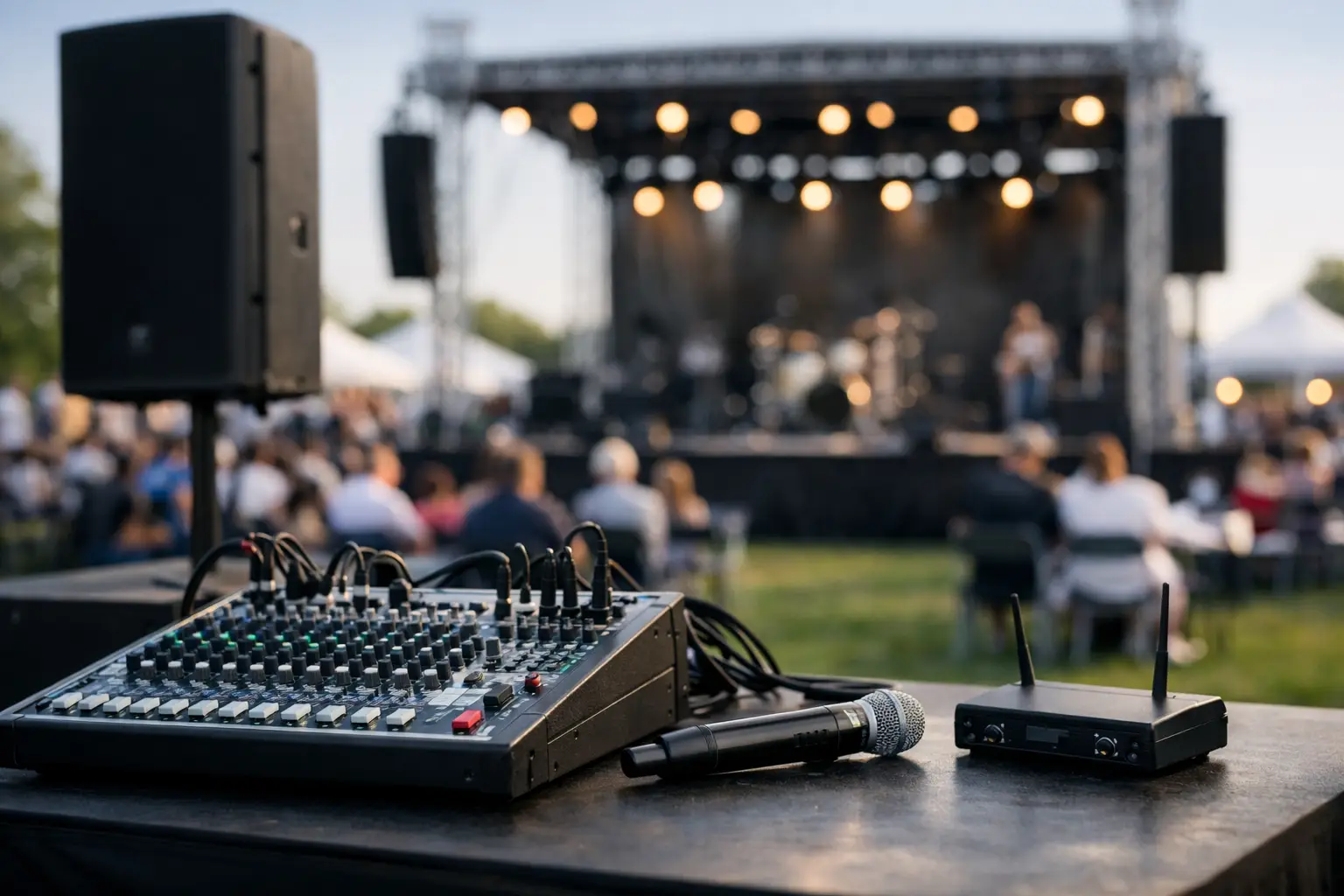
Festivals and concerts usually place more weight on audience energy, performer visibility, and durable infrastructure. Weather, load-bearing requirements, power distribution, and quick changeovers become much bigger factors.
Trade shows and product launches often need the stage to function as both presentation space and brand environment. In those cases, every design choice should support visibility, movement, and content delivery.
Budget-conscious design is not low-impact design
A smart production partner knows how to protect the look of the event while controlling costs. That may mean using rental inventory efficiently, repurposing scenic elements across multiple sessions, or relying on lighting and video to create dimension instead of building everything physically.
There are always trade-offs. Custom scenic fabrication can create a distinct look, but it adds labor, trucking, and install time. LED video walls offer flexibility and branding power, but they need proper content, processing, and brightness management. Decorative elements can elevate the room, but they should not interfere with lines of sight or stage access.
Budget-conscious event stage design comes down to knowing where the audience will notice the difference and where they will not. That is how you spend with purpose instead of just spending less.
Why one production partner simplifies the process
Stage design becomes harder when planners have to coordinate separate vendors for staging, lighting, screens, audio, and labor. Each handoff creates room for missed details, conflicting assumptions, and timeline pressure.
Working with one accountable production team makes the process clearer. The design can be built around real inventory, real labor needs, and a realistic installation schedule. It also gives clients one point of contact for revisions, approvals, show flow, and on-site problem-solving.
That matters even more for first-time buyers or lean internal teams. They may know what they want the event to feel like, but not how to translate that into stage dimensions, power requirements, rigging plans, screen sizes, and cueing needs. A dependable partner closes that gap and keeps the project moving.
GeoEvent approaches stage design that way – as part of the full event system, not as a standalone visual add-on. That helps clients avoid preventable issues before show day arrives.
What to decide early
The earlier key decisions get made, the smoother the design process becomes. Audience count, seating layout, stage purpose, content format, venue limitations, and budget range should be established before creative plans get too far ahead.
It also helps to be honest about what success looks like. Some clients need a stage that photographs well for sponsors and social content. Others care more about fast transitions, speaker comfort, or clean presentation support. Most want all of that, but priorities still matter when time and budget are limited.
Good stage design is not about adding more pieces until the room looks expensive. It is about creating a stage that feels intentional, functions cleanly, and supports the event from the first cue to final teardown.
If you are planning an event, the right stage should make the show easier to run, not harder to manage. That is usually the clearest sign the design is doing its job.