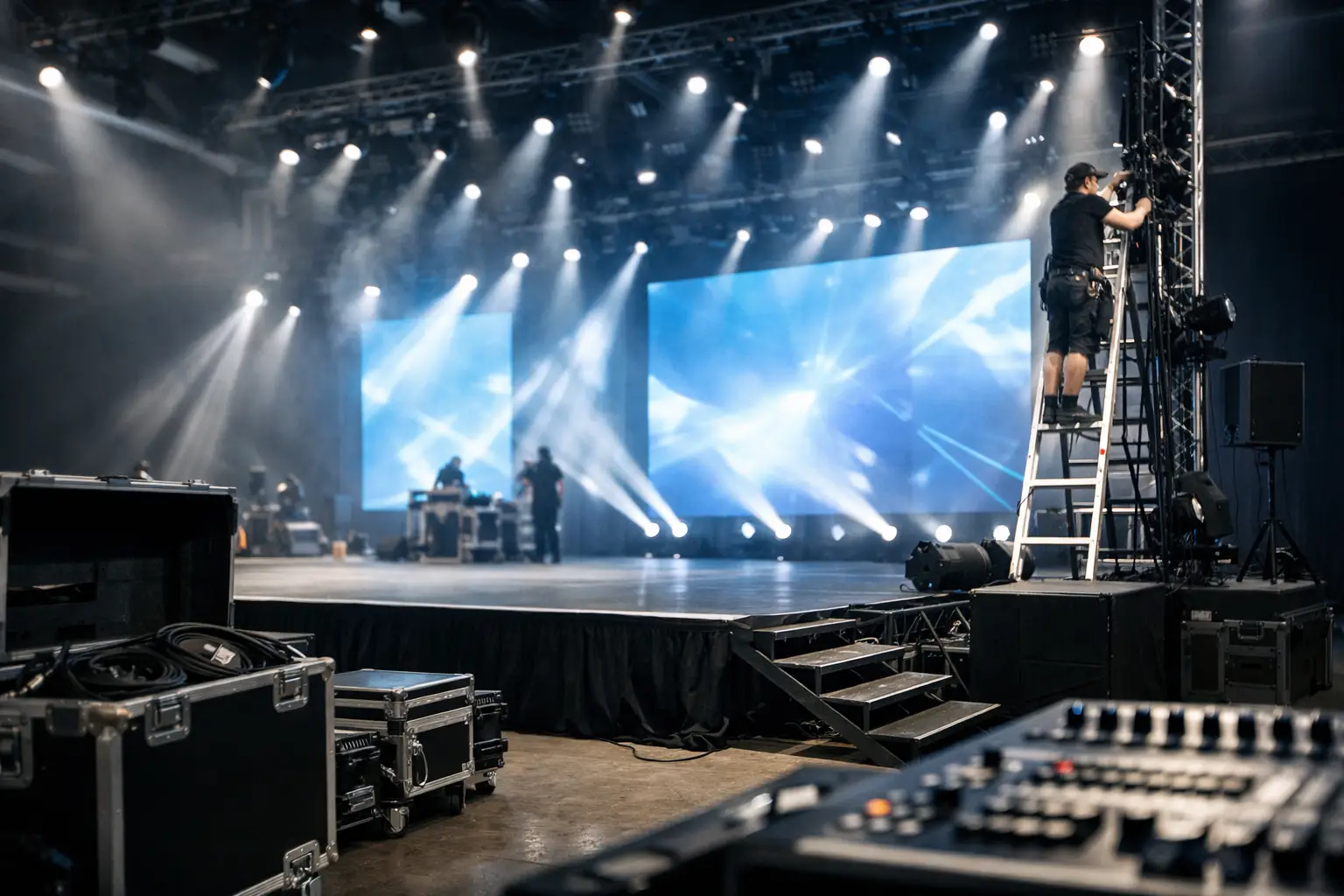
How Much Stage Rental Cost for Events?
A stage can look simple from the audience side. From the production side, it is one of the biggest variables in an event budget. If you are asking how much stage rental cost, the honest answer is that a basic platform setup might start in the low hundreds, while a larger custom stage with stairs, skirting, roof systems, and labor can run into the thousands or much more.
That range is wide for a reason. Stage pricing is not just about square footage. It depends on event type, audience size, load requirements, venue conditions, installation time, and whether you need a clean riser for a keynote or a full performance stage that can handle lighting, backline, and heavy traffic all day.
How much stage rental cost in real terms?
For most events, stage rental pricing falls into a few practical bands. A small indoor riser for a speaker, DJ, or head table may cost a few hundred dollars for the platform itself. A medium-sized stage for a wedding band, school event, or corporate presentation often lands in the mid-hundreds to low thousands once delivery, setup, and accessories are included. A large concert or festival stage can climb quickly because the structure, engineering, crew, and related production requirements are more involved.
If you want a rough planning framework, think of it this way. A simple 8×8 or 12×8 stage for a hotel ballroom is usually the most affordable category. A 16×12 or 20×16 stage for a band or panel event is a common middle ground. Anything larger, especially outdoors, usually needs a more detailed quote because weather planning, leveling, ballast, roof systems, and safety requirements all affect the final price.
That is why two clients asking for the same stage size may receive very different numbers. One may need a quick install on a flat ballroom floor. The other may need a stage built on grass with limited vehicle access and a tight load-in window. Those are not the same job.
The biggest factors behind stage rental cost
Stage size and height
This is the first pricing driver, but not the only one. A larger stage requires more deck sections, more support legs, more skirting, and more labor. Height matters too. A low stage for a conference general session is simpler than a taller stage designed to improve sightlines in a crowded room or outdoor setting.
Higher stages can also trigger additional safety needs such as stairs with handrails, guardrails at the rear or sides, and more careful access planning. Those details add cost, but they also protect guests, presenters, and performers.
Indoor vs. outdoor setup
Outdoor stages usually cost more. The surface may need leveling, the structure may need to account for weather, and the crew often spends more time on installation and teardown. If the event includes a stage roof, truss, or weather cover, pricing increases further because the system becomes a more complex production build instead of a simple platform rental.
Indoor stages are often more predictable, but not always cheaper if access is difficult. A ballroom on the second floor with limited freight access can be more labor-intensive than a straightforward outdoor load-in.
Delivery, setup, and teardown
Clients sometimes compare stage prices without comparing what is included. A low number may only reflect the deck rental. A more complete quote may include delivery, installation, teardown, and crew supervision. For most professional events, those services matter just as much as the hardware.
A stage is not a drop-off item in the way a few chairs might be. It needs to be built correctly, leveled properly, and broken down safely. Labor is a real part of the cost and usually worth budgeting for from the start.
Stairs, skirting, ramps, and railings
Accessories are where budgets often move. Black skirting creates a finished look. Stairs make talent access safe and comfortable. ADA ramps may be required depending on the event format, venue, and audience expectations. Guardrails may be necessary for elevated platforms.
None of these items are optional if they solve a functional or safety issue. They should be planned early, not added at the last minute when the floor plan is already locked.
Load requirements
A podium and one presenter create a very different load profile than a drum kit, keyboard rig, and six performers. If the stage will support heavy equipment, rolling cases, scenic pieces, or large LED walls nearby, the production team needs to match the deck system to the real use case.
Trying to save money by underbuilding a stage is one of the worst places to cut corners. The right stage needs to look polished and perform safely under real event conditions.
How much stage rental cost for different event types?
Corporate events and conferences
Corporate stage rentals are often clean, modular, and presentation-focused. The goal is usually sightlines, branding, and smooth presenter flow rather than heavy performance loads. Costs are often moderate unless the event includes scenic builds, large LED walls, multiple stage zones, or a tight union labor environment.
A simple keynote stage in a hotel meeting room may be relatively efficient to price. A general session in a convention venue with layered decks, confidence monitors, and custom branding is a different category entirely.
Weddings and private events
Wedding clients often need a stage for a band, sweetheart table, ceremony platform, or DJ. These stages are not always huge, but finish matters. Clean skirting, proper stairs, and integration with lighting and sound are often what make the result feel polished.
The cost can stay reasonable when the stage is modest and access is easy. It rises when the install needs to happen around other vendors, inside a narrow timeline, or in a challenging outdoor location.
Concerts and festivals
This is where stage rental costs expand the fastest. Larger footprints, performance loads, weather planning, barricade layouts, roof systems, backstage flow, and longer crew calls all contribute. Festival staging also tends to involve more coordination with audio, lighting, video, and power teams.
For these events, the stage is not a standalone rental. It is part of the larger production system. That is why full-service support often saves time and avoids costly missteps.
What clients often miss when budgeting
The most common budgeting mistake is focusing only on deck size. In practice, the full stage cost may include site visit coordination, permit-related requirements, labor windows, overnight holds, and integration with other departments. If your event has lighting, LED video, or a live band, the stage setup should be planned as part of the production design, not as an isolated line item.
Another common issue is last-minute changes. If the event grows from a solo speaker to a five-person panel, or from a DJ to a full band, the stage may need to be resized. Those changes are manageable when caught early. They become more expensive when trucks are already loaded and crew schedules are set.
How to get an accurate quote without wasting time
If you want a realistic answer to how much stage rental cost, the fastest route is to share a few specifics upfront. Stage size, venue type, indoor or outdoor location, event use, expected load, access restrictions, and whether you need stairs, skirting, or ramps will get you much closer to a usable number.
Photos, floor plans, and event timelines help too. Even a simple sketch can prevent back-and-forth and keep the quote aligned with what the event actually needs. Experienced production teams can usually spot budget issues early and suggest better options before you commit.
That might mean reducing height, adjusting dimensions, or combining stage rental with audio and lighting from one provider so labor and logistics stay under control. For many clients, that is where the best value comes from – not the cheapest stage on paper, but the setup that works the first time and supports the full event plan.
When a lower quote is not the better deal
A lower quote can absolutely be the right quote, but only if scope is truly the same. If one proposal excludes setup labor, stairs, or delivery, it is not cheaper in a meaningful way. It is just less complete.
The better question is whether the stage partner understands the event, the venue, and the schedule well enough to prevent problems on show day. That is especially true for planners managing multiple moving parts at once. A dependable team that handles staging alongside AV, crew, and execution can remove a lot of risk from the process.
For buyers across the West Coast, that support matters just as much as the deck itself. A stage should do more than fill a floor plan. It should fit the room, support the show, and make the event easier to run from load-in to final strike.
If you are pricing a stage for an upcoming event, the most useful starting point is not chasing a generic number. It is matching the stage to the experience you want to deliver, then building a quote around the real conditions that will shape the day.