Event Staging Rental Guide for Better Shows
A stage can make a room feel bigger, a speaker look more credible, and a performance land the way it should. It can also create problems fast when the wrong deck height, load rating, access point, or sightline gets overlooked. That is why an event staging rental guide matters. Good staging is not just a platform. It is the structural and visual foundation that affects safety, audience experience, camera coverage, power planning, and how smoothly your event runs from load-in to teardown.
What an event staging rental guide should help you decide
Most clients start by asking, “How big of a stage do I need?” That is a fair question, but it is rarely the first one that should be answered. A better starting point is what needs to happen on the stage. A keynote for one speaker has very different needs than a panel, a band, a fashion runway, or an awards show with constant walk-ons and video playback.
The right staging rental plan comes from matching purpose to footprint, height, access, finishes, and technical support. If the stage is only being used for speeches, you may not need a large platform, but you may need clean skirting, safe stairs, confident monitor placement, and enough room for lecterns, confidence monitors, or a branded backdrop. If it is a live performance, the priority may shift to load capacity, musician movement, cable paths, risers, and front-of-stage audience sightlines.
That is also where many budgets either stay controlled or start drifting. Renting a stage alone can work for experienced teams. For many events, though, staging decisions affect audio, lighting, LED walls, projection, and staffing. When those pieces are planned together, you avoid paying twice for fixes on site.
Start with event type, not stage size
A corporate general session usually benefits from clean, simple staging with strong visual framing. The stage needs to support presenters, scenic elements, and display technology without feeling crowded. In that setting, the audience often remembers clarity more than scale. If the room is deep and the stage is too low, people in the back lose connection. If the stage is too high, the front rows can feel disconnected and camera angles become awkward.
Weddings are different. The stage may be used for a band, DJ, toasts, or ceremonies, and the visual look matters as much as the practical setup. Couples often want equipment to disappear into the design, which means skirting, lighting color, cable management, and speaker placement all need attention. A stage that technically works but looks out of place can pull the whole room off balance.
Festivals and outdoor events bring another set of trade-offs. Weather, uneven ground, wind exposure, and power distribution become bigger concerns. A low deck may be safer in some conditions, while a higher platform may be necessary for visibility. There is rarely one standard answer. Site conditions drive the staging plan as much as the run of show.
Trade shows and brand activations often need compact staging that does several jobs at once. A small platform might host demos, product reveals, and interviews within a tight footprint. In those cases, smart design matters more than raw size. A modest stage paired with proper lighting and video support can outperform a larger platform that was rented without a full production plan.
The stage itself is only part of the rental
A practical event staging rental guide should make one point clear: you are not just renting decks. You are renting an operating environment.
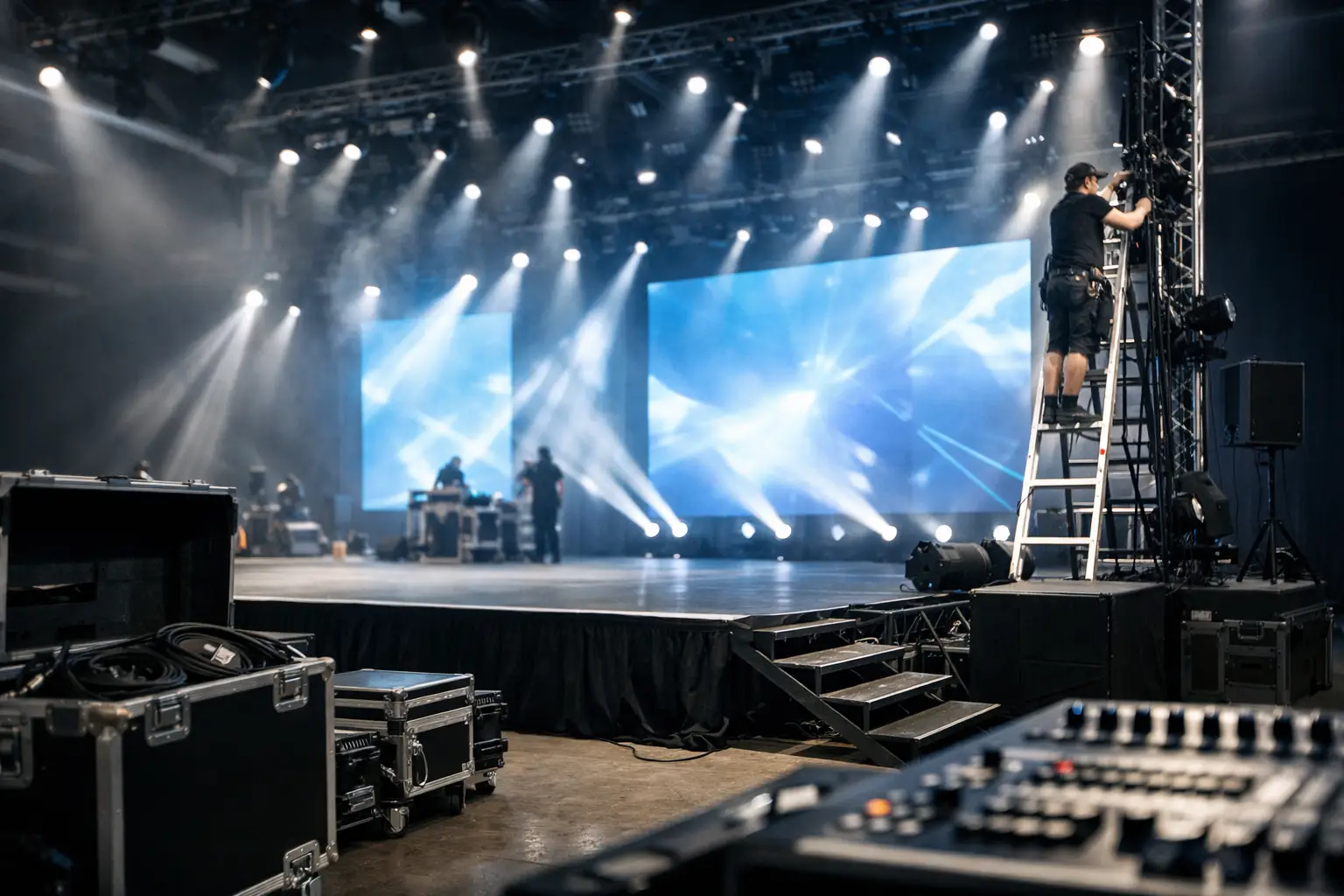
That includes stage platforms, stairs, ramps when needed, skirting, guardrails, risers, and sometimes roof structures or truss support. It also includes what has to interact with the stage. Audio gear needs placement that avoids blocked sightlines and feedback issues. Lighting needs trim height, rigging points, and control positions. Video needs enough stage depth and width to feel integrated rather than squeezed in at the last minute.
Then there is labor. This is where first-time planners often underestimate what it takes to get clean results. A stage may look simple on paper, but delivery timing, venue access, union rules, setup windows, and overnight security can all affect the final cost and schedule. A dependable production partner will flag those issues early instead of leaving them for show day.
How to choose the right stage height and layout
Stage height is one of the easiest things to get wrong because people often choose it based on appearance rather than viewing angles. A low stage can look elegant in a ballroom, but if the audience is seated flat and the room is wide, it may not give enough visibility. A higher stage improves sightlines, but it may require more substantial stairs, handrails, and edge protection depending on the venue and use.
Layout matters just as much. A deep stage gives presenters space to move and allows room for scenic pieces or screens. A shallow stage can work well in tighter venues, but it limits monitor placement and can make speaker movement feel cramped. For panels, you need to consider chair spacing, table placement, and mic access. For bands, you need to account for drum risers, backline, and cable runs. For dance or performance, the stage surface itself may affect comfort and safety.
This is where experience saves time. The best layout is not always the biggest one. It is the one that supports the show without wasting space, labor, or budget.
Budget decisions that actually matter
If you are trying to control costs, do not focus only on the stage rental line item. Look at the total production effect.
A slightly larger stage may reduce the need for awkward overflow solutions. A better layout may shorten setup time. Bundling stage, sound, lighting, video, and crew through one provider can also prevent expensive coordination problems between separate vendors. When one team handles planning and execution, there is less guesswork about who owns which issue.
At the same time, not every event needs full-scale production management. Some clients only need stage rental and a few supporting items. Others need full technical oversight from pre-production through strike. The right approach depends on your internal team, timeline, venue restrictions, and tolerance for risk. If your team is already stretched thin, saving money by piecing services together can end up costing more in stress and last-minute adjustments.
Questions to ask before you book
A strong vendor conversation should go beyond inventory and pricing. Ask how the stage solution changes based on your audience size, floorplan, venue access, and show flow. Ask what support is included for setup and teardown. Ask whether the same team that plans the system will also be involved on site.
You should also ask what could go wrong. That is not being negative. It is being realistic. Outdoor weather plans, backup power considerations, revised load-in windows, and contingency staffing all matter. A production company that can walk you through those variables is usually the one thinking ahead.
If your event includes video walls, projectors, intelligent lighting, live entertainment, or multiple presenters, ask how those systems will be coordinated with the stage layout. That is where many events either feel polished or patched together.
Why one accountable partner usually works better
For many planners, the biggest relief comes from not having to coordinate separate companies for stage rental, lighting, audio, video, and crew. A single production partner can make better decisions faster because all departments are working from the same show goals.
That does not mean every event needs a massive production build. It means responsibility should be clear. If the stage position affects LED wall sightlines, someone needs to own that decision. If speaker placement affects stage stairs, someone needs to solve that before guests arrive. A company like GeoEvent can support both ends of that spectrum, whether you need a straightforward stage rental package or a fully managed production plan with staffing and on-site execution.
Event staging rental guide for smoother show days
The best event staging rental guide is the one that helps you think beyond equipment. The stage should fit the room, the run of show, the audience, and the technical systems around it. It should support the event you are actually producing, not a generic template.
When staging is planned well, guests rarely think about it. They just see a show that feels organized, professional, and easy to follow. That is the goal. If you are evaluating options now, start with what the stage needs to do, then work backward into the rental package, crew support, and production level that makes the most sense for your event.