LED Wall Brightness for Better Event Viewing
At a noon outdoor product launch, a beautiful LED wall can still fail if the audience sees a gray, washed-out version of the presentation. LED wall brightness is what gives event content the power to compete with sunlight, ballroom lighting, camera lights, and visual distractions around the venue. The right setting makes logos, video, speaker graphics, and live camera feeds easy to see. The wrong one can make a major visual investment disappear.
Brightness is not simply a matter of choosing the highest-nit LED wall available. A wall that looks perfect under the controlled lighting of a conference room can be overwhelmed on a Las Vegas pool deck. Conversely, an overly bright display in a dark ballroom can strain guests’ eyes, flatten image detail, and distract from the stage. The goal is a screen that looks clear, balanced, and intentional in its actual event environment.
What LED Wall Brightness Means
LED wall brightness is measured in nits, also called candelas per square meter. Higher nit ratings mean the display can produce more light. This matters because viewers do not judge a screen in isolation. They judge it against the surrounding ambient light.
An LED wall running at 1,000 nits may look vivid in a dim indoor venue. Put that same wall in direct daylight, and it may appear weak because the sun is producing far more light than the display can overcome. Brightness gives a display the headroom to preserve contrast, color, and legibility when the environment is working against it.
That does not mean every event requires an ultra-bright wall. A properly selected screen should support the planned lighting conditions without overpowering the room or wasting energy. Professional crews also have the ability to adjust output during setup and show operation, rather than treating a maximum rating as the only setting that matters.
How Many Nits Does Your Event Need?
There is no single answer because the venue, schedule, screen position, and content all affect the requirement. Still, practical ranges can help event planners start the conversation.
Indoor events with controlled lighting
For conferences, galas, weddings, meetings, and trade show environments where room lighting can be managed, LED walls in the 600- to 1,500-nit range are often appropriate. A darker room may require less output, especially if the wall is used for cinematic video, elegant scenic visuals, or a live camera image where natural skin tones matter.
If the venue has large windows, bright exhibit lighting, or an open loading-door area, the screen may need additional brightness. A ballroom at 7 p.m. and the same ballroom during an afternoon session can require very different settings.
Indoor events with daylight exposure
For atriums, convention centers, storefront activations, and venues with significant daylight, a wall in the 1,500- to 3,500-nit range may be a better fit. The placement of the display matters as much as the rating. A screen facing a wall of west-facing windows will have a harder job than one positioned perpendicular to them.
Whenever possible, production planning should include window treatments, drape, screen orientation, and lighting control. Reducing the ambient light hitting the screen can be more cost-effective than upgrading to an unnecessarily bright display.
Outdoor daytime events
Outdoor screens used in daylight usually need roughly 4,500 to 6,500 nits or more, depending on direct sun exposure. Festivals, sporting events, public watch parties, and outdoor brand activations need a display that can remain visible as the sun moves across the site.
The event schedule is critical. A wall used only after sunset has different needs than a screen supporting presentations from noon through late afternoon. A production team should evaluate the sun path, stage direction, expected weather, and whether the wall will sit under cover or in open daylight before recommending equipment.
Brightness Is Only One Part of Visibility
A high-nit LED wall can still underperform if other visual choices are wrong. Brightness supports visibility, but it cannot fix content designed without regard for the screen, the venue, or the audience.
Contrast is a major factor. White type on a light image, low-opacity logos, and subtle gradients can become difficult to read in bright environments. Strong contrast, clear type, and purposeful color choices make content more durable. This is especially important for schedules, sponsor recognition, lower-thirds, and calls to action that guests need to read quickly.
Viewing distance also changes what the audience experiences. Pixel pitch determines how close viewers can stand before seeing individual LEDs, while brightness determines how well the image holds up against ambient light. A fine-pitch indoor wall may look exceptional from a few feet away but be unnecessary for a large audience viewing from 50 feet back. Choosing the right combination protects both image quality and budget.
Content resolution matters, too. A video wall processor can scale content, but starting with properly formatted media helps preserve sharp text and graphics. Before the event, confirm the wall’s final dimensions, pixel resolution, aspect ratio, and the source format for presentation laptops, playback systems, and cameras.
The Trade-Offs of Running a Wall Too Bright
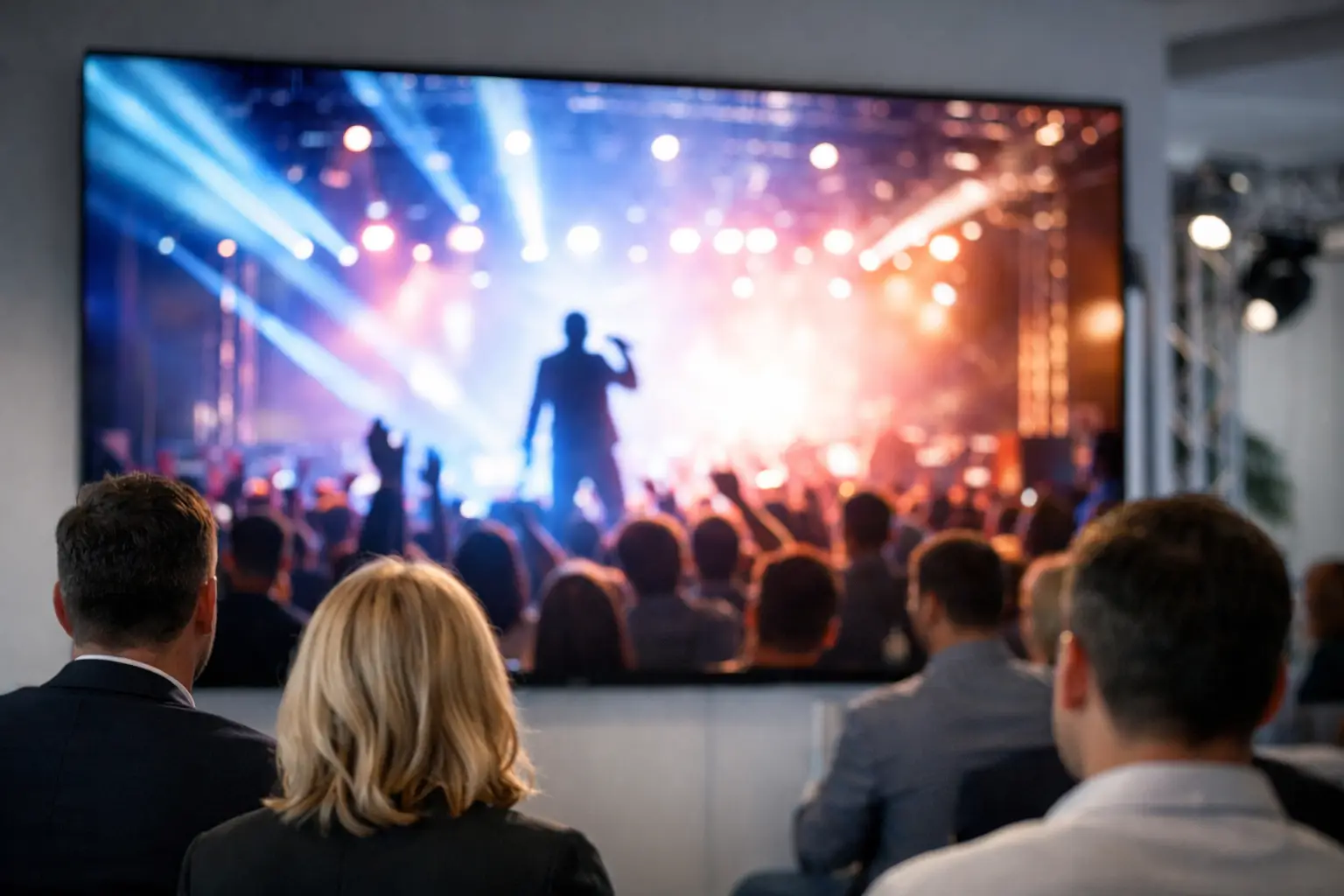
Maximum brightness is useful when conditions demand it, but it is not a default creative setting. In a dark or low-light room, an overdriven wall can create harsh glare. Guests may notice the screen more than the speaker, performer, or product it is meant to support.
Very high output can also affect camera exposure. When an event includes IMAG, livestreaming, or photography, the LED wall must work with the cameras as well as the in-room audience. Camera operators may need to balance exposure so presenters are not silhouetted against a bright background. Refresh rate, scan behavior, processor settings, and camera shutter settings can all affect how the wall appears on video.
Color accuracy is another consideration. Brightness adjustments can alter the perceived balance of an image, particularly when content includes skin tones, branded colors, or detailed product visuals. A qualified technician should calibrate the wall and review actual show content on site, not just rely on a specification sheet.
Plan LED Wall Brightness Around the Full Production
The strongest LED wall plan begins before equipment is loaded in. Start with the event objective: Is the screen primarily supporting keynote slides, a live music performance, sponsor loops, a wedding montage, or broadcast cameras? Each use case changes the right recommendation.
Next, assess the environment. Confirm whether the event is indoors or outdoors, the time of day, available power, audience location, sightlines, nearby light sources, and any venue restrictions. A site visit is especially valuable for complex spaces, outdoor installations, and multi-screen layouts.
Then coordinate the video wall with lighting, staging, audio, and camera needs. Stage lighting that hits the LED surface can reduce contrast. Scenic elements can cast shadows or block sightlines. Speaker positions, confidence monitors, and camera platforms all affect the final layout. Working with one production partner helps prevent these departments from being planned independently and corrected under time pressure.
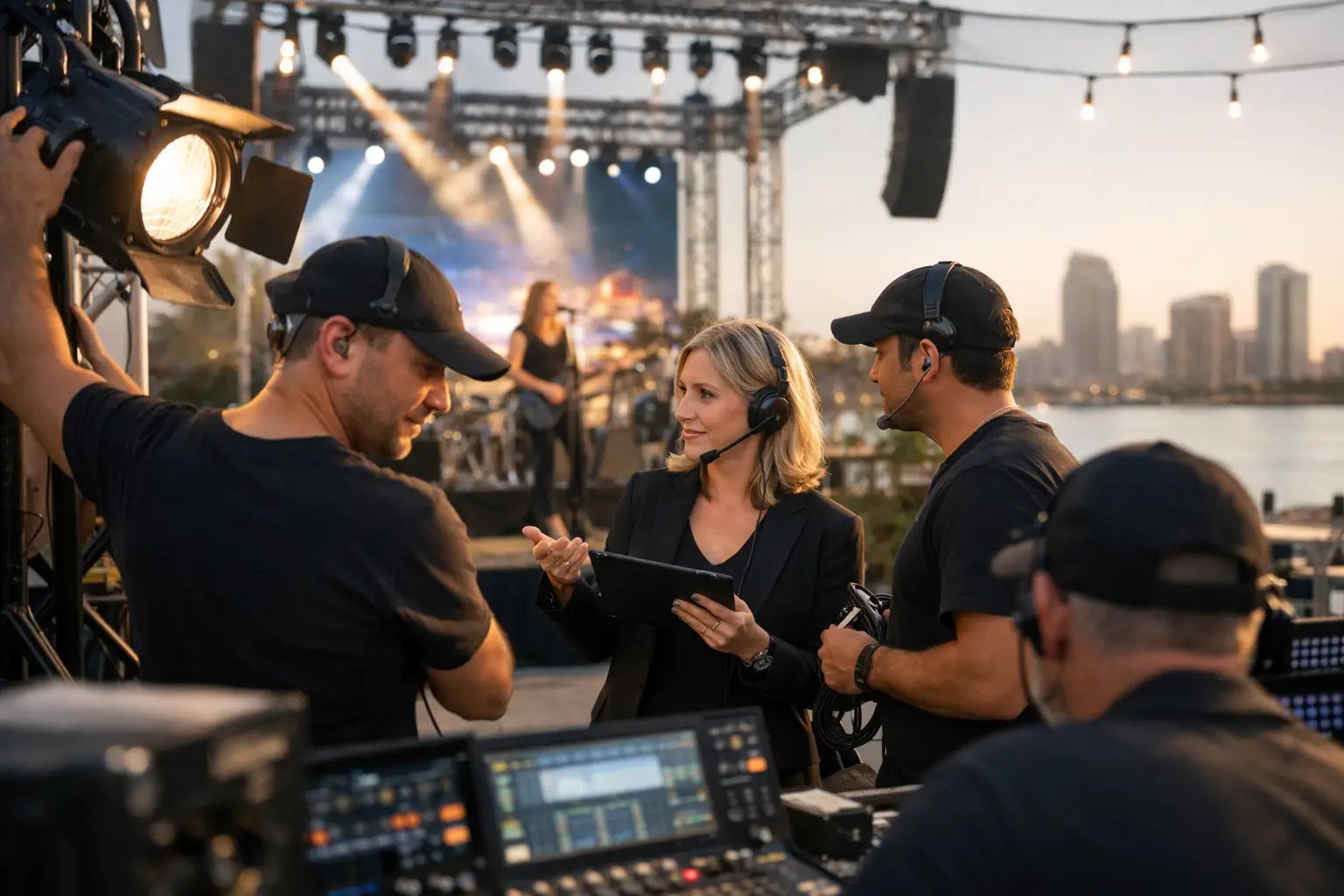
For events across Los Angeles, San Diego, San Francisco, and Las Vegas, GeoEvent can support this process from equipment selection through installation, operation, and teardown. That includes matching the LED wall to the venue conditions and providing an on-site crew that can make practical adjustments when the real-world environment differs from the floor plan.
Questions to Answer Before Renting an LED Wall
Before approving a video wall, event teams should be able to answer a few operational questions. Will guests view it in direct sun, indirect daylight, or controlled indoor light? How far is the closest and farthest viewer? Is the wall carrying detailed presentations, atmospheric visuals, or camera feeds? Will event lighting change from day to night? And does the event need a technician to manage playback, switching, brightness, and troubleshooting during show hours?
Those answers lead to a more accurate equipment choice than asking for the brightest screen available. They also help avoid late changes, such as adding drape after the screen appears washed out or discovering that a fine-pitch wall is not necessary for the audience distance.
A well-planned LED wall should feel dependable rather than demanding. When the screen is bright enough for the conditions, properly positioned, and supported by clear content and experienced operators, guests simply see the message the event was built to deliver.