Corporate Event Audio Solutions That Work
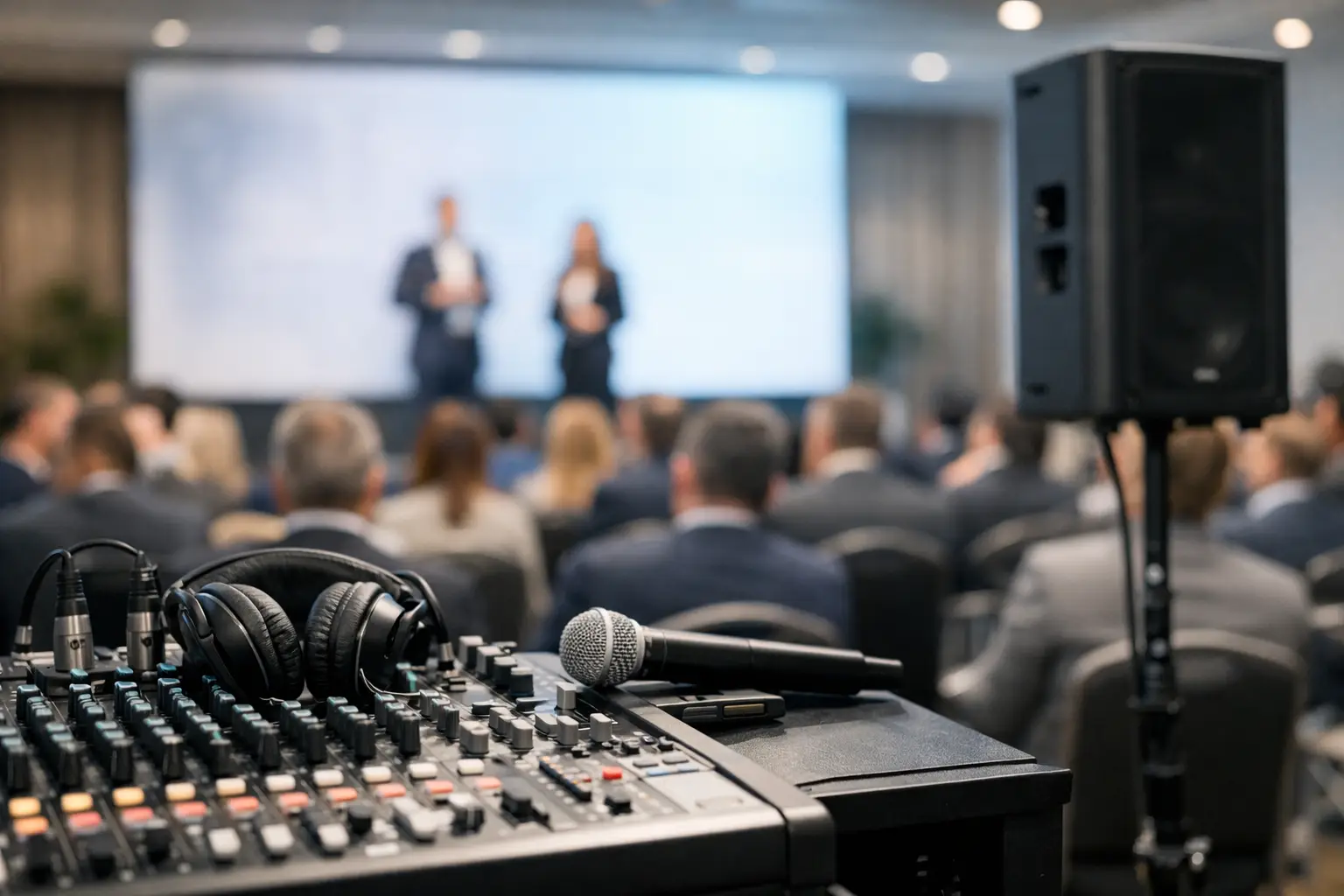
A keynote can have excellent content, a polished stage, and a full room, yet still lose its audience in seconds if the first sentence is hard to hear. Corporate event audio solutions are not simply a matter of placing speakers around a ballroom. They are the systems, planning, and live support that make every presenter, panelist, video, and audience question clear from the front row to the back of the room.
For corporate planners, the goal is straightforward: attendees should focus on the message, not strain to understand it. Reaching that goal takes the right equipment, a crew that understands the venue, and a practical plan for the moments that do not appear on the run of show.
What Corporate Event Audio Solutions Need to Cover
Corporate programs create different audio demands throughout the day. A morning executive presentation needs highly intelligible speech. A product video needs controlled playback levels and reliable connections. A panel discussion requires enough microphones for natural conversation without cluttering the stage. An awards program may need walk-up music, stingers, and quick handoffs between presenters.
A sound system should be designed around these changes rather than one generic setup. The right approach starts by identifying what attendees need to hear, where they will be seated, how the room behaves acoustically, and how the agenda will move from one segment to the next.
For a small meeting room, a compact PA system and a few wireless microphones may be exactly right. A large general session, convention ballroom, or outdoor brand activation may require distributed speakers, digital mixing, audio playback, confidence-monitor feeds, and dedicated audio technicians. More equipment is not automatically better. The best system is the one that provides consistent coverage without overpowering the room or consuming budget that would be better used elsewhere.
Speech clarity comes first
Most corporate events are speech-driven. That makes microphone selection, speaker placement, and sound tuning more important than sheer volume. A presenter using a handheld wireless microphone has flexibility for audience interaction. A lavalier keeps hands free but can be more sensitive to clothing noise, movement, and room acoustics. A headset microphone is often the strongest choice for active presenters, trainers, and speakers who need dependable vocal presence.
The audio team should also plan for the human side of the program. Executives may hold a microphone too far away. Panelists may talk over one another. A last-minute speaker may arrive with a headset preference or a video that has its own audio track. Experienced on-site support anticipates these situations and keeps the program moving without making the fix visible to the audience.
The room changes the system
A venue is never just an empty box. Glass, concrete, low ceilings, drapery, trade show booths, and occupied seating all affect how sound travels. A system that sounded fine during a quiet setup can behave differently once hundreds of guests are talking, dining, or standing near the back of the room.
That is why venue coordination and sound checks matter. The production team needs to understand ceiling height, power availability, rigging restrictions, loading access, adjacent events, and any venue sound limits before equipment arrives. In a hotel ballroom, the challenge may be reflections and uneven coverage. At an outdoor event in Los Angeles, San Diego, San Francisco, or Las Vegas, wind, traffic, and open-air sound loss may require a different speaker layout and more deliberate microphone management.
Build the Audio Plan Around the Agenda
The event agenda is one of the most useful technical documents a planner can share. It tells the production team when a wireless microphone must be ready, when video playback needs to start, when walk-up music needs to fade, and when a panel will shift into audience Q&A.
A detailed audio plan accounts for speaker changes, executive entrances, remote contributors, awards, prerecorded content, and breakouts. It also identifies who has authority to call changes during the show. That single point of contact prevents conflicting cues and helps the crew respond quickly when timing shifts.
Plan microphone counts realistically
Underestimating microphone needs is a common source of avoidable stress. A four-person panel usually needs four dedicated microphones, not two that get passed around. If audience questions are part of the format, plan for a floor microphone, a roaming handheld, or a staff member assigned to bring a microphone to guests.
It is also wise to allow for backups. Wireless microphones rely on batteries, frequency coordination, and careful handling. A professionally managed system includes spare microphones, fresh batteries, and a coordinated frequency plan, particularly in dense downtown venues where many nearby events and wireless devices may be competing for spectrum.
Do not overlook playback and remote audio
Corporate programs often depend on more than live voices. Walk-in music shapes the room before the program begins. Video sound reinforces a product launch or brand story. A remote presenter may need to hear the room, receive a return feed, and speak without distracting echo.
These elements should be rehearsed with the same care as a keynote. Testing a video on a laptop is not the same as confirming that its audio level, connection type, playback cue, and backup file are ready for the live system. For hybrid segments, audio routing deserves special attention. The in-room audience, remote guest, and streaming audience may each need a different mix to hear clearly.
When Rental Equipment Is Enough and When Production Support Matters
Some events have an experienced internal production manager, a familiar venue, and a simple schedule. In that case, standalone audio rental can be a practical, cost-conscious choice. The client may need a PA system, wireless microphones, mixer, speakers, and delivery support, then have a qualified team to operate the equipment.
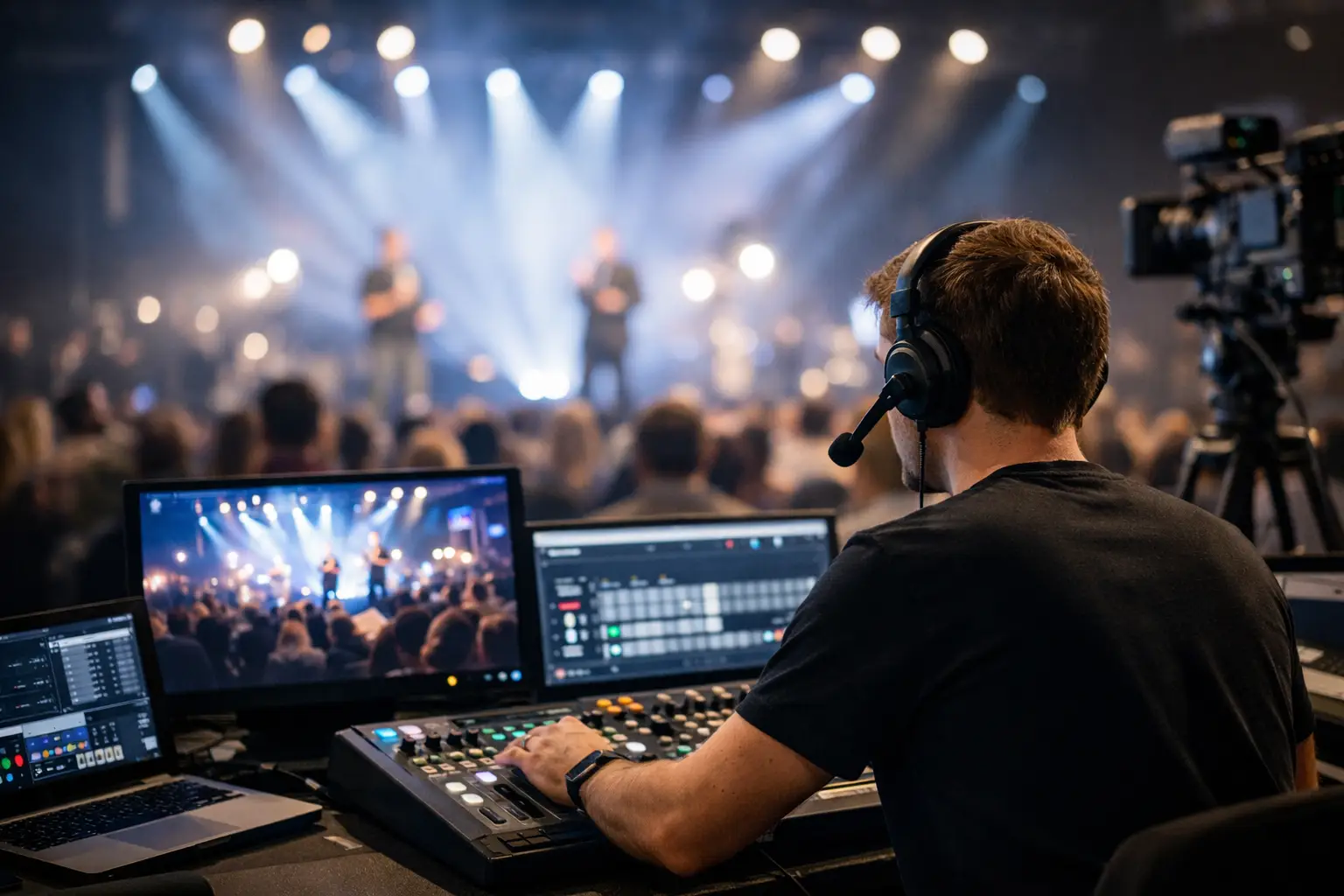
Other programs benefit from a full-service production partner. This is especially true when the schedule includes multiple presenters, video playback, stage cues, executive audiences, breakout rooms, or a venue with challenging logistics. A staffed solution adds value because one accountable crew handles load-in, setup, testing, live mixing, troubleshooting, and teardown.
The trade-off is not simply cost versus quality. It is cost versus risk and workload. A rental-only approach can work well when responsibilities are clear. Full production support reduces the number of technical details a planner must manage during an event, when their attention is needed for guests, speakers, and program decisions.
Questions to Ask Before Booking Audio
Before finalizing corporate event audio solutions, planners should be able to answer a few operational questions. How many people will attend, and will the room be classroom-style, theater-style, banquet-style, or standing reception? How many presenters, panelists, and audience participants need microphones? Will there be video, music, remote speakers, or live entertainment? What are the venue’s power, load-in, and sound-limit requirements?
Also ask who will operate the system during the event. Equipment does not replace a technician who can balance a panel, cue a walk-up track, solve a connection problem, or make a presenter comfortable before they step on stage. For high-visibility programs, having the right person at the console is often the difference between a polished event and a series of small distractions.
GeoEvent supports corporate teams with audio rentals and full production services designed around the actual program, venue, and budget. From a focused meeting to a large-scale conference, the priority is clear communication, prepared crews, and dependable execution at every stage of the event.
The strongest audio plan is the one guests never have to think about. Give presenters a system they can trust, give attendees a message they can hear, and give your event team the support to stay focused on the experience in the room.