San Diego Projector Rental That Fits the Event
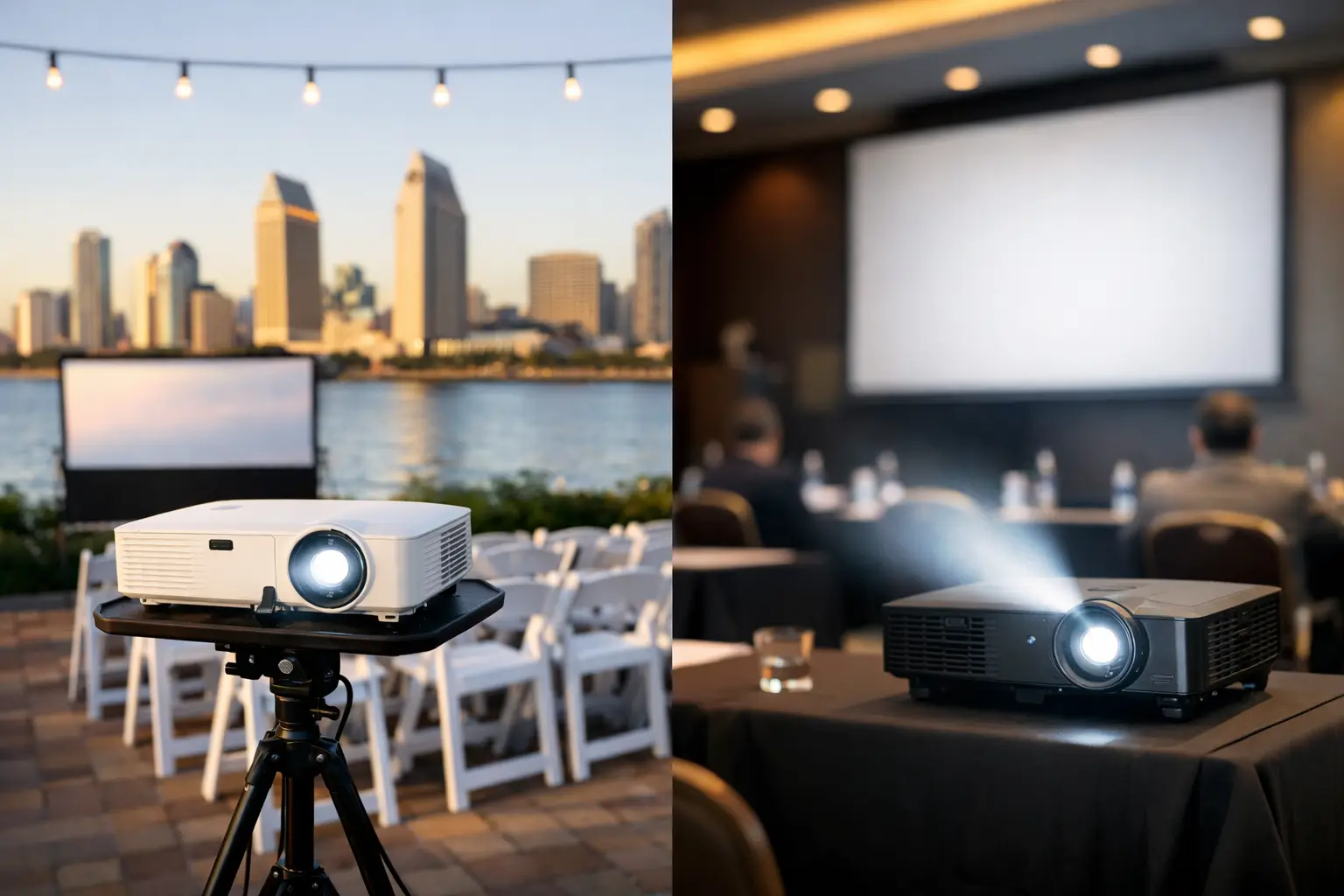
A projector that looks fine in a conference room can fail fast in a ballroom, on a trade show floor, or under a tent before sunset. That is why san diego projector rental should never be treated like a simple gear pickup. The right projector depends on room size, ambient light, screen choice, content type, signal flow, and whether you need basic playback or full show support.
For planners, venues, and production teams, the real job is not just finding a projector. It is making sure the image is bright enough, the text is readable, the setup is stable, and the event runs without visual problems once guests are in the room. That takes the right equipment and the right planning behind it.
When San Diego projector rental makes sense
Projector rental is a smart fit when you need a large image without committing to permanent equipment, or when one event calls for more output than your in-house system can provide. Corporate meetings, nonprofit galas, trainings, wedding slideshows, school presentations, brand activations, and breakout sessions all fall into that category.
It is also common for clients to need projectors only as part of a larger production package. A general session may need projection, audio, lighting, pipe and drape, staging, and an operator all coordinated together. In that case, renting from one production partner simplifies timing, troubleshooting, and accountability.
There are also cases where projection is not the best answer. If your event is outdoors in daylight, if your audience is far from the screen, or if your content depends on strong contrast and saturated color, LED video walls may perform better. A good rental partner should say that clearly instead of forcing projection into a situation where it will struggle.
How to choose the right projector rental in San Diego
Most event problems start with one wrong assumption: that projector size and projector brightness are the same thing. They are not. A physically larger projector does not guarantee a better image, and a projector with solid specs on paper may still look weak in the wrong room.
Brightness matters more than people expect
Brightness is one of the first things to evaluate. A small meeting room with controlled lighting may only need modest output. A ballroom with chandeliers, a lobby with windows, or a stage with scenic lighting needs significantly more. If your audience needs to read spreadsheets, presentation decks, or small sponsor logos, brightness becomes even more critical.
This is where event context matters. A wedding montage can survive with a softer image more easily than a sales meeting packed with charts and numbers. A scenic background loop may not need the same output as a keynote presentation where every line of text has to read cleanly from the back of the room.
Screen size and throw distance change everything
A projector has to match the screen, and both have to fit the room. Screen size affects image impact, but it also affects readability and brightness. Throw distance matters too. If the projector has to sit far from the screen, the lens and output need to support that placement without compromising the image.
This is one reason a quick online quote rarely tells the full story. Ceiling height, rigging options, rear projection space, and where attendees will sit all influence the recommendation. In tighter venues, short throw options may be necessary. In cleaner stage designs, rear projection may be the better choice if there is enough backstage depth.
Content type should guide the setup
Not every event shows the same content, and that affects the equipment package. Video playback, keynote slides, live camera feed, sponsor loops, and worship lyrics all place different demands on a system. If you are switching between laptops, confidence monitors, playback machines, and cameras, you may need switching, distribution, converters, and operator support in addition to the projector itself.
That is where experienced guidance saves time. A projector is only one part of the visual chain. If the source gear, cabling, adapters, playback format, and screen ratio are not coordinated, the result can look stretched, cut off, delayed, or simply not appear when it matters most.
Common event types that need projector rental
Corporate events are one of the biggest categories for projector use. Sales meetings, trainings, executive presentations, and conferences often need clean image reproduction and dependable switching between multiple presenters. In these environments, professionalism matters as much as brightness. The audience notices when the screen flickers, the laptop does not connect, or the image is too washed out to read.
Weddings and private events use projectors differently. The focus is often on photo slideshows, tribute videos, same-day edits, or a branded visual element that adds emotion without overpowering the room. Here, setup placement and aesthetics matter more. The system still needs to work flawlessly, but it also has to stay visually discreet.
Trade shows and brand activations can be more demanding than they appear. Booth lighting is often strong, ambient noise is high, and sightlines are limited. A projector may work well for certain booth designs, but only if brightness, screen placement, and content are planned around the environment. Otherwise, an image that looked good in pre-show testing can disappear on a busy floor.
Outdoor events are the most conditional. Projection can work very well at night, especially for screenings, stage support, or audience-facing presentations. During the day or even late afternoon, it becomes much harder. This is where a reliable vendor should walk you through the trade-off honestly instead of giving you a setup that is technically installed but practically ineffective.
What a full-service rental partner should handle
The difference between a basic vendor and a production partner shows up long before load-in. Good support starts with asking the right questions about venue conditions, schedule, audience size, content sources, and staffing needs. It continues through delivery, setup, testing, show operation, and teardown.
If you only need standalone equipment, that can be simple. But many events benefit from added support because projection problems are rarely caused by the projector alone. They come from signal issues, laptop settings, bad adapters, unsupported resolutions, poor placement, or rushed setup time.
A full-service team can help with screen selection, projector placement, front or rear projection planning, playback coordination, show calling, and live troubleshooting. That matters when the event has no margin for error, especially for general sessions, sponsored events, public-facing activations, and client presentations.
For larger productions, projector rental often needs to align with the rest of the system. Audio timing, stage layout, lighting levels, power distribution, scenic design, and crew timing all affect visual performance. Managing those pieces under one roof reduces finger-pointing and keeps the show moving.
Questions worth asking before you book
Before committing to any san diego projector rental package, ask what brightness is being recommended and why. Ask what screen size is included, whether the image will hold up in the room lighting, and who is responsible for setup and testing. If you are showing content from multiple devices, ask how switching will happen and whether adapters or converters are included.
You should also ask what happens if the venue changes, the room is brighter than expected, or your run of show shifts. Flexibility matters. Event production rarely stays frozen from the first quote to show day, and a dependable rental partner plans for that reality.
It is also fair to ask whether projection is the best fit at all. Sometimes the strongest recommendation is a different display solution. That kind of honesty usually tells you a lot about how the company will behave once your event is underway.
Why support matters as much as the gear
Anyone can list projector models. The harder part is making sure the chosen system actually works in your venue, for your audience, on your schedule. That is where experienced event support makes a measurable difference.
For some clients, that means a straightforward rental with fast delivery and clean setup. For others, it means handing off the entire visual side of the event to one accountable team. Companies like GeoEvent support both approaches, which is often the most practical option for planners who want flexibility without losing professional oversight.
The best projector setup is usually the one guests never think about. They simply see the content clearly, the transitions happen on cue, and the room feels polished. If your event depends on that result, choose a rental partner who plans for the room, not just the equipment list.
When the screen has to carry your message, a little extra planning up front is what keeps the event calm once the doors open.