How Many Speakers for Event Sound?
If you are asking how many speakers for event sound you need, the real question is how much space you need to cover clearly without blasting the people closest to the stage. That is where many events go wrong. A room can look small enough for two speakers, then turn out to have awkward corners, high ceilings, or a crowd layout that swallows speech and music.
The right speaker count depends less on a simple headcount and more on coverage, content, and room conditions. A 100-person panel discussion in a hotel meeting room has very different needs than a 100-person wedding on a lawn. The audience size matters, but it is only one piece of the system.
How many speakers for event planning really depends on
When clients ask this question, they are usually hoping for a quick rule of thumb. There are some useful starting points, but sound design is still about matching the system to the event.
First, think about the type of audio. Speech is less forgiving than people expect. Guests can often tolerate background music that is a little uneven, but if they miss every third word from a keynote or officiant, the event feels poorly run. If the program is speech-heavy, coverage and intelligibility matter more than sheer volume.
Second, consider the shape of the venue. A long narrow room may need delay speakers farther back so guests in the rear hear clearly without the front rows getting overwhelmed. A wide ballroom may need left-right mains plus fills. Outdoor events often need more deliberate speaker placement because there are no walls to help contain or reflect sound.
Third, look at audience density. A seated corporate audience is different from a packed dance floor, festival crowd, or trade show floor with constant ambient noise. People absorb sound. So do drape, carpet, and soft furnishings. Glass, concrete, and open air behave very differently.
Finally, think about expectations. Background music at a reception has a lower bar than a live band, DJ set, or brand launch where the audience expects impact. The more energy you need from the sound system, the more careful you need to be about speaker type, placement, and quantity.
A practical starting point for how many speakers for event setups
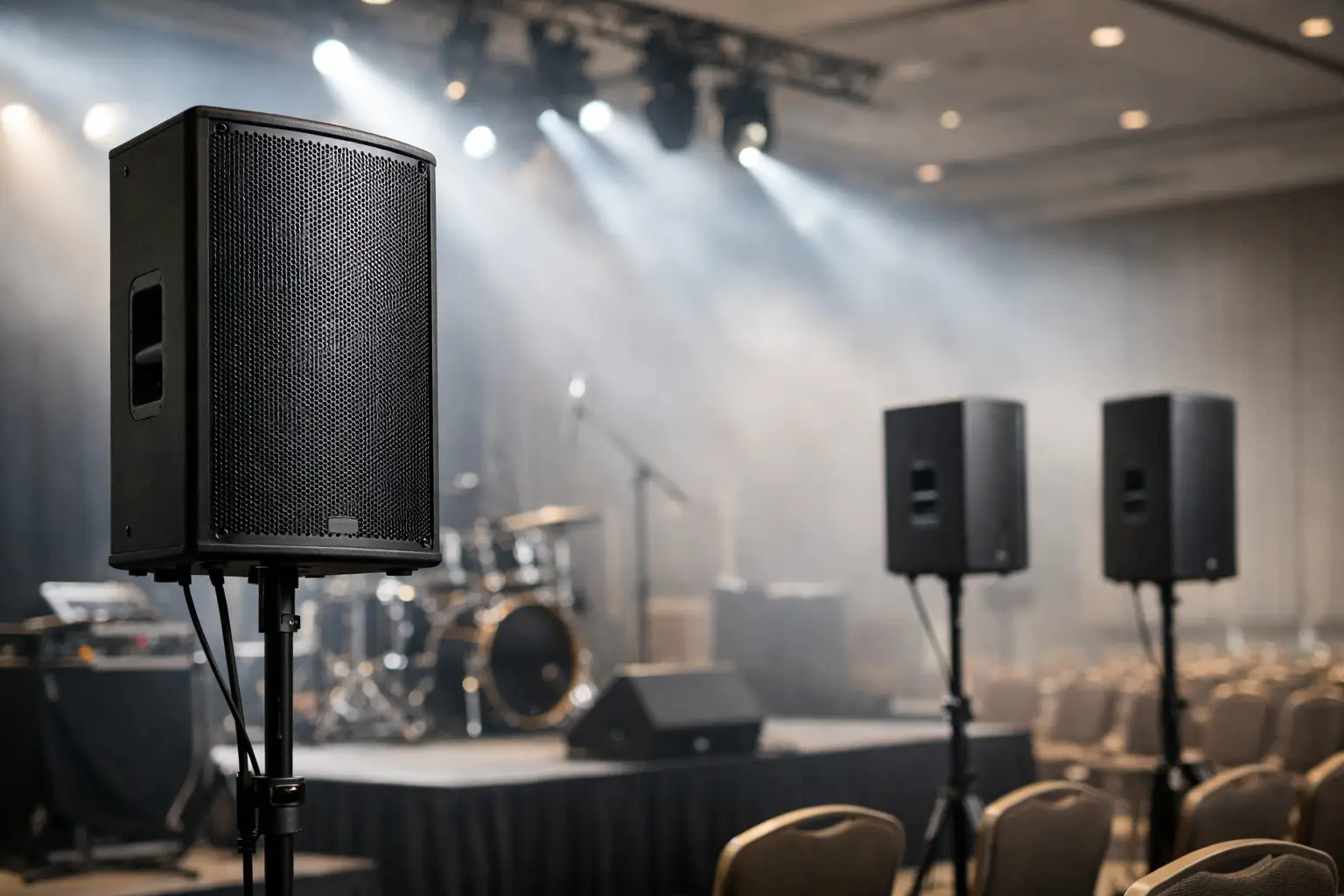
For a small indoor event such as a meeting, birthday, or wedding reception with up to around 75 guests, two main speakers are often enough if the room is compact and the audience is close to the source. That setup can work well for speeches, light music, and basic presentations.
For events in the 75 to 150 guest range, two speakers may still be enough in the right room, but this is where gaps in coverage start to show. If the room is deep, wide, or broken into sections, adding fills or delay speakers can make a major difference. This is especially true when guests are spread across banquet tables.
For 150 to 300 guests, many events benefit from more than a simple pair of mains. You may need front-of-room speakers plus additional units to cover the rear or side audience areas evenly. If there is dancing, live performance, or significant program audio, subwoofers may also become part of the plan.
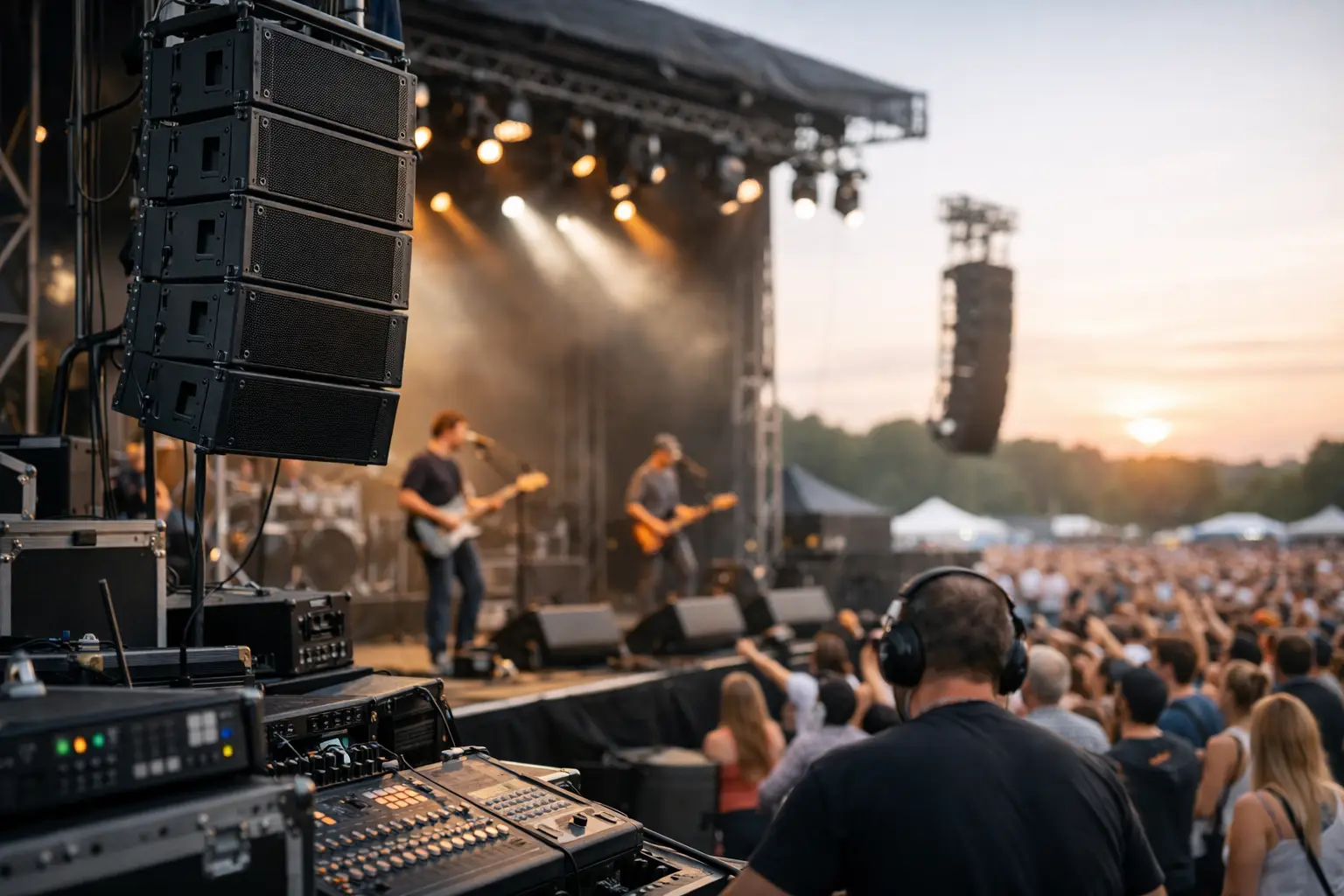
For larger corporate events, festivals, and outdoor gatherings, speaker count rises quickly because the goal is not just loudness. It is consistent coverage across a much larger footprint. That often means mains, fills, delays, and subs working together as a system rather than a few standalone speakers turned up too high.
These ranges are useful, but they are not guarantees. A well-designed four-speaker setup can outperform an oversized two-speaker setup by a mile because it distributes sound more evenly.
Why two speakers is not always enough
A lot of event planners start with the classic left-right setup because it sounds simple and budget-friendly. Sometimes it is exactly right. Sometimes it creates the most common audio problem in live events: the people near the speakers get too much volume while everyone farther away struggles to hear.
That happens because pushing a pair of speakers harder does not magically improve coverage. It often just makes the front of the room uncomfortable. Adding properly placed support speakers lets the system run more evenly at lower volume levels.
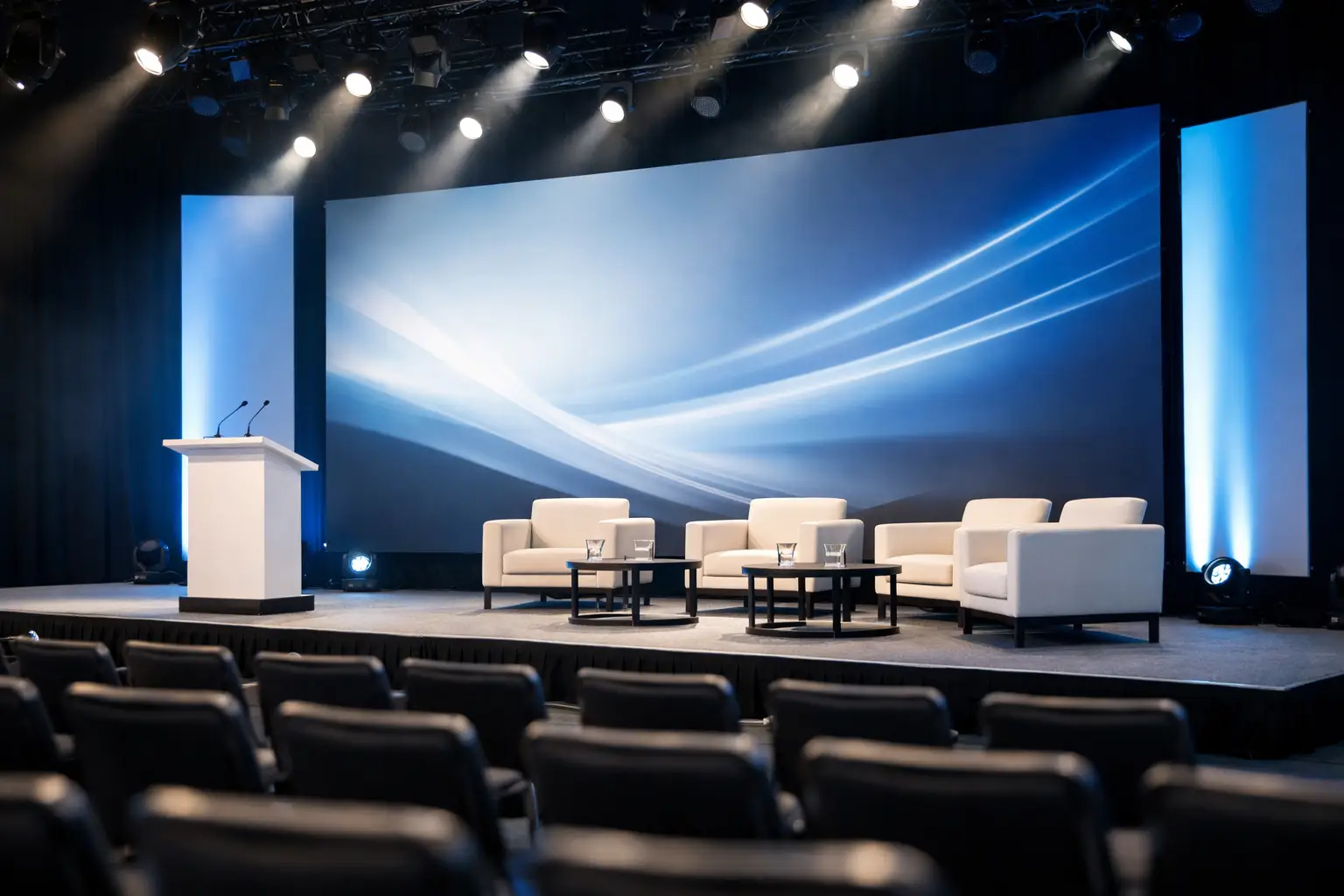
This matters even more for spoken-word events. Conferences, ceremonies, presentations, and award shows all depend on clean, intelligible speech. If the back third of the room cannot hear clearly, the event loses momentum fast.
Indoor vs outdoor speaker needs
Indoor venues can be tricky because walls and ceilings reflect sound. In a well-treated ballroom, that can help. In a hard-surface venue, reflections can smear speech and make the system feel louder without making it clearer. More speakers at lower output can sometimes solve that better than fewer speakers pushed hard.
Outdoor events have the opposite problem. There is no room reinforcement, so sound simply travels and disperses. Wind, open space, and crowd spread all work against you. An outdoor wedding ceremony for 120 guests might need a more intentional setup than an indoor reception for the same number.
For outdoor events, placement becomes just as important as quantity. You may need speakers aimed for the ceremony seating, separate speakers for cocktail hour, and another system for dinner or dancing. Technically, that is not one event system but several event zones working together.
Speaker count is also about zones, not just audience size
One reason the question gets tricky is that many events do not happen in a single listening area. A conference may have a general session room, breakout rooms, registration, and sponsor areas. A wedding may have ceremony, cocktail, and reception spaces. A festival may have stage coverage, VIP sections, and vendor areas.
In those cases, asking how many speakers for event sound is really asking how many speakers each zone needs. A single guest count does not tell the whole story. Two hundred guests moving through three separate spaces may require more total equipment than three hundred guests seated in one ballroom.
This is where production planning saves money as much as it improves quality. Instead of overbuilding one area and under-serving another, the system can be matched to how the event actually flows.
Don’t forget subwoofers, monitors, and delay speakers
When people talk about speaker count, they usually mean the main audience speakers. But depending on the event, you may also need subwoofers for low-end impact, stage monitors for performers or presenters, and delay speakers for extended coverage.
A DJ or band setup without subs can feel thin, even if the mains are technically loud enough. A live panel or emcee-driven show may need monitor wedges so talent can hear program audio and cues. A deep room may need delay speakers halfway back so the rear audience hears at the same level as the front.
These are not luxury add-ons. They are often the difference between a setup that merely functions and one that feels polished.
Budget trade-offs: more speakers or bigger speakers?
There is always a budget conversation, and it is a fair one. In some cases, fewer high-output speakers are the right call. In others, more compact speakers placed strategically will create better coverage and a better guest experience.
The trade-off usually comes down to event goals. If you need focused coverage for speeches in a hotel ballroom, distributed speakers may be the smarter investment. If you need strong music playback for a straightforward party layout, a simpler system with the right mains and subs may do the job.
A dependable production partner should be able to explain where adding gear actually improves results and where it does not. Not every event needs a larger package. But guessing low to save money often creates more expensive problems later, especially when the fix has to happen on show day.
The best way to estimate your event
Start with five questions: How many guests are attending, what kind of audio are you presenting, is the event indoors or outdoors, how many separate zones need sound, and what does the room or site actually look like?
From there, the speaker count becomes easier to estimate with confidence. A planner who can share a floor plan, venue dimensions, audience layout, and run of show will almost always get a better recommendation than someone starting with guest count alone.
That is especially helpful for events with mixed uses, like conferences that shift from keynote to networking, or weddings that move from ceremony to dinner to dance floor. In those cases, the smartest setup is often flexible, not just bigger.
If you are trying to decide how many speakers for event sound, the safest answer is this: enough to cover every guest clearly, not just enough to make the room loud. Clear, even sound makes an event feel organized, professional, and easy to enjoy – and that is what people remember when the lights go down.